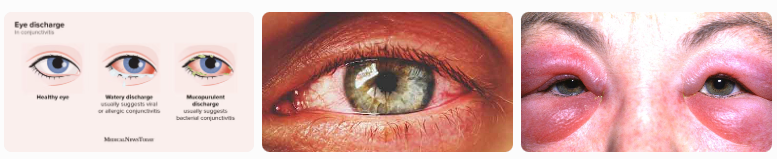
Eye Allergy (also known as Allergic Conjunctivitis) is an inflammatory reaction of the conjunctiva (the clear membrane covering the white part of the eye and inner eyelids) triggered by allergens. It is very common and often occurs together with hay fever or other allergies. In homeopathy, remedies are used only as supportive care to help reduce itching, redness, watering, and swelling while supporting the body's response to allergens. Eye allergies are not contagious but can be uncomfortable and may need medical advice if severe.
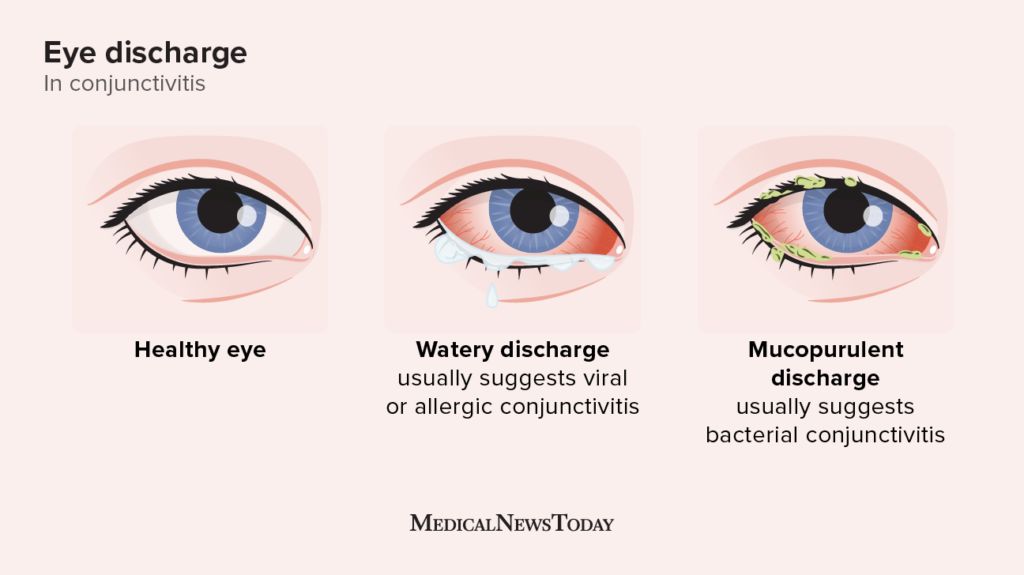

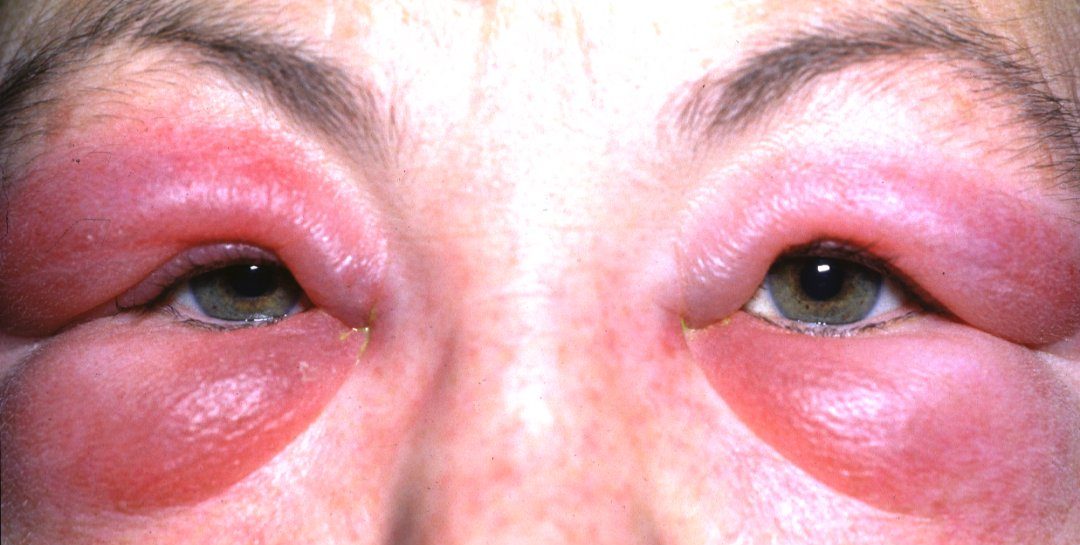
(Images above show eye allergy / allergic conjunctivitis — red, itchy eyes with watery or stringy discharge, swollen eyelids, and typical allergic appearance.)
Causes
Eye allergy is mainly caused by:
- Airborne allergens such as pollen, dust mites, mold, or pet dander
- Seasonal changes (hay fever) or perennial (year-round) exposure
- Irritants like smoke, pollution, or strong smells
- Contact lens overuse or certain eye drops (rarely)
Symptoms
Common symptoms include:
- Intense itching and rubbing of the eyes
- Redness (pink or bloodshot appearance)
- Watery or stringy discharge
- Swollen or puffy eyelids
- Gritty or burning sensation with sensitivity to light
- Symptoms often affect both eyes and worsen in certain seasons or environments
Homeopathy Medicines with Key Symptoms and Doses
Homeopathic remedies for eye allergy are selected based on the type of discharge, itching intensity, and individual constitution. They are used only as supportive care alongside allergen avoidance. The following are commonly considered. Remedy selection must be determined only by a qualified homeopath after detailed case-taking, in coordination with an eye doctor if needed. These are general guidelines only.
Euphrasia Officinalis For profuse, acrid, watery discharge that burns the cheeks. Eyes feel better in open air but water constantly. Typical use: 30C, 3-5 pellets 1-2 times daily.
Apis Mellifica For puffy, swollen eyelids with stinging or burning pain. Better from cold applications. Typical use: 30C, 3-5 pellets 1-2 times daily (short term).
Belladonna For bright red eyes with sudden throbbing and heat. Marked sensitivity to light. Typical use: 30C, 3-5 pellets 1-2 times daily (short term).
Pulsatilla For thick, yellowish-green discharge with mild, changeable symptoms. Weepy disposition and better in open air. Typical use: 30C, 3-5 pellets 1-2 times daily.
Sulphur For intense itching and burning that worsens from heat or washing. Unhealthy skin tendency. Typical use: 30C or 200C, sparingly (once weekly under guidance).
Natrum Muriaticum For watery discharge with dryness or crusting, often linked to emotional stress or grief. Typical use: 30C, 3-5 pellets 1-2 times daily.
Arsenicum Album For burning and restlessness with anxiety. Better from warm applications. Typical use: 30C, 3-5 pellets 1-2 times daily (short term).
Rhus Toxicodendron For red, swollen eyes with intense itching and restlessness. Better from warm applications. Typical use: 30C, 3-5 pellets 1-2 times daily.
Graphites For sticky discharge or cracking skin around the eyes. Typical use: 30C, 3-5 pellets 1-2 times daily.
Silicea For chronic or recurrent allergic eye issues with weakness and slow resolution. Typical use: 6X or 30C, 3-5 pellets 1-2 times daily.
Important guidance: Eye allergy management includes avoiding known allergens, using artificial tears, cold compresses, and antihistamine eye drops if needed. Maintain good eye hygiene and avoid rubbing the eyes. Homeopathy may help reduce itching, redness, and watering as supportive care but must never replace proper eye examination. This information is for educational purposes only and not a substitute for professional medical or homeopathic advice. Consult a qualified eye doctor (ophthalmologist) if symptoms are severe, vision is affected, or there is pain/discharge, and a registered homeopath for individualized supportive remedy selection. With allergen avoidance and care, most eye allergies can be well controlled.