Eustachian Tube Dysfunction (ETD) is a condition in which the Eustachian tube — the narrow passage connecting the middle ear to the back of the nose and throat — fails to open and close properly. This tube normally equalizes air pressure in the middle ear and drains fluid. When it does not function well, pressure builds up, leading to discomfort and hearing issues. In homeopathy, remedies are used only as supportive care to help relieve fullness, improve tube function, reduce inflammation, and support natural drainage. Eustachian tube dysfunction often needs medical assessment, especially if symptoms persist or affect hearing.
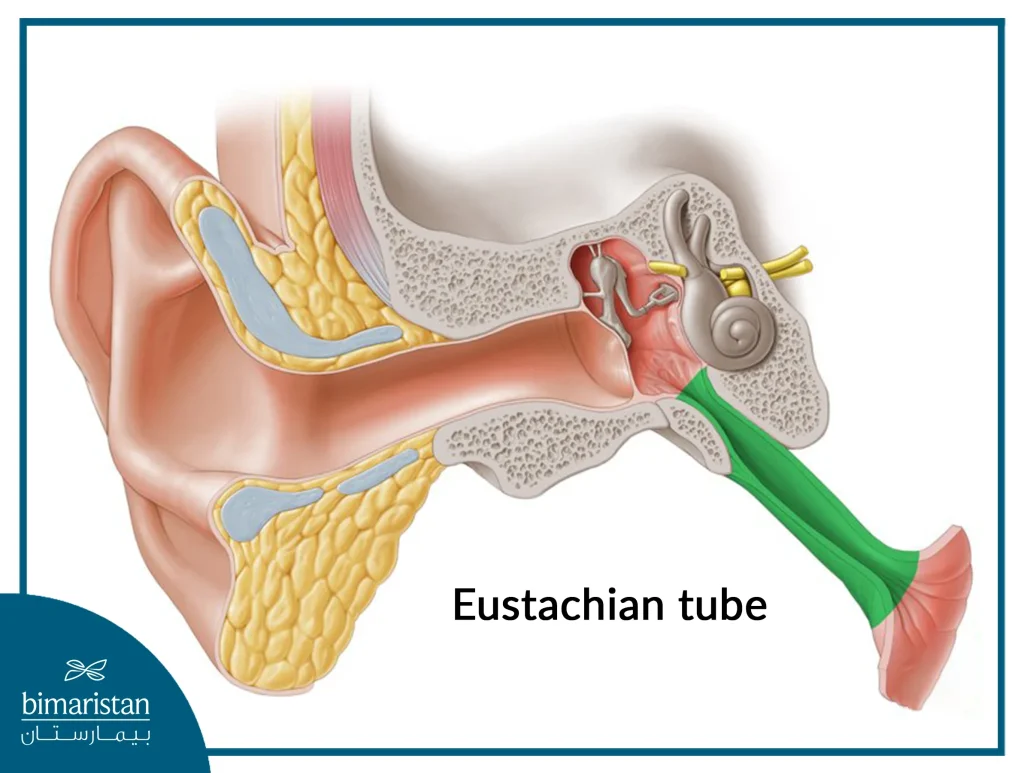
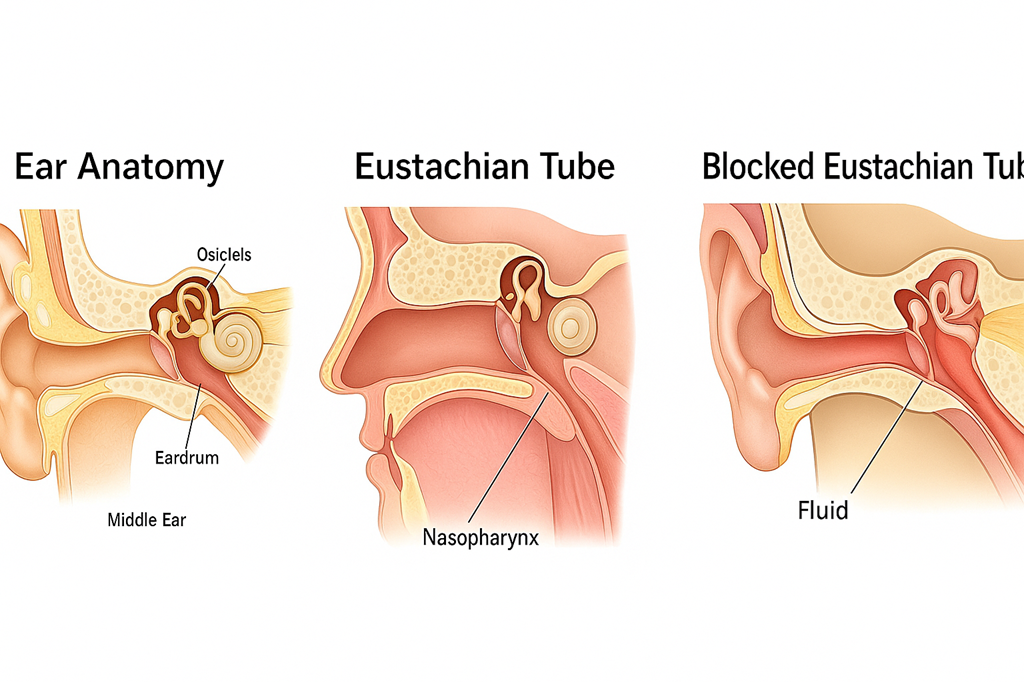
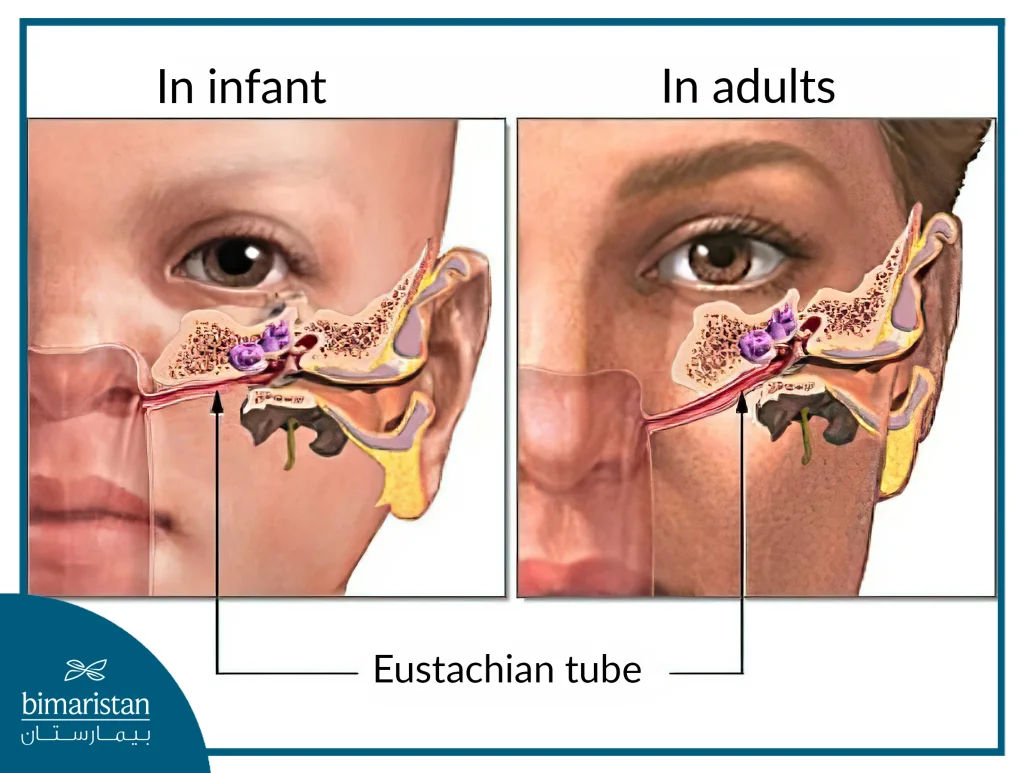
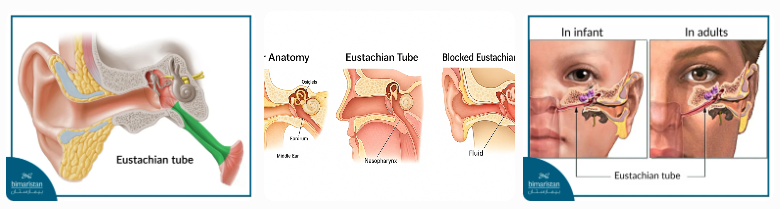
(Images above show Eustachian tube dysfunction — anatomy of the Eustachian tube, its connection to the middle ear, and blocked tube with fluid accumulation.)
Causes
Eustachian tube dysfunction commonly occurs due to:
- Upper respiratory infections, colds, or allergies causing swelling
- Enlarged adenoids (especially in children)
- Sudden pressure changes (flying, diving, or elevators)
- Smoking, acid reflux, or anatomical issues
- Obesity or hormonal changes
Symptoms
Common symptoms include:
- Feeling of fullness, pressure, or blockage in the ear
- Muffled hearing or popping/clicking sounds
- Ear pain or discomfort, especially during altitude changes
- Tinnitus (ringing in the ear) or dizziness
- Reduced hearing and a sensation of water in the ear
- Symptoms often worse with colds or allergies
Homeopathy Medicines with Key Symptoms and Doses
Homeopathic remedies for Eustachian tube dysfunction are selected based on the sensation of blockage, associated symptoms, and the person’s constitution. They are used only as supportive care alongside lifestyle measures (e.g., swallowing, yawning, or Valsalva maneuver). The following are commonly considered. Remedy selection must be determined only by a qualified homeopath after detailed case-taking, in coordination with an ENT specialist. These are general guidelines only.
Kali Muriaticum For blocked Eustachian tube with thick, white or grayish mucus and cracking or popping sounds in the ear. Typical use: 6X or 30C, 3-5 pellets 1-2 times daily.
Pulsatilla For changeable blockage with thick yellowish discharge after a cold. Mild, weepy disposition; better in open air. Typical use: 30C, 3-5 pellets 1-2 times daily.
Mercurius Solubilis For Eustachian tube blockage with offensive discharge, shooting pains, and night sweating. Typical use: 30C, 3-5 pellets 1-2 times daily (short term).
Silicea For chronic blockage with weakness and tendency to recurrent ear issues or slow drainage. Typical use: 6X or 30C, 3-5 pellets 1-2 times daily.
Graphites For dry, hard wax or sticky mucus causing blockage with cracking sounds. Typical use: 30C, 3-5 pellets 1-2 times daily.
Lycopodium Clavatum For right-sided blockage with digestive bloating and fullness in the ear. Typical use: 30C or 200C, 3-5 pellets 1-2 times daily.
Causticum For raw, burning sensation with dryness and roaring or ringing in the ears. Typical use: 30C, 3-5 pellets 1-2 times daily.
Hepar Sulphuris For sensitive blockage with sharp pain and tendency to inflammation or pus. Better from warmth. Typical use: 30C, 3-5 pellets 1-2 times daily (short term).
Belladonna For sudden throbbing fullness with heat and redness if inflammation is marked. Typical use: 30C, 3-5 pellets 1-2 times daily (short term).
Natrum Muriaticum For blockage linked to emotional stress or allergies with dry sensation and craving for salt. Typical use: 30C, 3-5 pellets 1-2 times daily.
Important guidance: Eustachian tube dysfunction is often managed with nasal decongestants, allergy treatment, or auto-inflation techniques. Persistent cases may need ENT evaluation (possible grommet insertion in severe or chronic cases). Homeopathy may help relieve blockage sensation and support tube function as supportive care but must never replace proper medical assessment. Avoid forceful blowing of the nose. This information is for educational purposes only and not a substitute for professional medical or homeopathic advice. Consult a qualified ENT specialist for Eustachian tube dysfunction (especially if there is persistent hearing loss, pain, or dizziness), and a registered homeopath for individualized supportive remedy selection. With proper care, most cases improve significantly.