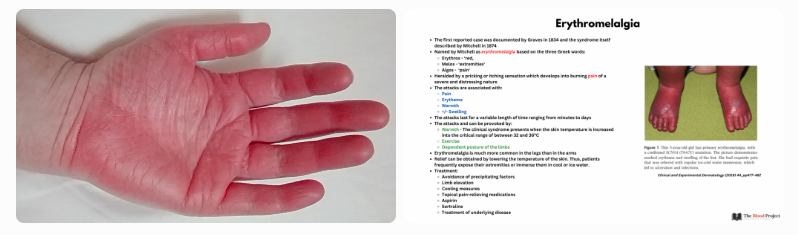
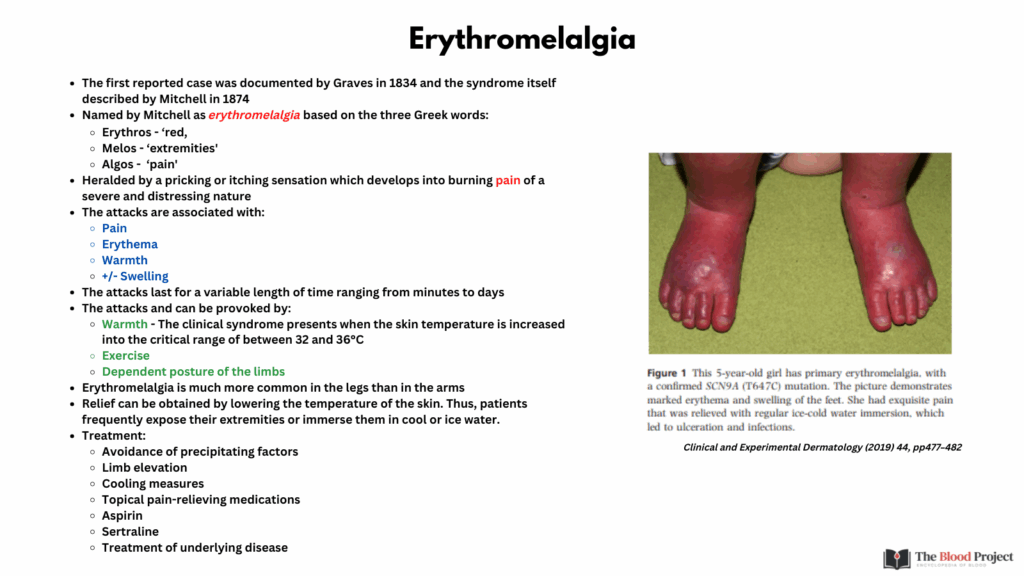
Erythromelalgia is a rare neurovascular disorder characterized by episodes of intense burning pain, redness (erythema), and warmth (sometimes swelling) in the extremities, most commonly the feet and hands. The attacks are often triggered by heat, exercise, or dependency of the limbs and are relieved by cooling or elevation. It can be primary (genetic or idiopathic) or secondary to other conditions. In homeopathy, remedies are used only as supportive care to help reduce the intensity and frequency of burning pain, improve circulation, and ease associated discomfort. Erythromelalgia has no cure and requires proper medical evaluation.

Causes
Erythromelalgia can be caused by:
- Genetic mutations (especially in sodium channel genes like SCN9A in primary cases)
- Secondary to blood disorders (polycythemia, thrombocythemia), autoimmune diseases, or nerve damage
- Small fiber neuropathy or vascular dysfunction
- Triggers include heat, exercise, alcohol, or certain medications
Symptoms
Common symptoms include:
- Sudden episodes of severe burning, throbbing, or prickling pain in feet, hands, or other extremities
- Redness (erythema), warmth, and sometimes swelling of the affected area
- Attacks lasting from minutes to hours or days, often worse with heat or standing
- Relief by cooling the area (cold water, ice, or elevation)
- In chronic cases: skin changes, ulcers, or secondary infections due to repeated cooling
Homeopathy Medicines with Key Symptoms and Doses
Homeopathic remedies for erythromelalgia are highly individualized based on the nature of pain, triggers, and the person’s constitution. They are used only as supportive care alongside conventional management (cooling measures, aspirin, medications for nerve pain, or treatment of underlying causes). The following are sometimes considered. Remedy selection must be determined only by a qualified homeopath after detailed case-taking, in coordination with a neurologist or pain specialist. These are general guidelines only.
Secale Cornutum For burning pain with icy coldness of the extremities yet the patient cannot bear covering. Dark, passive congestion with relief from cold applications. Typical use: 30C, 3-5 pellets 1-2 times daily (short term under guidance).
Ledum Palustre For burning, stinging pain in the feet or hands with marked swelling and relief from cold applications. Punctured or injured sensation. Typical use: 30C, 3-5 pellets 1-2 times daily.
Belladonna For sudden, intense throbbing or burning pain with bright red, hot, and swollen extremities. Worse from touch or heat. Typical use: 30C, 3-5 pellets 1-2 times daily (short term).
Arsenicum Album For burning pain with great restlessness, anxiety, and prostration. Better from warmth but desires cold drinks. Typical use: 30C, 3-5 pellets 1-2 times daily (short term).
Lachesis Muta For left-sided or alternating symptoms with hot, congested extremities and sensitivity to touch or constriction. Typical use: 30C, 3-5 pellets 1-2 times daily (short courses).
Carbo Vegetabilis For burning pain with coldness of the body, air hunger, and collapse-like weakness. Better from fanning or cold air. Typical use: 30C, 3-5 pellets 1-2 times daily (short term).
Pulsatilla For changeable symptoms with mild, weepy disposition. Burning pain better in open cool air and worse in warm rooms. Typical use: 30C, 3-5 pellets 1-2 times daily.
Rhus Toxicodendron For burning and aching pain with restlessness and stiffness. Better from continued gentle motion and warmth. Typical use: 30C, 3-5 pellets 1-2 times daily.
Sulphur For chronic burning sensations with itching or unhealthy skin tendency. Worse from heat of bed. Typical use: 30C or 200C, sparingly (once weekly under guidance).
Apis Mellifica For stinging, burning pain with rosy swelling and relief from cold applications. Typical use: 30C, 3-5 pellets 1-2 times daily.
Important guidance: Erythromelalgia is diagnosed clinically with support from thermography, nerve studies, or genetic testing. Management includes avoiding triggers, cooling measures, elevation, aspirin (especially in secondary cases), and medications like gabapentin or mexiletine for nerve pain. Homeopathy may help reduce pain intensity and frequency as supportive care but must never replace medical evaluation or prescribed treatment. Avoid excessive cooling that can damage skin. This information is for educational purposes only and not a substitute for professional medical or homeopathic advice. Consult a qualified neurologist or pain specialist for persistent burning pain with redness in extremities, and a registered homeopath for individualized supportive remedy selection. With proper care, symptoms can often be better managed.