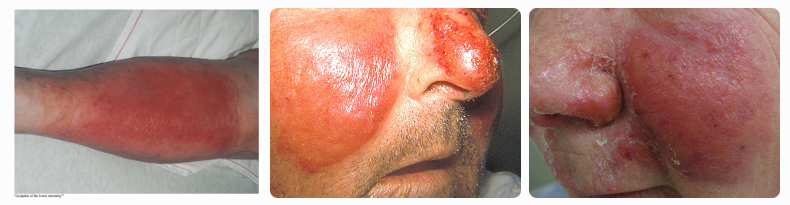
Erysipelas is an acute bacterial skin infection that affects the upper layers of the skin (dermis) and the lymphatic vessels. It is characterized by bright red, swollen, and sharply demarcated patches, most commonly on the face or legs. It is often caused by Group A Streptococcus bacteria and can spread quickly if not treated. In homeopathy, remedies are used only as supportive care to help reduce intense redness, burning, swelling, and fever while supporting the body's healing response. Erysipelas is a serious infection that usually requires prompt antibiotic treatment.
:max_bytes(150000):strip_icc()/erysipelas4-099ddec307c74900993c0bd5e954043e.jpg)
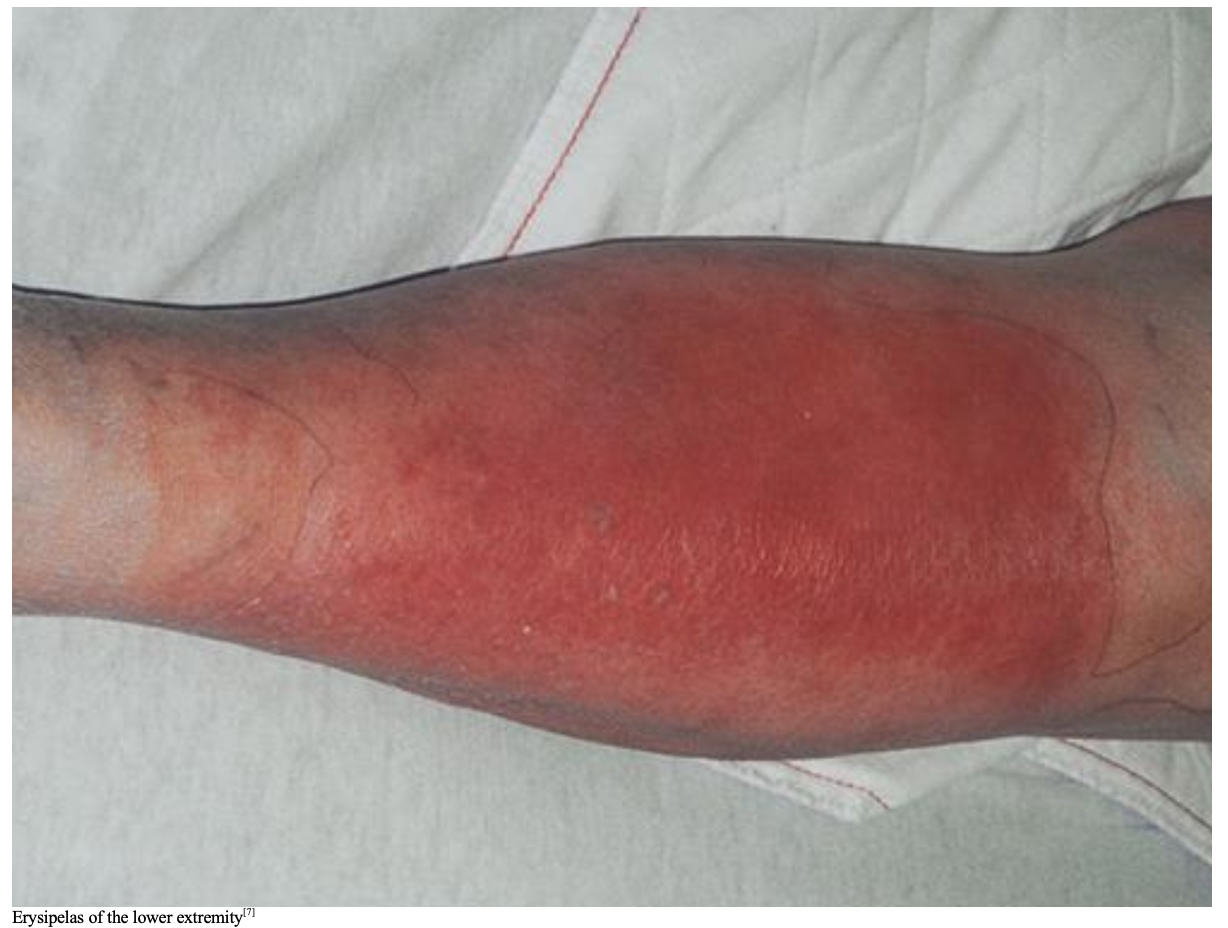
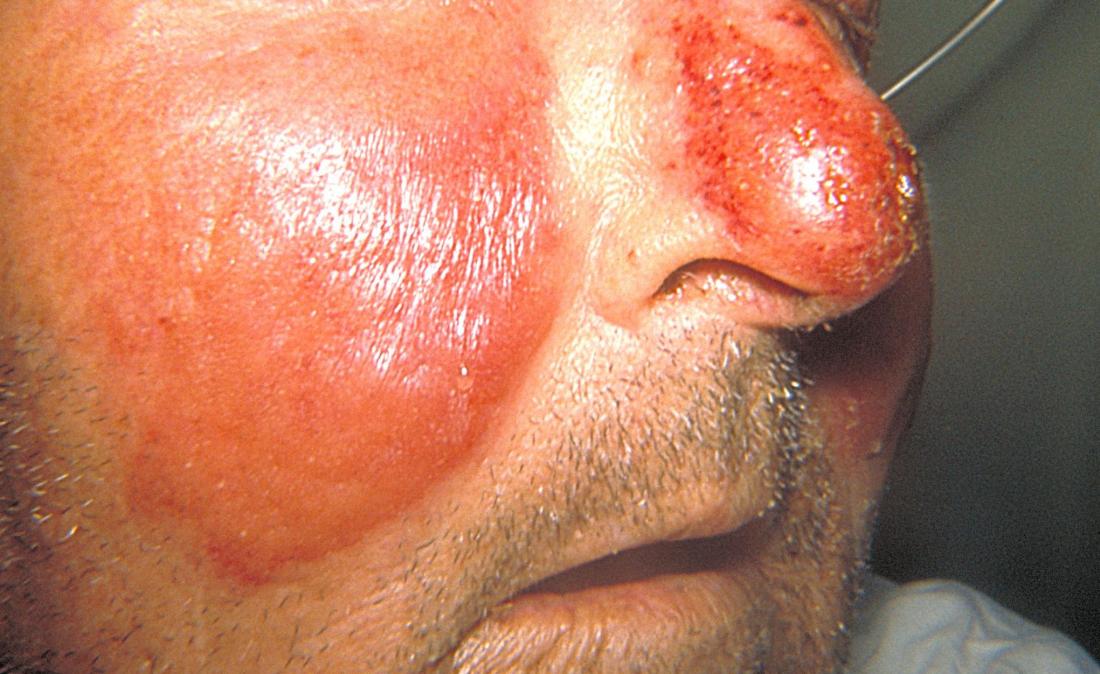
(Images above show erysipelas — bright red, shiny, swollen skin with well-defined raised borders, commonly affecting the leg or face.)
Causes
Erysipelas is primarily caused by:
- Bacterial infection, most often Group A Streptococcus entering through breaks in the skin (cuts, ulcers, insect bites, or surgical wounds)
- Weakened skin barrier or compromised immunity
- Predisposing factors: lymphedema, diabetes, obesity, or previous episodes of erysipelas
Symptoms
Common symptoms include:
- Sudden onset of bright red, hot, and shiny skin with sharply raised borders
- Swelling, tenderness, and burning or stinging pain
- Fever, chills, headache, and general weakness
- Enlarged nearby lymph nodes
- In severe cases: blisters, skin breakdown, or spread to deeper tissues
Homeopathy Medicines with Key Symptoms and Doses
Homeopathic remedies for erysipelas are selected based on the intensity of redness, pain, fever, and individual constitution. They are used only as supportive care alongside conventional antibiotic therapy. The following are commonly considered. Remedy selection must be determined only by a qualified homeopath after detailed case-taking, in close coordination with a doctor. These are general guidelines only.
Belladonna For sudden, violent onset with bright red, hot, throbbing skin and high fever. The affected area is sensitive to touch and pain is pulsating. Typical use: 30C, 3-5 pellets 1-2 times daily (short term).
Apis Mellifica For rosy-red, puffy swelling with stinging or burning pain. The skin looks shiny and better from cold applications. Thirstlessness is common. Typical use: 30C, 3-5 pellets 1-2 times daily (short term).
Arsenicum Album For burning pain with great anxiety, restlessness, and prostration. Better from warmth. Often indicated in septic or exhausted states. Typical use: 30C, 3-5 pellets 1-2 times daily (short term).
Rhus Toxicodendron For red, swollen skin with intense itching and restlessness. Symptoms better from warm applications and continued motion. Typical use: 30C, 3-5 pellets 1-2 times daily.
Lachesis Muta For left-sided erysipelas with dark purplish-red color, extreme sensitivity to touch, and loquacity. Worse after sleep. Typical use: 30C, 3-5 pellets sparingly.
Hepar Sulphuris For very sensitive, painful red areas with tendency to suppuration. Better from warmth. Typical use: 30C, 3-5 pellets 1-2 times daily (short term).
Sulphur For unhealthy-looking red skin with burning and itching that worsens from heat or washing. Useful as an intercurrent remedy. Typical use: 30C or 200C, sparingly (once weekly under guidance).
Mercurius Solubilis For red, moist, inflamed skin with offensive odor or glandular swelling. Typical use: 30C, 3-5 pellets 1-2 times daily (short term).
Silicea For slow-resolving cases with weakness and tendency to chronicity. Typical use: 6X or 30C, 3-5 pellets 1-2 times daily.
Calcarea Sulphurica For suppurative tendency with thick yellow discharge in chronic or recurrent erysipelas. Typical use: 30C, 3-5 pellets 1-2 times daily.
Important guidance: Erysipelas requires prompt medical attention with antibiotics to prevent spread or complications like abscess, cellulitis, or sepsis. Supportive measures include rest, elevation of the affected part, and pain relief. Homeopathy may help reduce inflammation, pain, and fever as supportive care but must never replace antibiotic treatment or medical evaluation. This information is for educational purposes only and not a substitute for professional medical or homeopathic advice. Consult a qualified doctor immediately if you suspect erysipelas (sudden red swollen skin with fever), and a registered homeopath for individualized supportive remedy selection in coordination with conventional care. Early treatment usually leads to good recovery.