Enterocolitis is inflammation that affects both the small intestine (enteritis) and the large intestine (colitis). It is a more widespread digestive tract inflammation than simple gastroenteritis and can range from mild to severe, sometimes leading to complications like dehydration or intestinal damage. In homeopathy, remedies are used only as supportive care to help reduce abdominal pain, diarrhea, inflammation, and weakness while supporting gut recovery. Enterocolitis can cause rapid dehydration and requires proper medical evaluation.

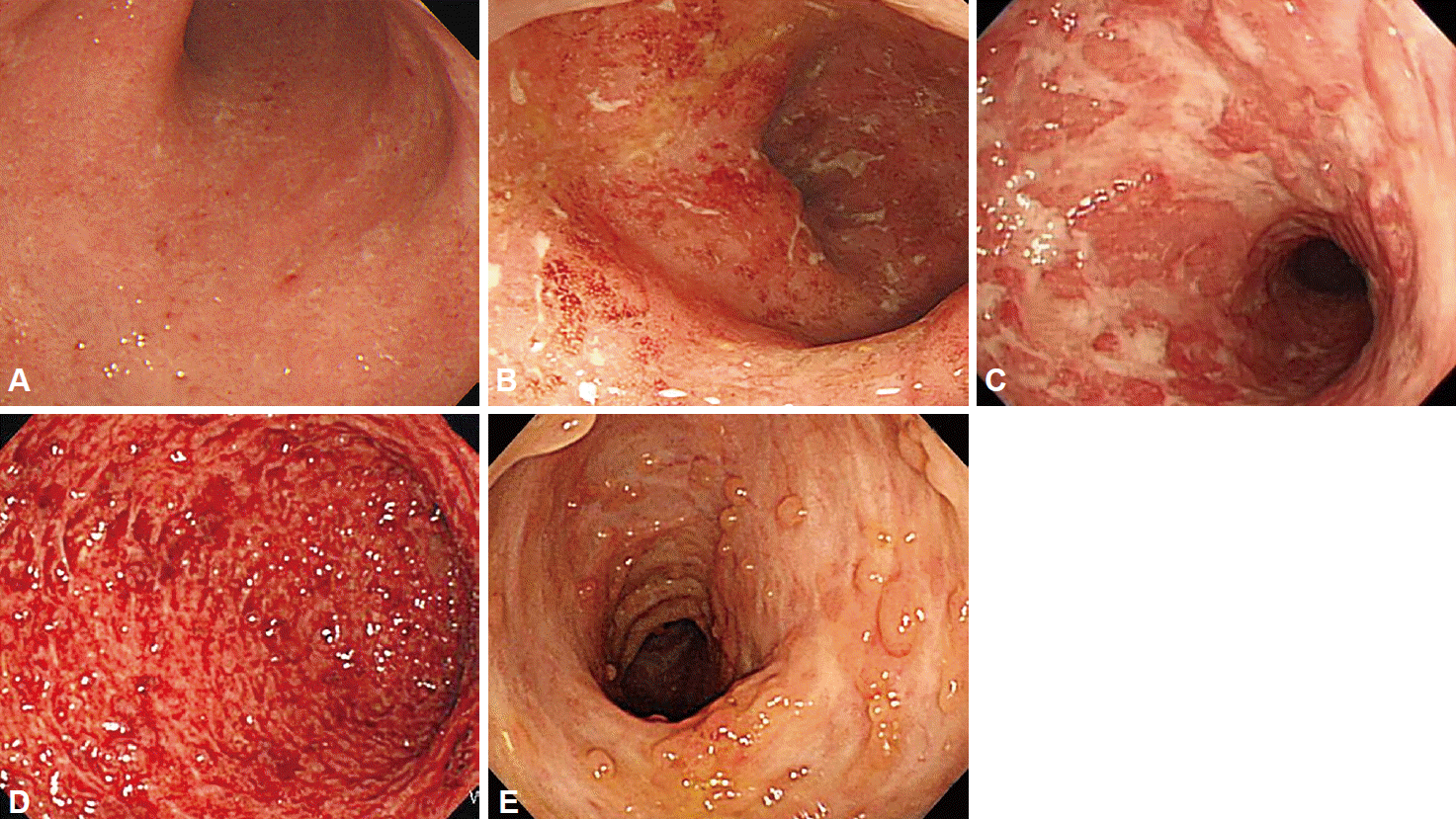

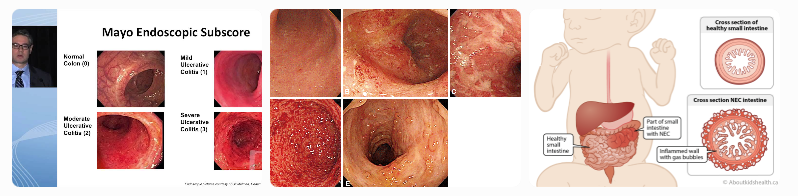
(Images above show enterocolitis — inflamed intestinal lining visible on endoscopy with redness, ulcers, and swelling; also cross-section views of healthy vs. inflamed intestine with gas bubbles in severe cases like necrotizing enterocolitis.)
Causes
Enterocolitis is commonly caused by:
- Infections (viral, bacterial like Clostridium difficile, or parasitic)
- Antibiotic-associated colitis or food poisoning
- Inflammatory bowel diseases (Crohn’s disease or ulcerative colitis)
- Reduced blood flow to the intestines (ischemic enterocolitis)
- In newborns: necrotizing enterocolitis (NEC) linked to prematurity
Symptoms
Common symptoms include:
- Cramping or severe abdominal pain
- Frequent watery or bloody diarrhea
- Nausea, vomiting, and loss of appetite
- Bloating, gas, and tenderness in the abdomen
- Fever, weakness, and signs of dehydration (dry mouth, reduced urine)
- In severe cases: blood in stool, weight loss, or shock
Homeopathy Medicines with Key Symptoms and Doses
Homeopathic remedies for enterocolitis are selected based on the nature of pain, stool, vomiting, and the person’s constitution. They are used only as supportive care alongside hydration and medical advice. The following are commonly considered. Remedy selection must be determined only by a qualified homeopath after detailed case-taking, in coordination with a gastroenterologist if symptoms are severe. These are general guidelines only.
Arsenicum Album For burning abdominal pain with profuse watery diarrhea and vomiting. Extreme anxiety, restlessness, and thirst for small sips. Better from warmth. Typical use: 30C, 3-5 pellets 1-2 times daily (short term).
Veratrum Album For violent vomiting and diarrhea with cold sweat, collapse, and cramps. Thirst for large quantities of cold water. Typical use: 30C, 3-5 pellets 1-2 times daily (short term).
Podophyllum For gushing, painless, watery diarrhea with rumbling and offensive stool. Worse in the morning. Typical use: 30C, 3-5 pellets 1-2 times daily.
Aloe Socotrina For sudden gushing diarrhea with jelly-like mucus and feeling of insecurity in the rectum. Typical use: 30C, 3-5 pellets 1-2 times daily.
Mercurius Corrosivus For bloody, slimy diarrhea with intense tenesmus (constant urging) and burning pain. Typical use: 30C, 3-5 pellets 1-2 times daily (short term).
Nux Vomica For cramping pain from overeating, spicy food, or stress with irritability and frequent urging. Typical use: 30C, 3-5 pellets 1-2 times daily.
China Officinalis For marked weakness, bloating, and distension after heavy fluid loss from diarrhea. Typical use: 30C, 3-5 pellets 1-2 times daily.
Ipecacuanha For constant nausea with vomiting that does not relieve and clean tongue. Typical use: 30C, 3-5 pellets 1-2 times daily (short term).
Carbo Vegetabilis For extreme bloating, offensive gas, and coldness with collapse-like weakness. Typical use: 30C, 3-5 pellets 1-2 times daily (short term).
Pulsatilla For changeable symptoms with nausea after rich food. Mild, weepy disposition and better in open air. Typical use: 30C, 3-5 pellets 1-2 times daily.
Important guidance: Enterocolitis management includes rest, oral rehydration solutions (ORS), and a bland diet. Severe cases with blood in stool, high fever, or dehydration need urgent medical care, possibly antibiotics or hospitalization. Homeopathy may help relieve pain, diarrhea, and inflammation as supportive care but must never replace proper medical evaluation. This information is for educational purposes only and not a substitute for professional medical or homeopathic advice. Consult a qualified doctor immediately if there is blood in stool, severe pain, or signs of dehydration, and a registered homeopath for individualized supportive remedy selection. With prompt hydration and care, most cases improve, but underlying causes must be addressed.