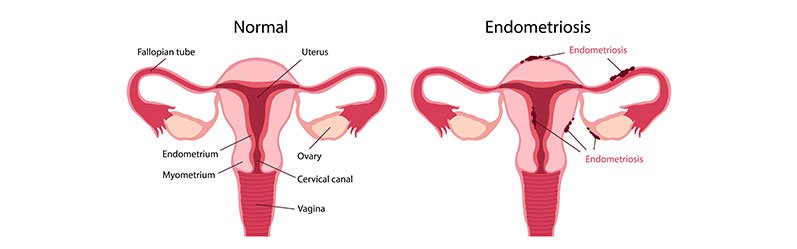
Endometriosis is a chronic and often painful condition in which tissue similar to the lining of the uterus (endometrium) grows outside the uterus, most commonly on the ovaries, fallopian tubes, and pelvic lining. This misplaced tissue responds to hormonal changes during the menstrual cycle, causing inflammation, scarring, and adhesions. In homeopathy, remedies are used only as supportive care to help reduce pelvic pain, heavy bleeding, emotional distress, and associated symptoms while supporting hormonal balance. Endometriosis requires proper gynecological evaluation and may need medical or surgical management.
(Images above show endometriosis — endometrial-like tissue implants outside the uterus, causing dark chocolate cysts on ovaries, adhesions, and pelvic inflammation.)
Causes
The exact cause is not fully understood, but possible factors include:
- Retrograde menstruation (menstrual blood flowing backward into the pelvis)
- Genetic predisposition and family history
- Hormonal imbalances (estrogen dependence)
- Immune system dysfunction
- Surgical scar implantation or embryonic cell transformation
Symptoms
Common symptoms include:
- Severe pelvic pain, especially during menstruation (dysmenorrhea)
- Chronic lower abdominal or back pain
- Pain during intercourse (dyspareunia)
- Heavy or irregular menstrual bleeding
- Infertility or difficulty conceiving
- Painful bowel movements or urination during periods
- Fatigue, bloating, and emotional distress
Homeopathy Medicines with Key Symptoms and Doses
Homeopathic remedies for endometriosis are highly individualized based on the type of pain, menstrual symptoms, emotional state, and constitution. They are used only as supportive care alongside conventional treatment. The following are commonly considered. Remedy selection must be determined only by a qualified homeopath after detailed case-taking, in coordination with a gynecologist. These are general guidelines only.
Sepia For bearing-down sensation in the pelvis with dragging pain. Suited to women feeling exhausted, indifferent, or emotionally detached. Symptoms often worse before or during menses. Typical use: 30C, 3-5 pellets 1-2 times daily or 200C weekly.
Lachesis Muta For left-sided pelvic pain with hot flushes, extreme sensitivity to touch, and loquacity. Symptoms worse before menses and relieved after flow starts. Typical use: 30C, 3-5 pellets 1-2 times daily (short courses).
Sabina For heavy, bright red bleeding with clots and pain extending from sacrum to pubis. Pain is sharp and shooting. Typical use: 30C, 3-5 pellets 1-2 times daily during pain.
Belladonna For sudden, violent, throbbing pelvic pain with red, hot sensation. Pain comes and goes abruptly. Typical use: 30C, 3-5 pellets 1-2 times daily (short term).
Platinum Metallicum For intense cramping pain with arrogance or numbness in the affected parts. Sexual hypersensitivity may be present. Typical use: 30C, 3-5 pellets 1-2 times daily.
Natrum Muriaticum For emotional suppression, grief, and headaches with pelvic pain. Craving for salt and aversion to consolation. Typical use: 30C, 3-5 pellets 1-2 times daily.
Calcarea Carbonica For fair, sweaty, chilly women with heavy periods and bearing-down sensation. Constitutional sluggishness. Typical use: 30C or 200C, 3-5 pellets once or twice weekly.
Pulsatilla For changeable symptoms and weepy, mild disposition. Pain better in open air and worse in warm rooms. Typical use: 30C, 3-5 pellets 1-2 times daily.
Arsenicum Album For burning pains with anxiety and restlessness. Better from warmth and small sips of water. Typical use: 30C, 3-5 pellets 1-2 times daily (short term).
Thuja Occidentalis For history of suppressed eruptions or vaccinations with wart-like growths or adhesions. Typical use: 30C, 3-5 pellets 1-2 times daily (short courses).
Important guidance: Endometriosis is diagnosed by ultrasound, MRI, or laparoscopy. Conventional management includes pain relief, hormonal therapy, or laparoscopic surgery to remove implants. Homeopathy may help reduce pain intensity and improve quality of life as supportive care but must never replace gynecological evaluation and treatment. Maintain a healthy lifestyle, manage stress, and avoid known triggers. This information is for educational purposes only and not a substitute for professional medical or homeopathic advice. Consult a qualified gynecologist for accurate diagnosis and management (especially if there is severe pain, infertility, or heavy bleeding), and a registered homeopath for individualized supportive remedy selection. Early intervention can significantly improve symptoms and fertility outcomes.