Endocarditis is a serious and potentially life-threatening inflammation of the inner lining of the heart chambers and valves (endocardium). It is most often caused by bacterial infection and can damage heart valves, leading to heart failure or spread of infection if not treated promptly. In homeopathy, remedies are used only as supportive care to help manage symptoms such as fever, weakness, restlessness, or heart-related discomfort while supporting the body's vitality. Endocarditis is a medical emergency that requires immediate hospital treatment with intravenous antibiotics and sometimes surgery.
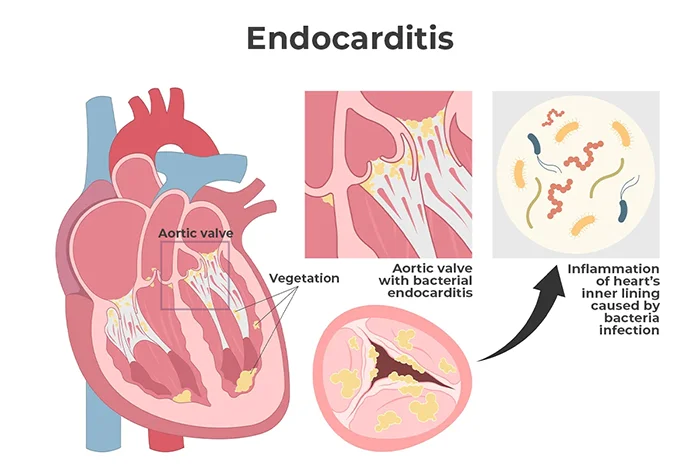
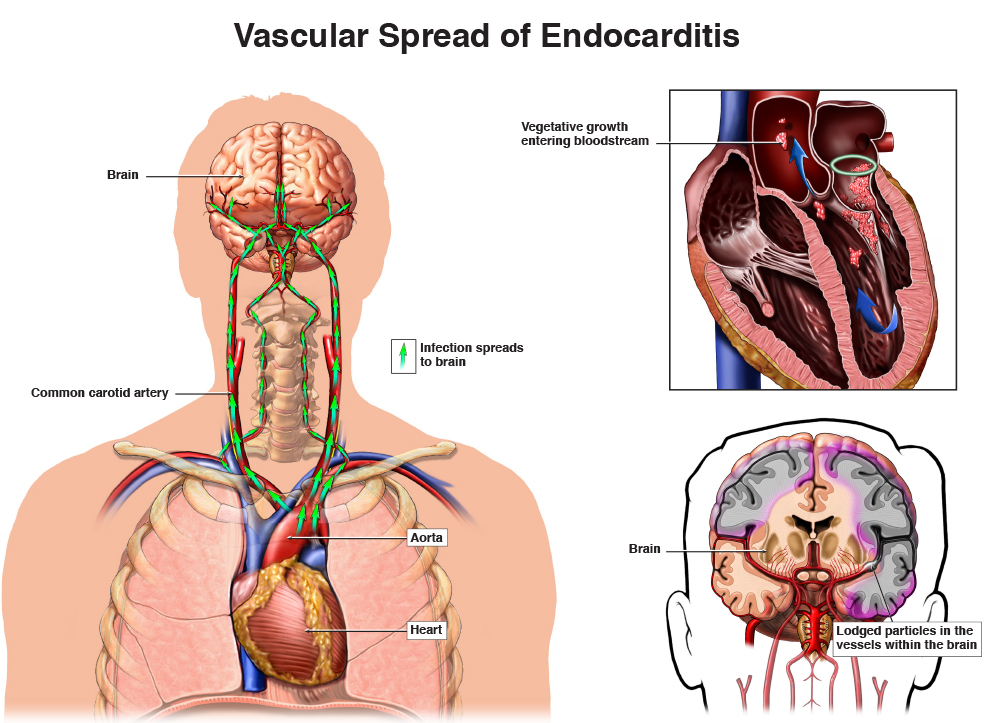
(Images above show endocarditis — inflammation of the heart's inner lining with vegetations (clumps of bacteria and fibrin) on heart valves, and how infection can spread through the bloodstream.)
Causes
Endocarditis is mainly caused by:
- Bacterial infection (most common: streptococci, staphylococci) entering the bloodstream
- Pre-existing heart valve damage, congenital heart defects, or artificial valves
- Procedures like dental work, surgery, or intravenous drug use that allow bacteria to enter blood
- Rarely fungal or other organisms in immunocompromised individuals
Symptoms
Common symptoms include:
- Persistent fever, chills, and night sweats
- Fatigue, weakness, and loss of appetite
- Heart murmur (new or changed), chest pain, or shortness of breath
- Small red or purple spots on skin (petechiae), painful nodules on fingers/toes (Osler’s nodes), or splinter hemorrhages under nails
- Joint pain, weight loss, and flu-like symptoms
- In advanced cases: symptoms of heart failure or embolism
Homeopathy Medicines with Key Symptoms and Doses
Homeopathic remedies for endocarditis are highly individualized and focus on symptom similarity for supportive management only. They are never a substitute for urgent conventional medical care. The following are sometimes considered in literature for infectious or inflammatory heart conditions. Remedy selection must be determined only by a qualified homeopath experienced in acute and cardiac cases after detailed case-taking, in close coordination with cardiologists and infectious disease specialists. These are general guidelines only.
Arsenicum Album For great anxiety, restlessness, burning pains, and extreme prostration with thirst for small sips. Better from warmth. Often indicated in septic or exhausted states. Typical use: 30C, 3-5 pellets 1-2 times daily (short term).
Crotalus Horridus For hemorrhagic tendency, septic states, and dark bleeding with profound weakness. Useful in bacterial endocarditis with purpura or bleeding. Typical use: 30C, 3-5 pellets sparingly (under expert guidance).
Lachesis Muta For left-sided symptoms, dark purplish discoloration, extreme sensitivity, and loquacity or suspicion. Worse after sleep. Typical use: 30C, 3-5 pellets sparingly.
Phosphorus For bleeding tendency, great weakness, fearfulness, and burning sensations. Thirst for cold drinks. Typical use: 30C, 3-5 pellets 1-2 times daily (use cautiously under guidance).
Pyrogenium For septic conditions with high fever, restlessness, and offensive discharges. The pulse may be fast while temperature is high. Typical use: 30C or 200C, sparingly (under guidance).
Belladonna For sudden violent onset with high fever, throbbing headache, red flushed face, and delirium. Typical use: 30C, 3-5 pellets 1-2 times daily (short term).
Carbo Vegetabilis For collapse-like weakness, coldness, air hunger, and blueness in exhausted septic states. Typical use: 30C, 3-5 pellets 1-2 times daily (short term).
China Officinalis For marked debility and weakness after fluid loss or prolonged fever. Typical use: 30C, 3-5 pellets 1-2 times daily.
Sulphur Often used as an intercurrent remedy in chronic or septic states with burning sensations. Typical use: 30C or 200C, sparingly (once weekly under guidance).
Aconite For sudden onset with intense fear, anxiety, and restlessness in the very early inflammatory stage. Typical use: 30C, 3-5 pellets sparingly (short term).
Important guidance: Endocarditis is diagnosed by blood cultures, echocardiography, and other tests. Treatment usually involves long courses of intravenous antibiotics and sometimes valve replacement surgery. Early diagnosis and treatment are critical to prevent heart damage or death. Homeopathy may provide supportive symptom relief but must never replace emergency medical care and antibiotics. This information is for educational purposes only and not a substitute for professional medical or homeopathic advice. If endocarditis is suspected (fever + heart symptoms + risk factors), seek immediate emergency medical help. Consult a qualified cardiologist or infectious disease specialist for accurate diagnosis and treatment, and a registered homeopath only for individualized supportive remedy selection in coordination with the medical team. Prompt hospital care significantly improves outcomes.