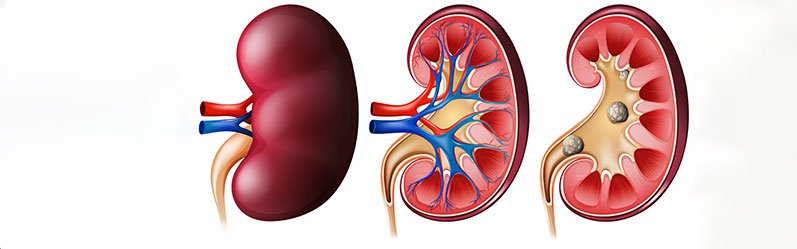
End-stage Renal Disease (ESRD), also called Stage 5 Chronic Kidney Disease, is the final and most severe stage of kidney failure. In this condition, the kidneys lose almost all their ability to filter waste, balance fluids, and maintain important body functions. Patients usually need dialysis or a kidney transplant to survive. In homeopathy, remedies are used only as supportive care to help reduce symptoms like fatigue, swelling, nausea, and weakness while improving overall comfort. ESRD is a life-threatening condition that requires ongoing specialist medical care.
(Images above show end-stage renal disease — shrunken, damaged kidneys, comparison with normal kidneys, dialysis treatment, and common symptoms like swelling and fatigue.)
Causes
End-stage renal disease usually develops from long-standing damage caused by:
- Long-term diabetes (diabetic nephropathy)
- High blood pressure (hypertensive nephrosclerosis)
- Chronic glomerulonephritis or other kidney inflammations
- Polycystic kidney disease, repeated infections, or obstructions
- Autoimmune diseases or prolonged use of certain medicines
Symptoms
Common symptoms in ESRD include:
- Severe fatigue, weakness, and shortness of breath
- Swelling (edema) in legs, ankles, face, or hands
- Decreased or no urine output, or sometimes increased urination at night
- Nausea, vomiting, loss of appetite, and metallic taste in mouth
- Itching, dry skin, muscle cramps, and bone pain
- Confusion, difficulty concentrating, or sleep problems
- High blood pressure and anemia
Homeopathy Medicines with Key Symptoms and Doses
Homeopathic remedies for end-stage renal disease are highly individualized based on the patient’s specific symptoms, constitution, and emotional state. They are used only as supportive care to ease discomfort and support vitality alongside dialysis or other medical treatment. The following are sometimes considered. Remedy selection must be determined only by a qualified homeopath after detailed case-taking, in close coordination with a nephrologist. These are general guidelines only.
Arsenicum Album For great weakness, restlessness, anxiety, burning pains, and thirst for small sips of water. Symptoms often worse at night. Typical use: 30C, 3-5 pellets 1-2 times daily (short term).
Apis Mellifica For marked swelling (edema) with burning and stinging pains. Urine is scanty and the patient feels better in open air or cold applications. Typical use: 30C, 3-5 pellets 1-2 times daily.
Serum Anguillae For kidney failure with high blood pressure, scanty urine, and fluid retention. Often used in uremic states. Typical use: 30C, 3-5 pellets 1-2 times daily (under expert guidance).
Lycopodium Clavatum For right-sided symptoms, bloating, weakness, and urine with red sediment. Digestive complaints are common. Typical use: 30C or 200C, 3-5 pellets 1-2 times daily.
Natrum Muriaticum For fluid retention with dryness of mouth, craving for salt, and emotional suppression. Typical use: 30C, 3-5 pellets 1-2 times daily.
Phosphorus For weakness, bleeding tendency, and thirst for cold drinks. Patient is sensitive and fearful. Typical use: 30C, 3-5 pellets 1-2 times daily (use cautiously).
China Officinalis For extreme debility and exhaustion after fluid loss or dialysis. Bloating and sensitivity to touch. Typical use: 30C, 3-5 pellets 1-2 times daily.
Carbo Vegetabilis For collapsed feeling, coldness, air hunger, and great weakness with slow recovery. Typical use: 30C, 3-5 pellets 1-2 times daily (short term).
Calcarea Carbonica For sluggish, fair, and sweaty persons with bone pains and constitutional weakness. Typical use: 30C or 200C, 3-5 pellets once or twice weekly.
Silicea For delicate constitution with slow healing, weakness, and tendency to suppuration or chronic complaints. Typical use: 6X or 30C, 3-5 pellets 1-2 times daily.
Important guidance: End-stage renal disease is diagnosed by blood tests (high creatinine, urea, low GFR <15), urine analysis, and ultrasound. Standard treatment includes hemodialysis, peritoneal dialysis, or kidney transplant along with strict diet control (low protein, low potassium, low phosphorus), fluid restriction, and medicines for blood pressure and anemia. Homeopathy may help relieve some symptoms and support quality of life as supportive care but must never replace nephrologist-supervised treatment or dialysis. Regular monitoring of electrolytes, hemoglobin, and kidney function is essential. This information is for educational purposes only and not a substitute for professional medical or homeopathic advice. Consult a qualified nephrologist immediately for any signs of advanced kidney disease, and a registered homeopath only for individualized supportive remedy selection under medical supervision. Early and consistent care can help manage symptoms and improve comfort.