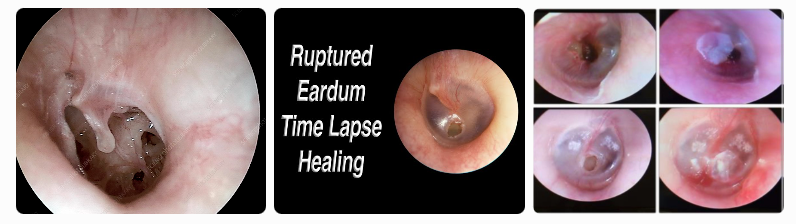
Eardrum Rupture (also known as perforated tympanic membrane) is a hole or tear in the thin membrane that separates the outer ear from the middle ear. It often occurs due to infection, trauma, or sudden pressure changes. Many small perforations heal on their own within weeks to months, but larger ones may need medical attention. In homeopathy, remedies are used only as supportive care to help reduce pain, inflammation, discharge, and promote natural healing of the eardrum. Eardrum rupture requires proper ENT evaluation to prevent complications like chronic infection or hearing loss.


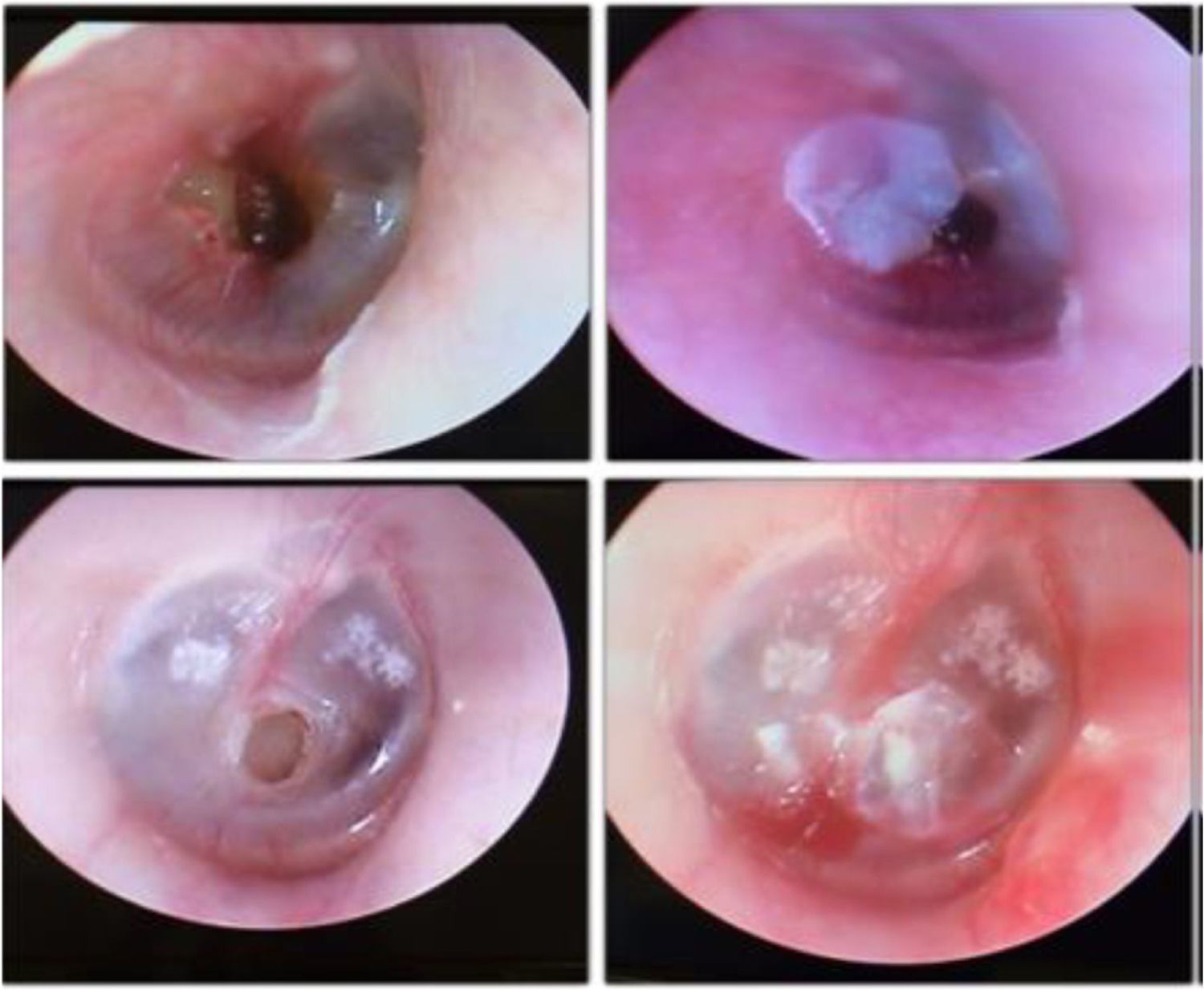
(Images above show eardrum rupture — a visible hole or perforation in the tympanic membrane on otoscopy, sometimes with fluid or inflammation.)
Causes
Eardrum rupture is commonly caused by:
- Severe middle ear infection (acute otitis media) with pus buildup and pressure
- Trauma (cotton bud injury, slap on the ear, or foreign object)
- Sudden loud noise or blast (acoustic trauma)
- Rapid pressure changes (diving, flying, or explosions)
- Chronic ear infections or previous ear surgery
Symptoms
Common symptoms include:
- Sudden sharp ear pain that may quickly decrease after rupture
- Hearing loss or muffled sounds in the affected ear
- Clear, bloody, or pus-like discharge from the ear
- Ringing in the ear (tinnitus) or dizziness
- Occasional fever or discomfort if infection is present
Homeopathy Medicines with Key Symptoms and Doses
Homeopathic remedies for eardrum rupture focus on pain relief, reducing discharge, and supporting healing. They are used only as supportive care alongside medical monitoring. The following are commonly considered. Remedy selection must be determined only by a qualified homeopath after detailed case-taking, in coordination with an ENT specialist. These are general guidelines only.
Belladonna For sudden, intense throbbing pain before or during rupture with red, hot ear and high fever. Typical use: 30C, 3-5 pellets 1-2 times daily (short term).
Hepar Sulphuris For sharp, stitching pain with extreme sensitivity to cold air or touch and tendency to pus formation. Typical use: 30C, 3-5 pellets 1-2 times daily (short term).
Silicea For slow-healing perforation with weakness, chronic discharge, and tendency to recurrent ear issues. Typical use: 6X or 30C, 3-5 pellets 1-2 times daily.
Mercurius Solubilis For offensive, pus-like discharge with shooting pains and night sweating. Typical use: 30C, 3-5 pellets 1-2 times daily (short term).
Pulsatilla For thick, yellowish discharge with mild pain and changeable symptoms. Better in open air. Typical use: 30C, 3-5 pellets 1-2 times daily.
Causticum For raw, burning sensation with dryness and ringing after rupture. Typical use: 30C, 3-5 pellets 1-2 times daily.
Kali Muriaticum For white or grayish thick discharge with blocked feeling and cracking sounds. Typical use: 6X or 30C, 3-5 pellets 1-2 times daily.
Symphytum For promoting healing of the perforated membrane, especially after trauma. Typical use: 30C, 3-5 pellets 1-2 times daily (under guidance).
Arnica Montana For eardrum rupture due to trauma or injury with soreness and bruising sensation. Typical use: 30C, 3-5 pellets 1-2 times daily (short term).
Graphites For chronic cases with sticky discharge and dry, cracked skin tendency. Typical use: 30C, 3-5 pellets 1-2 times daily.
Important guidance: Most small eardrum perforations heal spontaneously with ear dryness (keep water out) and avoiding pressure changes. Severe cases or those with persistent discharge, hearing loss, or infection may need antibiotics, ear drops, or surgical repair (tympanoplasty). Never insert anything into the ear. Homeopathy may help relieve pain and support healing as supportive care but must never replace proper ENT examination. This information is for educational purposes only and not a substitute for professional medical or homeopathic advice. Consult a qualified ENT specialist immediately for suspected eardrum rupture (sudden pain relief with discharge or hearing loss), and a registered homeopath for individualized supportive remedy selection. With timely care, most cases recover well without long-term complications.