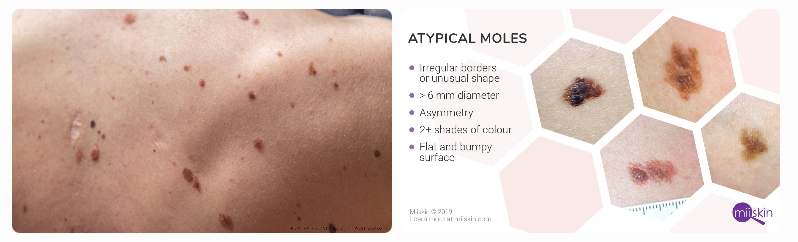
Dysplastic Nevus (also called atypical mole) is an unusual-looking mole that differs from common moles in size, shape, color, and border. It is a benign (non-cancerous) growth but serves as a marker for increased risk of developing melanoma, the most dangerous form of skin cancer. People with multiple dysplastic nevi or a family history are at higher risk. In homeopathy, remedies are used only as supportive care to help improve skin health, reduce any associated irritation, and support overall vitality. Dysplastic nevi must be monitored by a dermatologist — any changing or suspicious mole requires professional evaluation and possible biopsy.

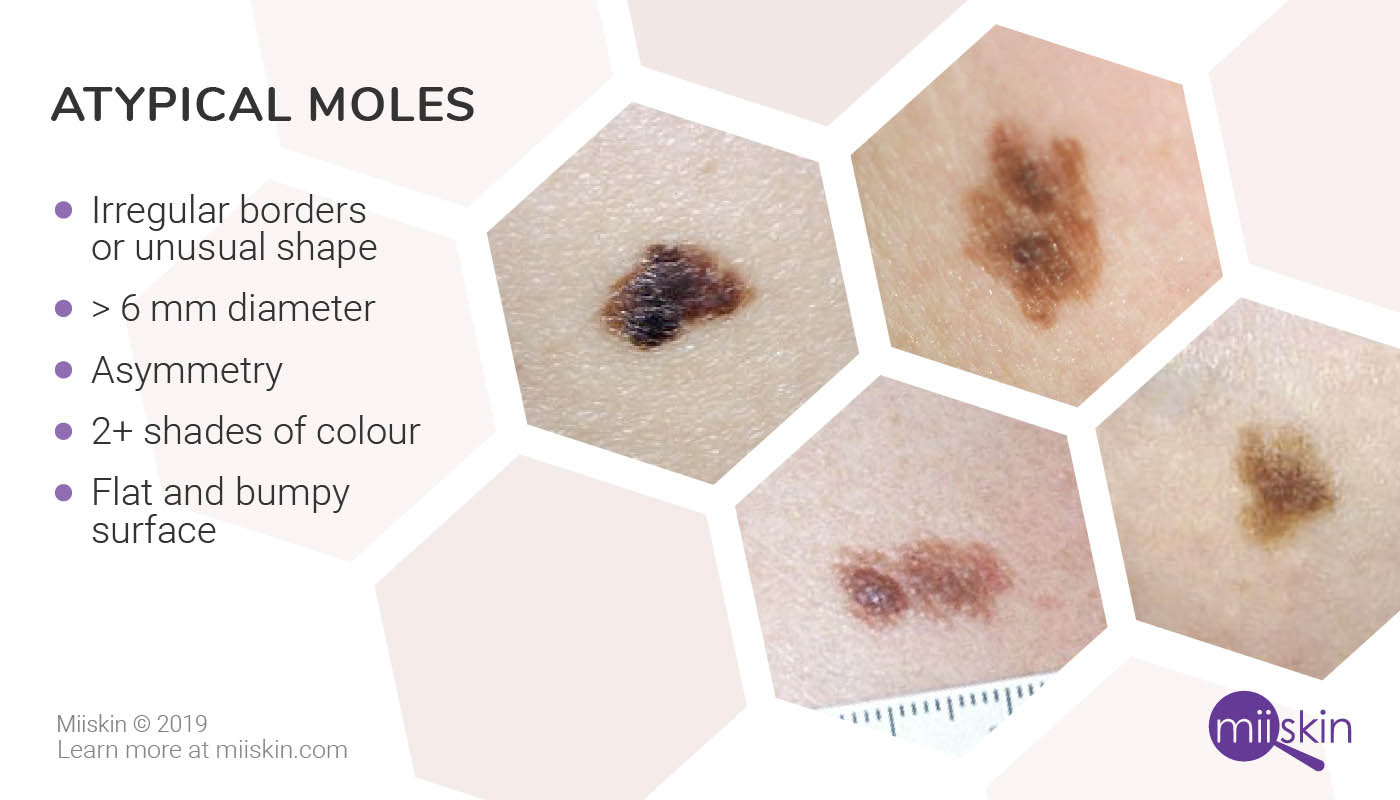
(Images above show dysplastic nevi — atypical moles with irregular borders, uneven color variation, larger size, and "fried-egg" appearance.)
Causes
Dysplastic nevi develop due to a combination of:
- Genetic predisposition (family history of atypical moles or melanoma)
- Excessive sun exposure or UV radiation, especially in childhood
- Fair skin that burns easily
- Immune system and melanocyte (pigment cell) abnormalities
Symptoms / Features
Dysplastic nevi are identified by the ABCDE rule (though not all apply perfectly):
- Asymmetry — one half does not match the other
- Border — irregular, notched, or blurred edges
- Color — varied shades (tan, brown, black, red, pink) within the same mole
- Diameter — usually larger than 5–6 mm
- Evolving — changes in size, shape, color, or symptoms like itching/bleeding
- Flat or slightly raised with a pebbly surface
Homeopathy Medicines with Key Symptoms and Doses
Homeopathic remedies for dysplastic nevus are selected based on the individual’s skin constitution, any associated symptoms (itching, sensitivity), and overall health. They are used only as supportive care alongside regular dermatological monitoring. The following are sometimes considered. Remedy selection must be determined only by a qualified homeopath after detailed case-taking, in close coordination with a dermatologist. These are general guidelines only.
Thuja Occidentalis For moles or skin growths with a tendency to warty or abnormal formations. Often indicated when there is a history of suppressed eruptions or vaccinations. Typical use: 30C, 3-5 pellets 1-2 times daily (short courses).
Sulphur For unhealthy skin with itching, burning, or rough texture. Useful as an intercurrent remedy when skin feels irritated or moles show unhealthy tendency. Typical use: 30C or 200C, sparingly (once weekly under guidance).
Calcarea Carbonica For fair, sweaty persons with constitutional sluggishness and tendency to skin abnormalities or slow-changing moles. Typical use: 30C or 200C, 3-5 pellets once or twice weekly.
Silicea For delicate skin with poor vitality and tendency to abnormal growths or slow-healing spots. Supports skin tissue strength. Typical use: 6X or 30C, 3-5 pellets 1-2 times daily.
Graphites For dry, cracked, or rough skin with sticky tendencies and abnormal pigmentation or mole-like growths. Typical use: 30C, 3-5 pellets 1-2 times daily.
Natrum Muriaticum For dry skin with pigmentation changes linked to emotional factors or sun sensitivity. Typical use: 30C, 3-5 pellets 1-2 times daily.
Arsenicum Album For burning or sensitive skin with anxiety and restlessness. Better from warmth. Typical use: 30C, 3-5 pellets 1-2 times daily (short term).
Phosphorus For sensitive skin with tendency to easy bleeding or changing moles in tall, slender persons. Typical use: 30C, 3-5 pellets 1-2 times daily (use cautiously).
Lycopodium Clavatum For right-sided or digestive-linked skin issues with lack of confidence. Typical use: 30C or 200C, 3-5 pellets 1-2 times daily.
Sepia For brownish pigmentation or skin changes in women with hormonal or exhaustion-related symptoms. Typical use: 30C, 3-5 pellets 1-2 times daily.
Important guidance: Dysplastic nevi themselves are benign, but having many of them or a family history increases melanoma risk. Regular self-examination and professional skin checks (dermoscopy) are essential. Any mole that changes in size, shape, color, or develops symptoms like itching, bleeding, or crusting should be evaluated promptly by a dermatologist — biopsy may be needed. Homeopathy may offer supportive benefits for general skin health but must never replace dermatological monitoring or surgical removal if recommended. Protect skin from excessive sun exposure, use broad-spectrum sunscreen, and avoid tanning beds. This information is for educational purposes only and not a substitute for professional medical or homeopathic advice. Consult a qualified dermatologist immediately for accurate assessment and management of any atypical moles, and a registered homeopath for individualized supportive remedy selection. Early detection of any suspicious changes greatly improves outcomes.