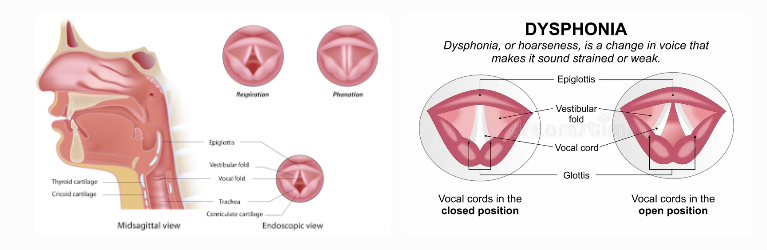
Dysphonia (commonly known as hoarseness) is a voice disorder in which the quality, pitch, loudness, or effort of the voice is altered, making it sound rough, raspy, strained, breathy, weak, or shaky. It occurs when the vocal cords (vocal folds) in the larynx (voice box) do not vibrate normally. Dysphonia can be temporary or chronic and affects daily communication, singing, or professional voice use. In homeopathy, remedies are used only as supportive care to help reduce inflammation, ease vocal strain, and support voice recovery. Dysphonia requires evaluation by an ENT specialist (otolaryngologist) to rule out serious causes like vocal cord nodules, polyps, paralysis, or tumors.
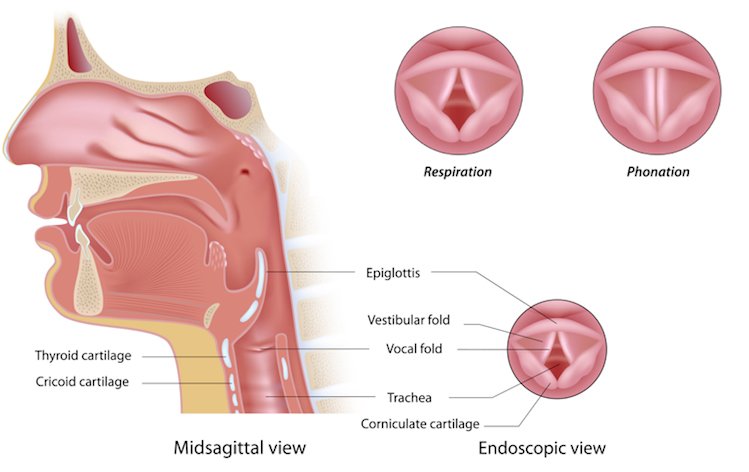

(Images above show the larynx and vocal cords — normal vocal cord position during breathing and phonation, and how irregularities can cause dysphonia or hoarseness.)
Causes
Dysphonia can result from:
- Overuse or misuse of voice (shouting, singing, prolonged talking)
- Acute laryngitis from viral infection or cold exposure
- Vocal cord nodules, polyps, cysts, or edema
- Acid reflux (GERD), smoking, alcohol, or irritants
- Neurological conditions (spasmodic dysphonia, vocal cord paralysis)
- Allergies, post-nasal drip, or thyroid problems
Symptoms
Common symptoms include:
- Hoarse, raspy, strained, or breathy voice
- Reduced voice volume or pitch changes
- Voice fatigue or breaking during speaking/singing
- Sore or dry throat with need to clear the throat frequently
- Pain or discomfort while speaking
- In chronic cases: complete loss of voice (aphonia) or persistent weakness
Homeopathy Medicines with Key Symptoms and Doses
Homeopathic remedies for dysphonia are selected based on the cause, voice quality, modalities, and the person’s constitution. The following are commonly considered for supportive management. Remedy selection must be determined only by a qualified homeopath after detailed case-taking, in coordination with an ENT doctor. These are general guidelines only. Voice rest is essential.
Causticum For hoarseness worse in the morning with rawness or paralysis-like weakness of vocal cords. Voice cracks or fades while speaking. Typical use: 30C, 3-5 pellets 1-2 times daily.
Phosphorus For hoarseness that worsens in the evening or with talking. Tickling in larynx leads to cough; voice is weak and breathy. Typical use: 30C, 3-5 pellets 1-2 times daily.
Argentum Metallicum Excellent for hoarseness from overuse of voice (singers, teachers). Sore, raw feeling in larynx with loss of voice power. Typical use: 30C, 3-5 pellets 1-2 times daily.
Arum Triphyllum For hoarseness with constant throat clearing and broken voice from vocal strain. Painful swallowing with raw sensation. Typical use: 30C, 3-5 pellets 1-2 times daily.
Spongia Tosta For dry, barking cough with hoarseness and sensation of a plug in the larynx. Worse from cold air. Typical use: 30C, 3-5 pellets 1-2 times daily.
Belladonna For sudden hoarseness with red, inflamed throat and painful swallowing. Throat feels constricted. Typical use: 30C, 3-5 pellets 1-2 times daily (short term).
Rhus Toxicodendron For hoarseness with stiffness and restlessness, better from warm drinks or continued use of voice. Typical use: 30C, 3-5 pellets 1-2 times daily.
Calcarea Carbonica For chronic hoarseness in fair, sweaty persons with constitutional sluggishness and tendency to catch cold easily. Typical use: 30C or 200C, 3-5 pellets once or twice weekly.
Carbo Vegetabilis For hoarseness with weak voice and air hunger; person feels exhausted after speaking. Typical use: 30C, 3-5 pellets 1-2 times daily.
Sulphur Often used as an intercurrent remedy in chronic hoarseness with burning or unhealthy tendency when other remedies do not hold. Typical use: 30C or 200C, sparingly (once weekly under guidance).
Important guidance: Most cases of dysphonia improve with voice rest, hydration, humidification, and avoiding irritants (smoking, shouting). Persistent hoarseness lasting more than 2–3 weeks needs ENT evaluation (laryngoscopy) to rule out serious issues. Homeopathy may help relieve inflammation and support voice recovery as supportive care but must never replace proper medical diagnosis and treatment. Avoid straining the voice and maintain good vocal hygiene. This information is for educational purposes only and not a substitute for professional medical or homeopathic advice. Consult a qualified ENT specialist immediately for accurate diagnosis and management (especially if hoarseness is accompanied by breathing difficulty, swallowing pain, or weight loss), and a registered homeopath for individualized supportive remedy selection. With proper care, most cases of dysphonia resolve well.