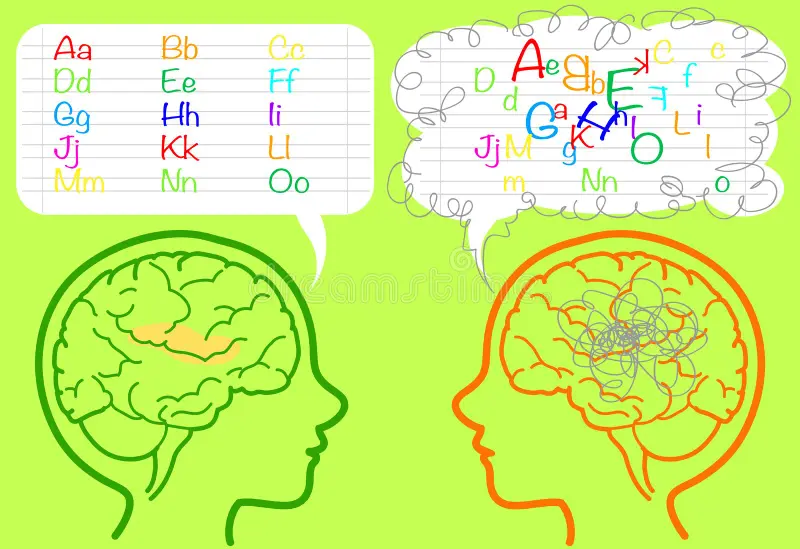
Dyslexia is a common learning difficulty that affects the way the brain processes written and spoken language. It is not related to intelligence — children and adults with dyslexia are often bright and creative, but they struggle with reading, spelling, writing, and sometimes speaking. It is a lifelong condition, but with proper support, early intervention, and specialized teaching methods, most people with dyslexia can learn effectively and succeed in life. In homeopathy, remedies are selected to support overall brain function, concentration, memory, confidence, and associated emotional issues. Homeopathy is used as supportive care only and works best along with educational therapies, special teaching techniques, and counseling.

(Images above illustrate how dyslexia affects reading and writing — letters may appear jumbled, reversed, or confusing in the brain, leading to difficulty in processing words normally.)
Causes
Dyslexia is mainly caused by:
- Genetic factors (it often runs in families)
- Differences in the way the brain processes language and sounds (neurobiological)
- It is not caused by poor vision, laziness, or lack of effort
Risk factors include family history of learning difficulties and sometimes premature birth or low birth weight.
Symptoms
Common symptoms usually appear when a child starts learning to read and write:
- Difficulty learning letter sounds and connecting them to words
- Slow or inaccurate reading, often skipping or mixing up letters/words
- Poor spelling and writing (reversing letters like b/d, p/q)
- Trouble remembering sequences (days of the week, phone numbers)
- Difficulty following multi-step instructions
- Low confidence, frustration, or avoidance of reading tasks
- Sometimes associated with poor handwriting or coordination
Homeopathy Medicines with Key Symptoms and Doses
Homeopathic remedies for dyslexia are chosen according to the child’s individual constitution, learning pattern, emotional state, and associated symptoms. The following are commonly considered to support cognitive function, memory, and confidence. Remedy selection must be done only by a qualified homeopath experienced in pediatric developmental cases after detailed case-taking. These are general guidelines only. Homeopathy works best along with structured educational support.
Baryta Carbonica Indicated for slow mental development, difficulty in learning, shyness, and poor memory for words or lessons. The child may appear timid and have delayed milestones. Typical use: 30C or 200C, 3-5 pellets once or twice weekly (sparingly).
Calcarea Carbonica Suited to fair, sweaty, chubby children who are slow in learning to read and write. They tire easily from mental effort and may have fear of failure. Typical use: 30C or 200C, 3-5 pellets once or twice weekly.
Silicea Helpful for delicate, sensitive children with poor concentration and slow assimilation of lessons. Supports nervous system strength and confidence. Typical use: 30C, 3-5 pellets 1-2 times daily (monitor closely).
Lycopodium Clavatum For children with lack of self-confidence, anticipatory anxiety before studies, and digestive issues. They may know the answer but forget it during exams. Typical use: 30C or 200C, 3-5 pellets 1-2 times daily.
Natrum Muriaticum Useful for emotionally reserved children who suppress feelings and have difficulty with memory or concentration due to emotional stress. Typical use: 30C, 3-5 pellets 1-2 times daily.
Anacardium Orientale Indicated when there is a feeling of mental block, poor memory for words, and lack of confidence. The child may feel two conflicting wills. Typical use: 30C, 3-5 pellets 1-2 times daily.
Medorrhinum A nosode sometimes used in developmental learning difficulties with a family history of chronic conditions. Supports when other remedies do not hold well. Typical use: 200C, single dose or very sparingly (under expert guidance).
Phosphorus For bright, affectionate but easily distracted children who fear the dark or being alone. Supports vitality and mental clarity. Typical use: 30C, 3-5 pellets 1-2 times daily (use cautiously).
Calcarea Phosphorica Helps in slow bone and mental development with poor memory and difficulty in schoolwork. Good for growing children with learning delays. Typical use: 6X or 30C, 3-5 pellets 1-2 times daily.
Agaricus Muscarius For clumsy, twitching children with poor coordination and difficulty focusing on studies. Useful when neurological symptoms are present. Typical use: 30C, 3-5 pellets 1-2 times daily.
Important guidance: Dyslexia requires specialized educational support such as multisensory teaching methods (Orton-Gillingham approach), extra time in exams, and speech-language therapy. Early diagnosis and intervention give the best results. Homeopathy may help improve concentration, confidence, and overall development as supportive care but cannot cure the condition. This information is for educational purposes only and not a substitute for professional medical or homeopathic advice. Consult a qualified pediatrician or neurologist for assessment and a registered homeopath experienced in learning difficulties for individualized remedy selection. With right support, children with dyslexia can excel in many areas of life.