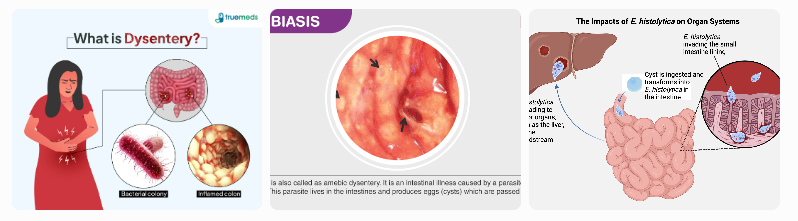
Amoebic Dysentery (also known as Amoebiasis) is an intestinal infection caused by the protozoan parasite Entamoeba histolytica. It mainly affects the large intestine (colon), leading to inflammation and ulceration of the intestinal lining. It is more common in areas with poor sanitation and can spread through contaminated food or water. In homeopathy, remedies are used only as supportive care to help relieve symptoms like abdominal pain, tenesmus, and loose stools while supporting recovery. Amoebic dysentery is a medical condition that requires proper diagnosis and conventional treatment, especially with antiparasitic medicines in moderate to severe cases.
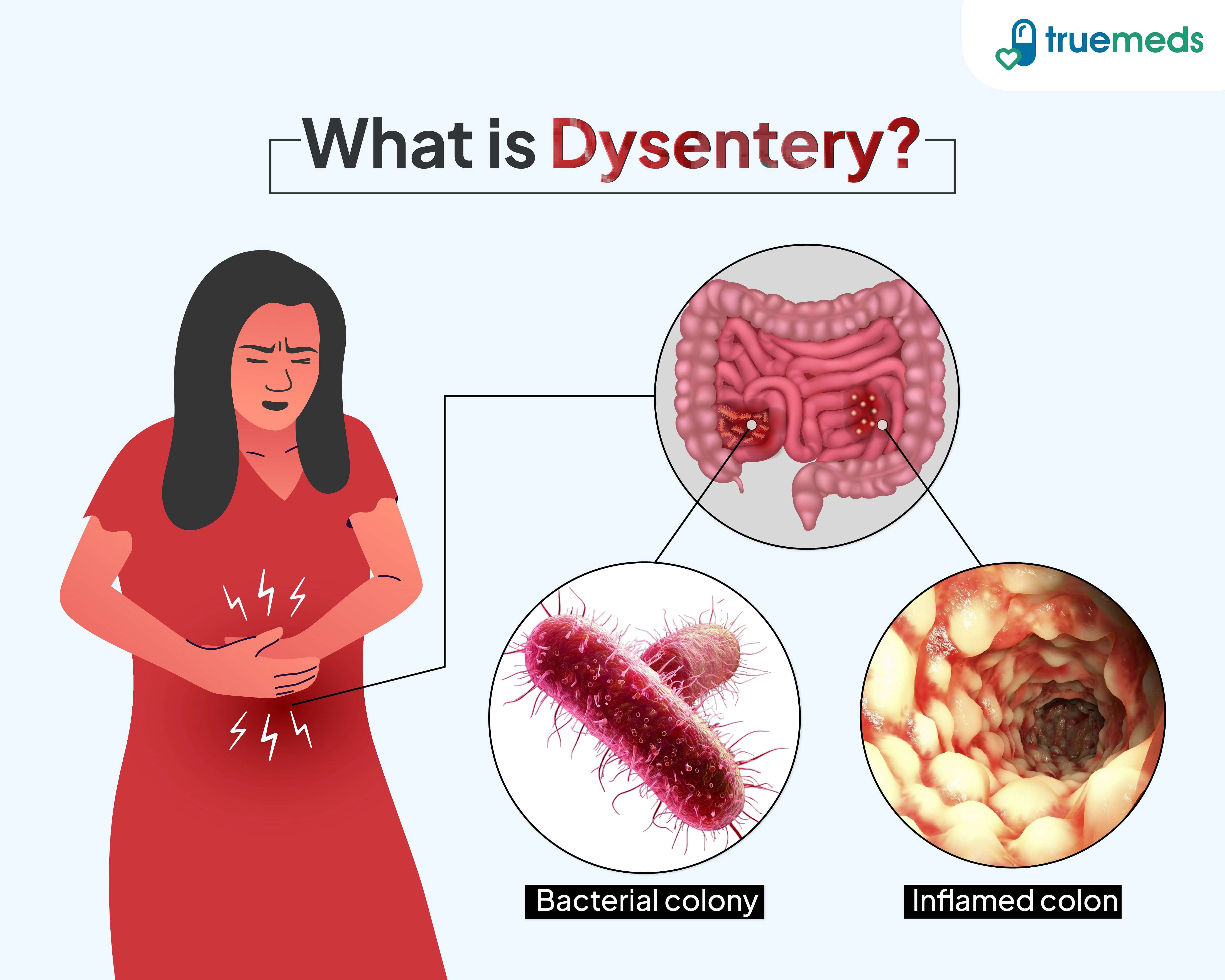
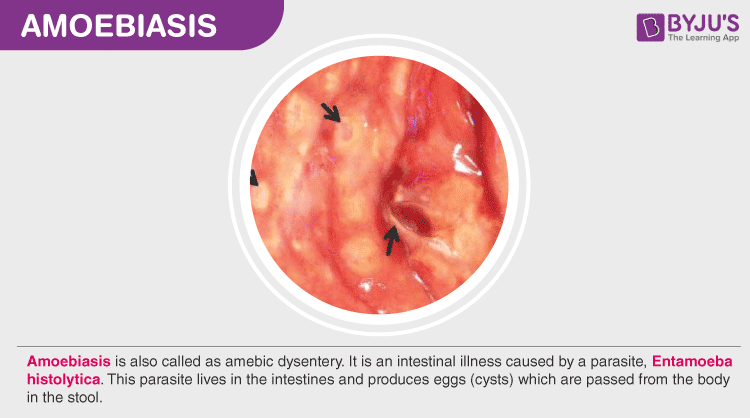

(Images above show amoebic dysentery — inflammation of the colon, presence of the parasite Entamoeba histolytica, and typical bloody-mucoid stools.)
Causes
Amoebic dysentery is primarily caused by:
- Ingestion of cysts of Entamoeba histolytica through contaminated food, water, or hands
- Poor hygiene and sanitation
- Crowded living conditions or travel to endemic areas
- Weakened immunity (in children, elderly, or malnourished persons)
Symptoms
Common symptoms include:
- Frequent loose stools mixed with blood and mucus (often called “bloody dysentery”)
- Severe abdominal cramps and pain
- Tenesmus (painful straining with feeling of incomplete evacuation)
- Fatigue, loss of appetite, and mild fever
- In severe cases: dehydration, weight loss, or complications like liver abscess
Homeopathy Medicines with Key Symptoms and Doses
Homeopathic remedies for amoebic dysentery are selected based on the character of stool, pain, tenesmus, and the person’s constitution. The following are commonly considered for supportive management. Remedy selection must be determined only by a qualified homeopath after detailed case-taking, in coordination with a doctor. These are general guidelines only.
Mercurius Corrosivus For dysentery with intense tenesmus, bloody and mucous stools, and burning pain in the rectum. Stools are frequent and scanty. Typical use: 30C, 3-5 pellets 1-2 times daily (short term).
Nux Vomica For dysentery with constant urging, cramping pain, and irritability. Stools are small and frequent with incomplete evacuation. Typical use: 30C, 3-5 pellets 1-2 times daily.
Aloe Socotrina For jelly-like mucus in stools with sudden urging and loss of control. Burning and soreness in the rectum. Typical use: 30C, 3-5 pellets 1-2 times daily.
Arsenicum Album For burning pain in the abdomen and rectum with great anxiety, restlessness, and thirst for small sips. Stools are offensive. Typical use: 30C, 3-5 pellets 1-2 times daily (short term).
Ipecacuanha For dysentery with nausea, vomiting, and clean tongue. Stools contain blood and mucus with constant nausea. Typical use: 30C, 3-5 pellets 1-2 times daily.
Colocynthis For severe colicky abdominal pain relieved by bending double or pressure. Dysentery with cutting pains. Typical use: 30C, 3-5 pellets 1-2 times daily.
Podophyllum Peltatum For profuse, gushing stools with jelly-like mucus and little pain. Useful in early stages with liver involvement. Typical use: 30C, 3-5 pellets 1-2 times daily.
Sulphur Often used as an intercurrent remedy in chronic or recurrent cases with burning sensations and unhealthy tendency. Typical use: 30C or 200C, sparingly (once weekly under guidance).
China Officinalis For marked weakness, debility, and bloating after fluid loss from dysentery. Typical use: 30C, 3-5 pellets 1-2 times daily.
Carbo Vegetabilis For collapse-like state with coldness, air hunger, and offensive stools in severe cases. Typical use: 30C, 3-5 pellets 1-2 times daily (short term).
Important guidance: Amoebic dysentery can lead to dehydration and serious complications like liver abscess if untreated. Conventional treatment with antiparasitic drugs (such as metronidazole) and supportive care (hydration, electrolytes) is often necessary. Homeopathy may help relieve symptoms and support recovery as supportive care but must never replace proper medical diagnosis and treatment. Maintain strict hygiene, drink clean water, and avoid raw foods in risk areas. This information is for educational purposes only and not a substitute for professional medical or homeopathic advice. Consult a qualified doctor immediately for stool examination and treatment if you have bloody-mucoid diarrhea, severe pain, or fever, and a registered homeopath for individualized supportive remedy selection. Early and complete treatment prevents long-term issues.