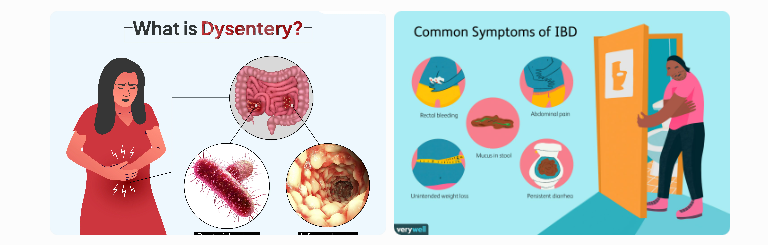
Dysentery is a serious intestinal infection that causes inflammation of the large intestine (colon). It leads to frequent, painful diarrhea with blood and mucus in the stools. There are two main types: bacillary dysentery (caused by bacteria like Shigella) and amoebic dysentery (caused by a parasite called Entamoeba histolytica). It spreads easily through contaminated food, water, or poor hygiene. In homeopathy, remedies are chosen based on the exact nature of the stool, pain, and the person’s symptoms. Homeopathy can provide supportive relief for pain, tenesmus, and weakness, but it is not a substitute for medical treatment. Severe dysentery needs prompt conventional care with hydration, antibiotics (for bacterial) or anti-parasitic drugs (for amoebic).
:max_bytes(150000):strip_icc()/ibd-symptoms-1942663-color-84819923811f4d978d30621228abdad0.jpg)
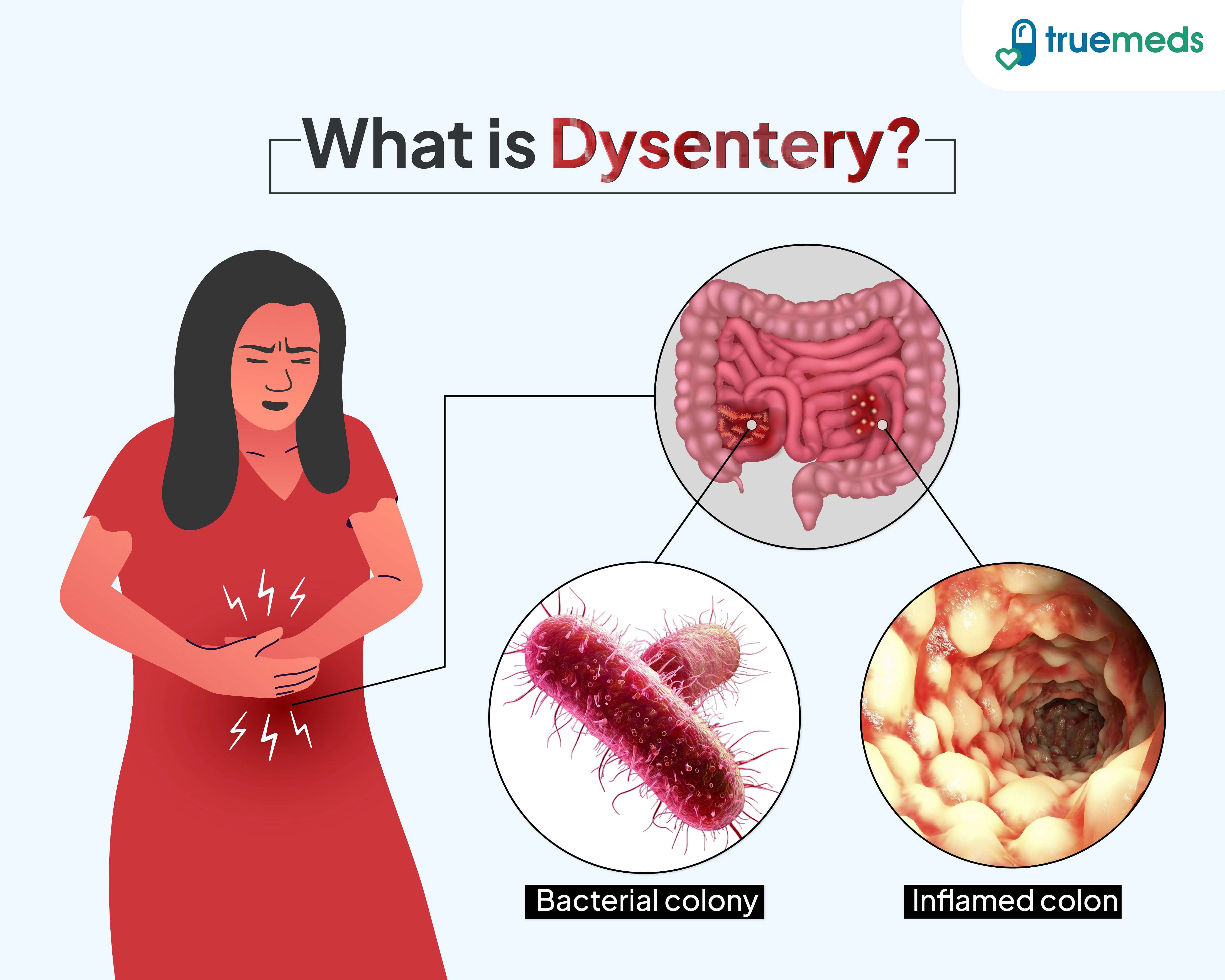
(Images above show typical features of dysentery — severe abdominal pain, inflamed colon, bloody and mucous stools, and rectal bleeding.)
Causes
Dysentery is mainly caused by:
- Bacteria (Shigella) – spreads through contaminated food and water
- Parasite (Entamoeba histolytica) – common in areas with poor sanitation
- Poor hand hygiene, drinking unsafe water, or eating unhygienic food
- Overcrowding and low immunity
Symptoms
Common symptoms include:
- Frequent loose stools with blood and mucus (may look like red jelly)
- Severe abdominal cramps and pain
- Constant urge to pass stool (tenesmus) even after passing
- Burning or cutting pain in the rectum
- Fever, weakness, and loss of appetite
- Dehydration, nausea, or vomiting in severe cases
Homeopathy Medicines with Key Symptoms and Doses
Homeopathic remedies work best when matched to the individual symptom picture. The following are commonly considered for dysentery. Remedy selection must be done by a qualified homeopath after proper case-taking. These are general guidelines only. Use only as supportive care along with medical treatment and hydration.
Mercurius Corrosivus Best for dysentery with intense burning and cutting pain in the rectum. Stools are bloody, slimy, and passed with great straining. Tenesmus is very severe and does not get relieved after passing stool. Typical use: 30C, 3-5 pellets 1-2 times daily (short term under guidance).
Nux Vomica Useful when there is frequent urging with small quantities of stool passed. Patient feels irritable, has abdominal cramps, and symptoms come from overeating or stress. Typical use: 30C, 3-5 pellets 1-2 times daily.
Aloe Socotrina Indicated for dysentery with jelly-like mucus and a constant bearing-down sensation in the rectum. Stools are loose with burning after passing. Typical use: 30C, 3-5 pellets 1-2 times daily.
Arsenicum Album For dysentery with great weakness, anxiety, and burning pain. Stools are offensive and watery with blood. Patient feels chilly and wants small sips of water. Typical use: 30C, 3-5 pellets 1-2 times daily during weakness.
Podophyllum Peltatum Helpful when stools are profuse, gushing, and contain mucus and blood. There is loud gurgling in the abdomen and weakness after stool. Typical use: 30C, 3-5 pellets 1-2 times daily.
Colocynthis For severe colicky abdominal pain that makes the person bend double. Pain is relieved by hard pressure or bending forward. Typical use: 30C, 3-5 pellets 1-2 times daily.
Ipecacuanha Useful in early stages with constant nausea and vomiting along with dysentery. Tongue is clean despite nausea. Typical use: 30C, 3-5 pellets 1-2 times daily.
Rhus Toxicodendron Indicated when there is restlessness with aching pains in the limbs and abdomen. Symptoms are better from warmth and movement. Typical use: 30C, 3-5 pellets 1-2 times daily.
China Officinalis For dysentery with marked weakness and exhaustion after loss of fluids. Patient feels very debilitated. Typical use: 30C, 3-5 pellets 1-2 times daily.
Sulphur Often used as an intercurrent remedy in stubborn or chronic cases with burning in the anus after stool. Patient feels warm and itchy. Typical use: 30C or 200C, sparingly (once weekly under guidance).
Important guidance: Dysentery can cause dangerous dehydration, so drink plenty of oral rehydration solution (ORS), coconut water, or clean fluids. Maintain strict hygiene to prevent spread. If there is high fever, severe pain, blood in large amounts, or signs of dehydration (dry mouth, dizziness, reduced urine), seek immediate medical help. Homeopathy may help relieve symptoms but must not replace proper diagnosis and conventional treatment (antibiotics or anti-amoebic drugs). This information is for educational purposes only. Consult a qualified doctor for testing and treatment, and a registered homeopath for individualized remedy selection. Early and proper care prevents complications.