Dysautonomia (also called autonomic dysfunction or autonomic neuropathy) is a group of disorders in which the autonomic nervous system (ANS) does not work properly. The ANS automatically controls vital functions such as heart rate, blood pressure, digestion, sweating, temperature regulation, bladder function, and breathing. When it malfunctions, symptoms can be widespread and unpredictable. Common forms include POTS (Postural Orthostatic Tachycardia Syndrome), orthostatic hypotension, and others. In homeopathy, remedies are used only as supportive care to help regulate the nervous system, reduce symptoms like dizziness or fatigue, and improve overall balance. Dysautonomia often requires conventional medical management and lifestyle support.
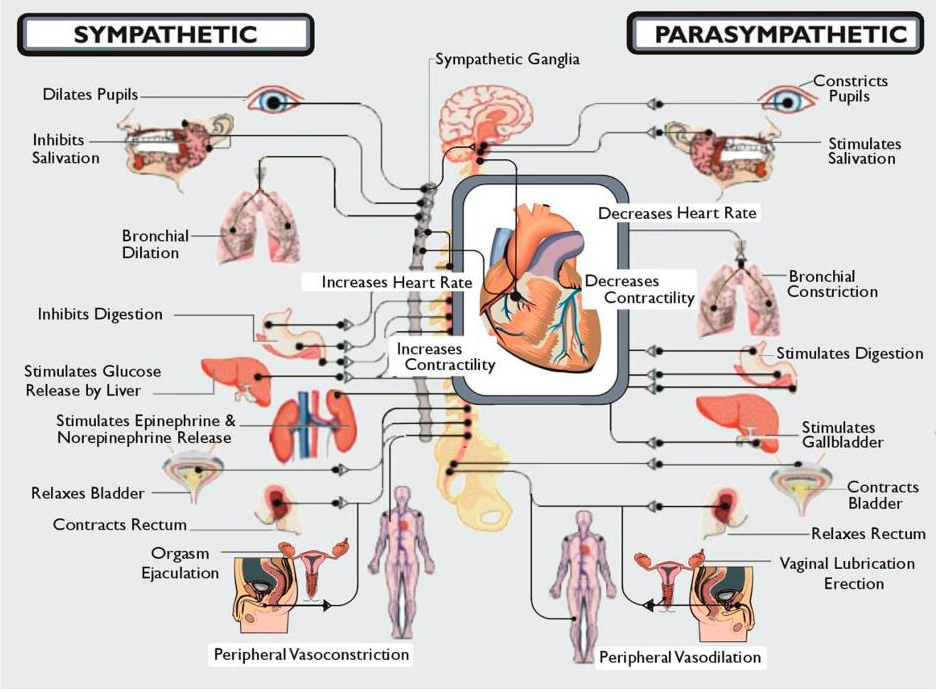
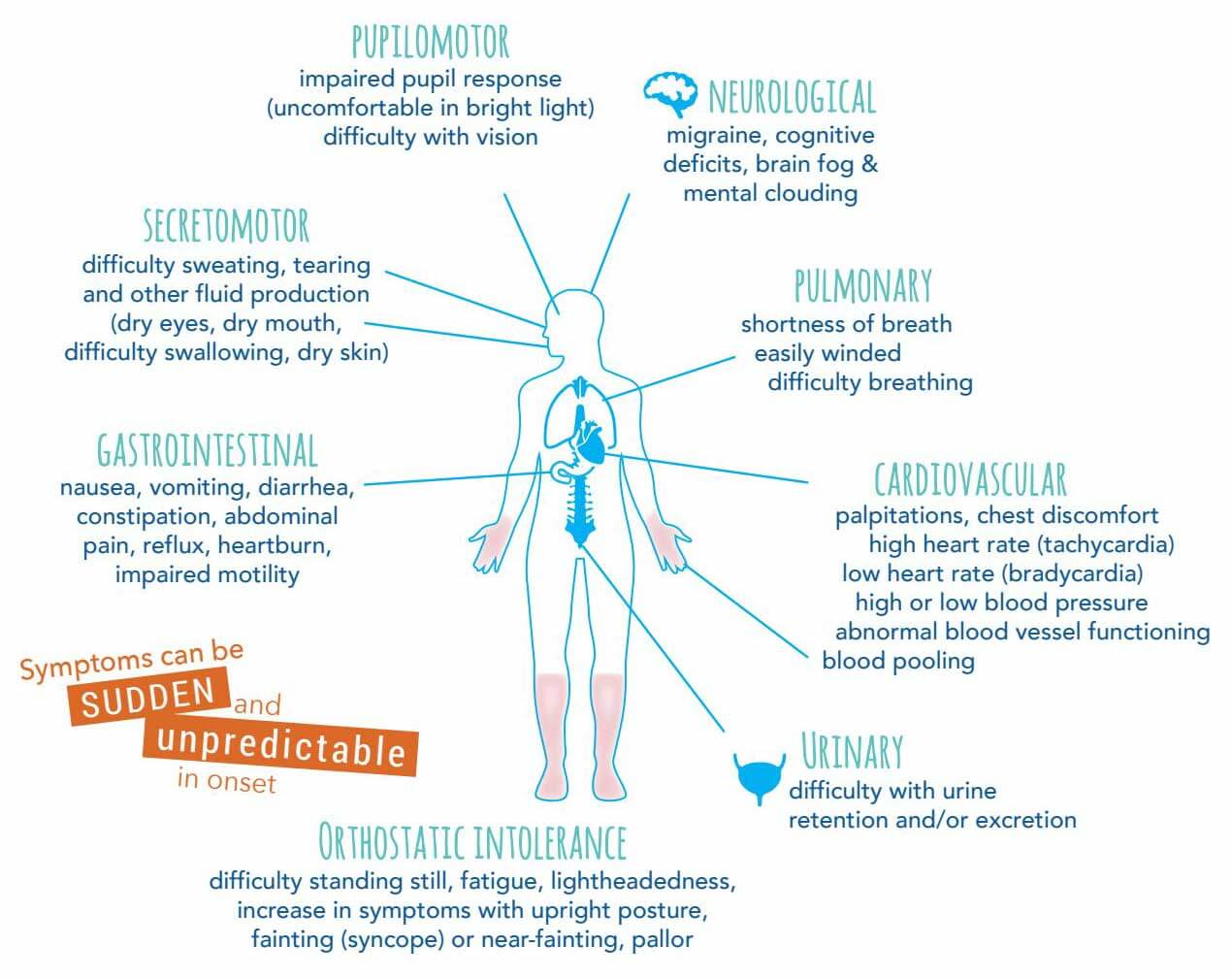
(Images above illustrate the autonomic nervous system and common symptoms of dysautonomia affecting multiple body systems.)
Causes
Dysautonomia can be primary (occurs on its own) or secondary (due to another condition). Common causes include:
- Genetic or inherited disorders (e.g., familial dysautonomia)
- Autoimmune conditions or post-viral syndromes (including after COVID-19)
- Diabetes, Parkinson’s disease, or multiple sclerosis
- Trauma, surgery, or certain medications
- Connective tissue disorders (e.g., Ehlers-Danlos syndrome)
Symptoms
Symptoms vary widely and can fluctuate. Common ones include:
- Dizziness, lightheadedness, or fainting upon standing (orthostatic intolerance)
- Rapid or slow heart rate (tachycardia or bradycardia)
- Fatigue, brain fog, and exercise intolerance
- Temperature dysregulation (feeling too hot or cold), abnormal sweating
- Digestive issues (nausea, bloating, constipation, or diarrhea)
- Bladder problems or sexual dysfunction
- Anxiety, palpitations, shortness of breath, or sleep disturbances
Homeopathy Medicines with Key Symptoms and Doses
Homeopathic remedies for dysautonomia are highly individualized based on the dominant symptoms, triggers, and the person’s constitution. The following are commonly considered for supportive management. Remedy selection must be determined only by a qualified homeopath experienced in autonomic or neurological conditions after detailed case-taking, in coordination with a neurologist or specialist. These are general guidelines only.
Gelsemium Sempervirens For dizziness, trembling, heaviness of eyelids, and weakness with anticipatory anxiety. Symptoms often worsen with fright or sudden movement. Typical use: 30C, 3-5 pellets 1-2 times daily.
Arsenicum Album For great anxiety, restlessness, and burning sensations with chilliness. The person feels better from warmth and small sips of water. Useful in orthostatic symptoms. Typical use: 30C, 3-5 pellets 1-2 times daily (short term).
Natrum Muriaticum For emotionally reserved persons with chronic fatigue, headaches, and symptoms linked to grief or suppressed emotions. Typical use: 30C or 200C, 3-5 pellets 1-2 times daily or sparingly.
Lycopodium Clavatum For bloating, digestive weakness, lack of confidence, and symptoms worse in the late afternoon. Right-sided complaints are common. Typical use: 30C or 200C, 3-5 pellets 1-2 times daily.
Phosphorus For tall, thin, sensitive individuals with weakness, anxiety, and circulatory instability. Craves cold drinks. Typical use: 30C, 3-5 pellets 1-2 times daily (use cautiously).
Carbo Vegetabilis For air hunger, coldness, and extreme exhaustion with desire to be fanned. Useful in collapse-like states or poor circulation. Typical use: 30C, 3-5 pellets 1-2 times daily (short term).
Pulsatilla Nigricans For changeable symptoms with mild, weepy nature. The person feels better in open air and craves sympathy. Typical use: 30C, 3-5 pellets 1-2 times daily.
Sepia Officinalis Especially in women with hormonal imbalance, indifference, and fatigue along with autonomic symptoms. Typical use: 30C, 3-5 pellets 1-2 times daily (under guidance).
Silicea For delicate, chilly persons with poor assimilation and recurrent symptoms affecting nervous system strength. Typical use: 6X or 30C, 3-5 pellets 1-2 times daily.
Sulphur Often used as an intercurrent remedy in chronic cases with heat intolerance, burning sensations, or when well-selected remedies stall. Typical use: 30C or 200C, sparingly (once weekly under guidance).
Important guidance: Dysautonomia management focuses on treating any underlying cause, increasing fluid and salt intake (as advised), compression garments, graded exercise, and medications for heart rate or blood pressure when needed. Lifestyle measures like avoiding heat, large meals, and prolonged standing are crucial. Homeopathy may help ease symptoms and support nervous system balance as supportive care but must never replace medical evaluation and conventional treatment. If symptoms include severe fainting, chest pain, or breathing difficulty, seek immediate medical help. This information is for educational purposes only and not a substitute for professional medical or homeopathic advice. Consult a qualified neurologist or autonomic specialist for accurate diagnosis and management, and a registered homeopath for individualized supportive remedy selection. With proper care, many people with dysautonomia can improve their quality of life significantly.