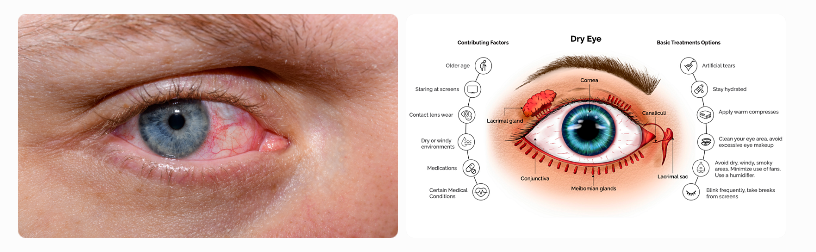
Dry Eye Syndrome (also called Dry Eye Disease) is a common condition where the eyes do not produce enough tears or the tears evaporate too quickly. This leads to insufficient lubrication and protection of the eye surface. It can cause discomfort and, if left untreated, may damage the cornea. In homeopathy, remedies are chosen based on the individual’s specific symptoms, sensation of dryness, burning, or associated factors. Homeopathy provides supportive care to improve tear quality and reduce discomfort, but it works best along with conventional treatments like artificial tears.
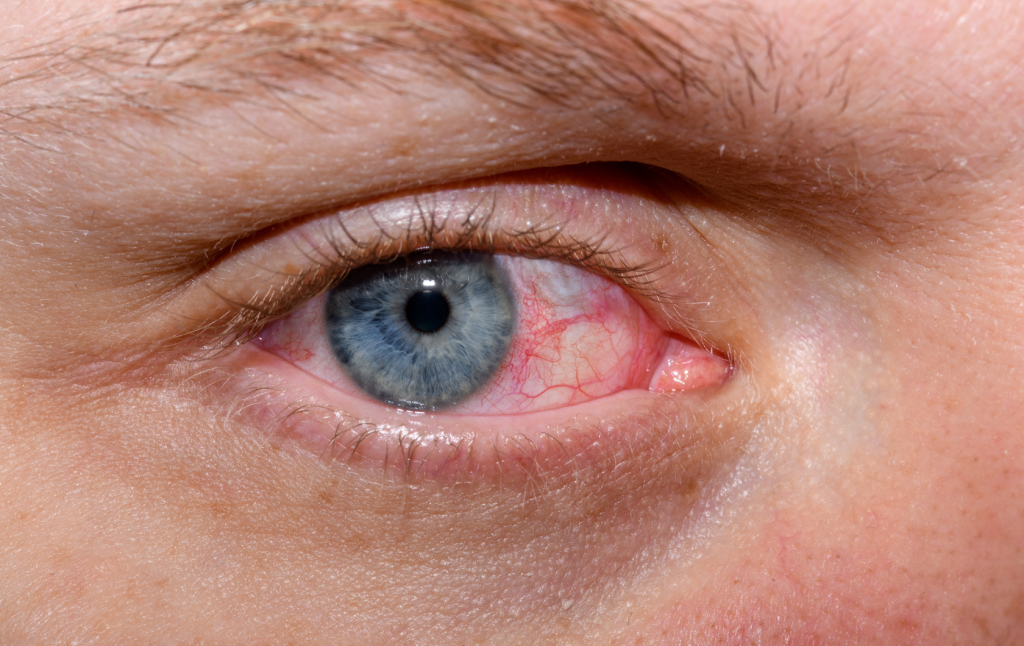

(Images above show typical signs of dry eye syndrome — red, irritated eyes with visible blood vessels, and an illustration of reduced tear film and inflamed ocular surface.)
Causes
Dry Eye Syndrome occurs due to:
- Reduced tear production (aqueous deficient dry eye)
- Increased tear evaporation (evaporative dry eye, often due to meibomian gland dysfunction)
- Aging, hormonal changes (especially in women after menopause)
- Prolonged screen time, air conditioning, or dry/windy environments
- Side effects of medications, contact lens wear, or autoimmune conditions (like Sjogren’s syndrome)
Symptoms
Common symptoms include:
- Burning, stinging, or gritty sensation in the eyes
- Feeling of dryness or foreign body in the eye
- Redness and irritation
- Watery eyes (paradoxical tearing as a reflex)
- Blurred vision that improves with blinking
- Difficulty wearing contact lenses
- Eye fatigue, especially after reading or screen use
- Sensitivity to light or wind
Homeopathy Medicines with Key Symptoms and Doses
Homeopathic remedies are selected according to the exact symptom picture. The following are commonly considered for Dry Eye Syndrome. Remedy selection must be done by a qualified homeopath after detailed case-taking. These are general guidelines only.
Natrum Muriaticum Indicated for dry, gritty eyes with a sensation of sand in the eyes. There may be burning and excessive watering as a reflex. Suited to emotionally reserved persons who crave salt. Typical use: 30C, 3-5 pellets 1-2 times daily.
Euphrasia Officinalis One of the top remedies for dry eyes with burning, smarting, and profuse watering. Eyes feel irritated as if full of smoke; eyelids may stick together in the morning. Typical use: 30C, 3-5 pellets 1-2 times daily.
Alumina Useful for very dry eyes with dryness of mucous membranes. The person may have difficulty opening eyes in the morning and a sensation of dryness extending to the throat. Typical use: 30C, 3-5 pellets 1-2 times daily.
Belladonna For acute redness, burning, and throbbing pain in dry eyes with sensitivity to light. Eyes appear bright red and hot. Typical use: 30C, 3-5 pellets 1-2 times daily (short term).
Arsenicum Album Indicated for burning dryness with restlessness and anxiety. The person feels chilly but burning improves with warm applications. Typical use: 30C, 3-5 pellets 1-2 times daily.
Sulphur Helpful in chronic dry eyes with burning, itching, and redness. Symptoms are worse from heat and bathing; the person feels warm-blooded. Typical use: 30C or 200C, sparingly (once weekly under guidance).
Graphites For dry, cracked eyelids with sticky discharge and roughness. Useful when there is associated skin dryness or constipation. Typical use: 30C, 3-5 pellets 1-2 times daily.
Rhus Toxicodendron For dry eyes with stiffness and pain that improves with movement or warm applications. Often associated with rheumatic complaints. Typical use: 30C, 3-5 pellets 1-2 times daily.
Pulsatilla Nigricans For changeable symptoms with thick, yellowish discharge and mild, weepy disposition. Symptoms are better in open air. Typical use: 30C, 3-5 pellets 1-2 times daily.
Silicea Indicated for delicate persons with dry eyes, recurrent styes, and poor assimilation. Supports overall vitality and tissue strength. Typical use: 6X or 30C, 3-5 pellets 1-2 times daily.
Important guidance: Simple measures like the 20-20-20 rule (every 20 minutes look 20 feet away for 20 seconds), using a humidifier, staying hydrated, and avoiding direct fan/AC on the face help a lot. Artificial tears (lubricating eye drops) are often the first line of treatment. If symptoms are severe, persistent, or accompanied by pain, vision changes, or redness, consult an ophthalmologist immediately. Homeopathy can be used as supportive care but should be individualized. This information is for educational purposes only and not a substitute for professional medical or homeopathic advice. Consult a qualified eye specialist for proper diagnosis and management, and a registered homeopath for personalized remedy selection. Regular eye care prevents complications.