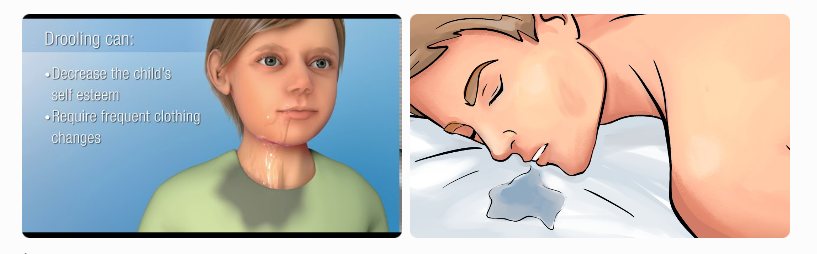
Drooling (also known as sialorrhea or excessive salivation) is the unintentional flow of saliva from the mouth. It is common in infants during teething but can be a troublesome symptom in older children and adults when it becomes persistent. Drooling may occur during sleep, while eating, or throughout the day and can affect speech, social confidence, and skin around the mouth. In homeopathy, remedies are used only as supportive care to help regulate saliva production, improve swallowing, and support nervous system control. Homeopathy does not replace treatment of the underlying cause.

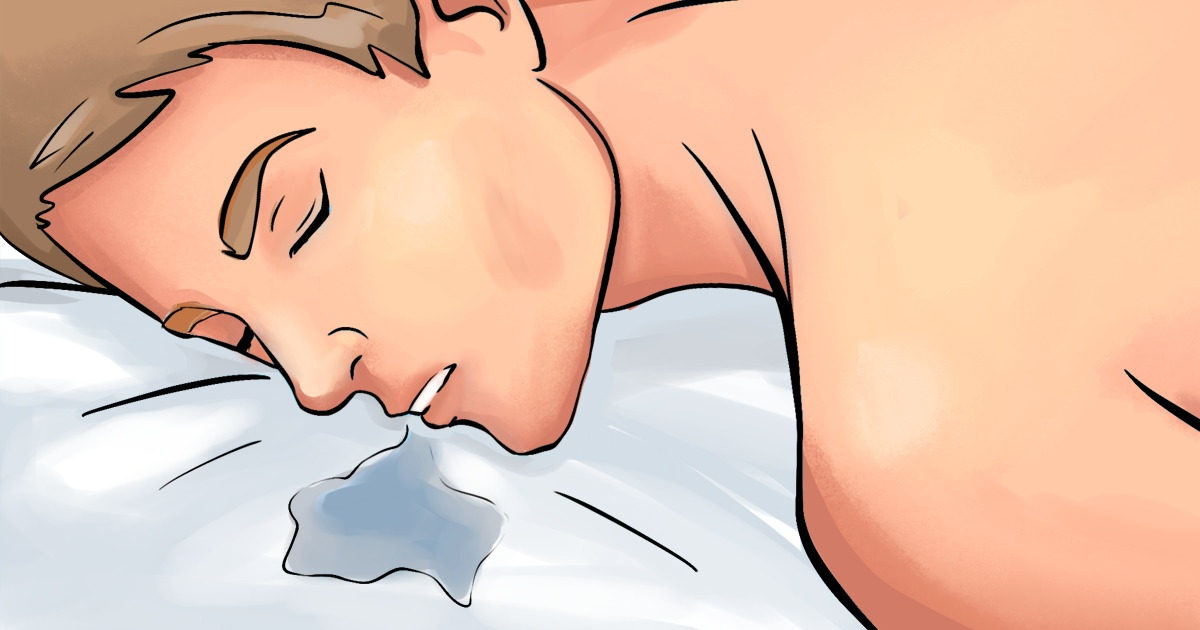
(Images above show typical drooling — saliva dripping from the mouth, especially noticeable during sleep or in children.)
Causes
Drooling can result from:
- Increased saliva production (teething, mouth infections, acid reflux)
- Difficulty swallowing due to weak mouth muscles or poor coordination
- Neurological conditions (cerebral palsy, Parkinson’s disease, stroke, or developmental delays)
- Nasal congestion or allergies forcing mouth breathing
- Side effects of certain medications or relaxed facial muscles during sleep
Symptoms
Common symptoms include:
- Constant or frequent saliva dripping from the mouth
- Wet chin, clothes, or pillow (especially at night)
- Skin irritation or rash around the mouth and chin
- Difficulty speaking clearly or swallowing
- Embarrassment or social discomfort in older children and adults
- In severe cases: choking episodes or recurrent chest infections from aspiration
Homeopathy Medicines with Key Symptoms and Doses
Homeopathic remedies for drooling are selected according to the individual’s constitution, associated symptoms, and triggers. The following are commonly considered for supportive management. Remedy selection must be determined only by a qualified homeopath after detailed case-taking, especially in children or neurological cases. These are general guidelines only.
Mercurius Solubilis One of the top remedies for excessive salivation with offensive breath and swollen gums or tongue. Drooling is worse at night; the person may have trembling tongue. Typical use: 30C, 3-5 pellets 1-2 times daily (short term).
Baryta Carbonica Useful for drooling in children with delayed development, slow learning, and enlarged tonsils. The child may have a timid nature. Typical use: 30C or 200C, 3-5 pellets once or twice weekly (sparingly).
Calcarea Carbonica Suited to fair, sweaty, chubby children who drool during teething or sleep. They tire easily and have slow milestones. Typical use: 30C or 200C, 3-5 pellets once or twice weekly.
Pulsatilla Nigricans For mild, changeable drooling with thick saliva. The person feels better in open air and craves sympathy; symptoms are worse in warm rooms. Typical use: 30C, 3-5 pellets 1-2 times daily.
Silicea For delicate children with drooling and recurrent infections. Supports weak constitution and poor assimilation. Typical use: 6X or 30C, 3-5 pellets 1-2 times daily.
Cham Chamomilla For irritable children with drooling during teething. The child is very fussy, wants to be carried, and has one red cheek. Typical use: 30C, 3-5 pellets 1-2 times daily (short term).
Hyoscyamus Niger For drooling with twitching or picking motions, especially in neurological cases. The person may be restless or suspicious. Typical use: 30C, 3-5 pellets 1-2 times daily.
Gelsemium Sempervirens For drooling with heaviness of eyelids and general weakness or trembling. Symptoms worsen with anticipation or fright. Typical use: 30C, 3-5 pellets 1-2 times daily.
Natrum Muriaticum For emotionally reserved persons with drooling linked to grief or stress. There may be dryness of mouth alternating with excess saliva. Typical use: 30C, 3-5 pellets 1-2 times daily.
Sulphur Often used as an intercurrent remedy in chronic cases with unhealthy skin tendency, heat, and burning sensations. Typical use: 30C or 200C, sparingly (once weekly under guidance).
Important guidance: Mild drooling in infants during teething is normal and usually resolves on its own. Persistent drooling in older children or adults needs medical evaluation to identify the root cause (neurological, dental, or ENT issues). Treatment may include speech therapy, oral motor exercises, medications to reduce saliva, or botox injections in severe cases. Homeopathy may help regulate saliva flow and support overall health as supportive care but must not replace proper diagnosis and conventional management. Maintain good oral hygiene and consult specialists (pediatrician, neurologist, or ENT) when needed. This information is for educational purposes only and not a substitute for professional medical or homeopathic advice. Consult a qualified doctor for thorough evaluation and a registered homeopath for individualized supportive remedy selection. With proper care, drooling can often be significantly improved.