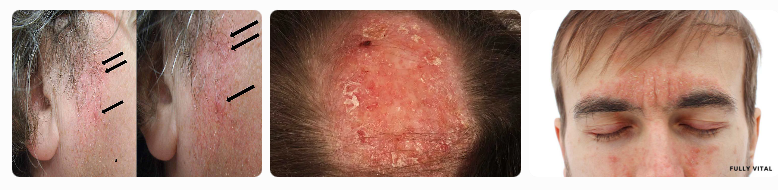
Discoid Lupus Erythematosus (DLE), also known simply as Discoid Lupus, is a chronic autoimmune skin condition and a form of cutaneous lupus. It causes distinctive round (discoid), red, scaly, and inflamed patches on the skin that can lead to scarring, pigmentation changes, and permanent hair loss if it affects the scalp. Unlike systemic lupus erythematosus (SLE), DLE usually affects only the skin, though a small percentage of patients may later develop systemic involvement. In homeopathy, remedies are used only as supportive care to help reduce inflammation, itching, and sensitivity while supporting overall skin health. DLE requires long-term dermatological monitoring and often conventional treatments like topical steroids, antimalarials (hydroxychloroquine), or sun protection.
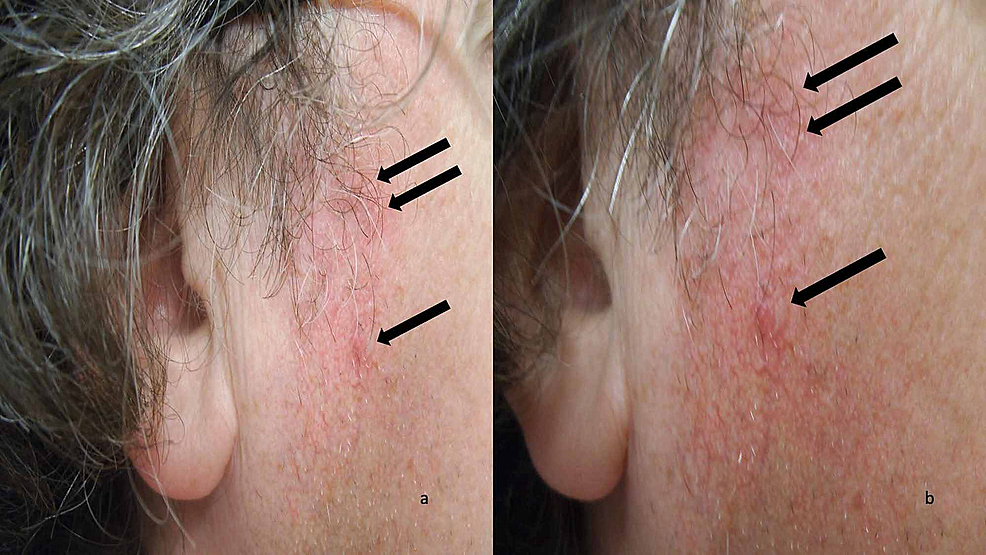


(Images above show classic discoid lupus lesions — round, red, scaly plaques with central atrophy or scarring, commonly on the face, scalp, and ears.)
Causes
Discoid lupus is an autoimmune disorder in which the immune system attacks the skin. Contributing factors include:
- Genetic predisposition and family history of autoimmune diseases
- Ultraviolet (UV) light exposure (sunlight often triggers or worsens lesions)
- Environmental triggers such as smoking, stress, or certain medications
- Hormonal influences (more common in women)
Symptoms
Typical symptoms include:
- Round or oval red patches with scaling and raised borders
- Central clearing, thinning, or scarring of the skin
- Itching, burning, or stinging in active lesions
- Permanent hair loss (scarring alopecia) when lesions occur on the scalp
- Hypopigmentation or hyperpigmentation after healing
- Lesions commonly appear on sun-exposed areas: face (especially cheeks, nose, ears), scalp, neck, and upper body
Homeopathy Medicines with Key Symptoms and Doses
Homeopathic remedies for discoid lupus are highly individualized based on the lesion appearance, itching character, sun sensitivity, and the person’s constitution. The following are commonly considered for supportive management. Remedy selection must be determined only by a qualified homeopath after detailed case-taking, in close coordination with a dermatologist. These are general guidelines only. Strict sun protection (sunscreen, hats, clothing) is essential.
Natrum Muriaticum One of the frequently indicated remedies for discoid lupus with red, scaly patches and photosensitivity. Often suited to emotionally reserved persons with a history of grief. Typical use: 30C or 200C, 3-5 pellets 1-2 times daily or sparingly (once or twice weekly).
Sulphur For burning, itchy lesions that are worse from heat or washing. Skin appears unhealthy or dirty-looking; often used as an intercurrent remedy in chronic cases. Typical use: 30C or 200C, sparingly (once weekly under guidance).
Thuja Occidentalis Indicated for warty or scaly growths with a tendency to abnormal tissue changes. Useful when there is a history of vaccinations or suppressed eruptions. Typical use: 30C, 3-5 pellets 1-2 times daily (short courses).
Arsenicum Album For burning sensations with anxiety and restlessness. Lesions may improve with warmth; the person feels chilly overall. Typical use: 30C, 3-5 pellets 1-2 times daily (short term).
Rhus Toxicodendron For itchy, blistering or vesicular lesions with restlessness. Symptoms improve with warm applications and gentle motion. Typical use: 30C, 3-5 pellets 1-2 times daily.
Graphites For thick, cracked, or sticky lesions with honey-like discharge in chronic cases. Typical use: 30C, 3-5 pellets 1-2 times daily.
Sepia Officinalis Especially useful in women with hormonal imbalance and discoid lesions accompanied by fatigue or indifference. Typical use: 30C, 3-5 pellets 1-2 times daily (under guidance).
Silicea For slow-healing lesions with tendency to scarring or suppuration. Supports tissue strength in delicate individuals. Typical use: 6X or 30C, 3-5 pellets 1-2 times daily.
Calcarea Carbonica Suited to fair, sweaty persons with constitutional sluggishness and chronic skin eruptions. Typical use: 30C or 200C, 3-5 pellets once or twice weekly.
Lycopodium Clavatum For right-sided lesions with digestive weakness and lack of confidence. Symptoms often worse in the late afternoon. Typical use: 30C or 200C, 3-5 pellets 1-2 times daily.
Important guidance: Discoid lupus is a chronic condition that requires lifelong sun protection to prevent new lesions and scarring. Conventional treatment often includes topical corticosteroids, antimalarial drugs, or immunosuppressants in severe cases. Regular dermatological follow-up is necessary to monitor for systemic involvement. Homeopathy may help reduce inflammation, itching, and sensitivity as supportive care but must never replace proper medical management or sun avoidance. Avoid smoking and manage stress. This information is for educational purposes only and not a substitute for professional medical or homeopathic advice. Consult a qualified dermatologist or rheumatologist immediately for accurate diagnosis, monitoring, and treatment, and a registered homeopath for individualized supportive remedy selection. With consistent care, many people can control symptoms and minimize scarring.