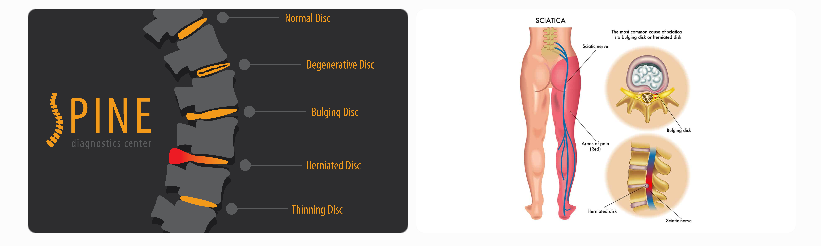
Disc Herniation (also called slipped disc or herniated disc) occurs when the soft inner gel-like material of an intervertebral disc pushes out through a tear in the tough outer layer. This can press on nearby nerves or the spinal cord, causing pain and other symptoms. It most commonly affects the lower back (lumbar region) but can also occur in the neck (cervical region). In homeopathy, remedies are selected to reduce inflammation, relieve nerve pain, and support healing of surrounding tissues. Homeopathy serves as supportive care only and works best along with rest, physiotherapy, and medical advice.
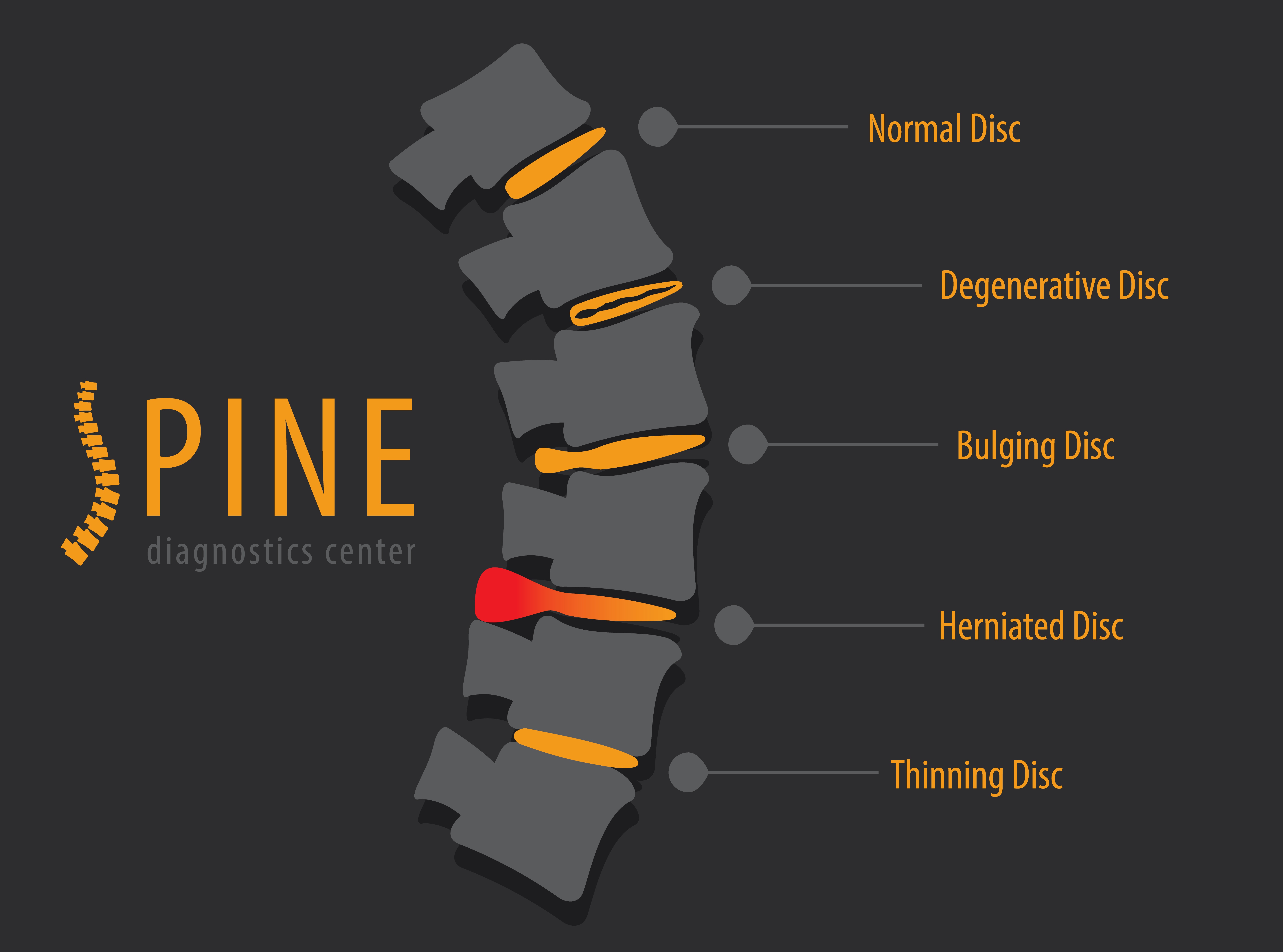
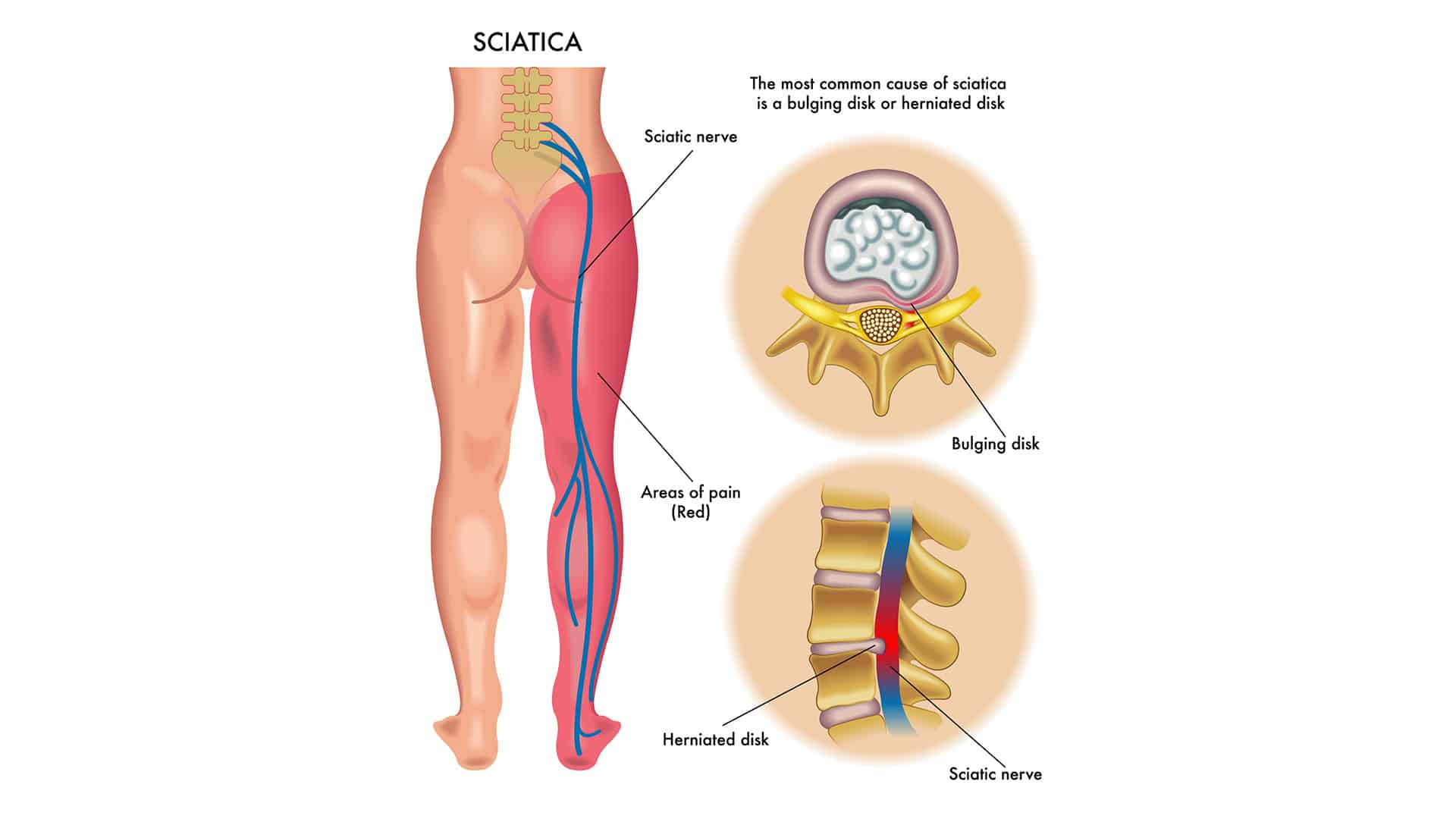
(Images above show a normal spinal disc versus a herniated disc with the inner material bulging out and pressing on the nerve root, causing radiating pain like sciatica.)
Causes
Common causes of disc herniation include:
- Sudden heavy lifting or twisting movements
- Age-related wear and tear (disc degeneration)
- Repetitive strain from poor posture or sitting for long hours
- Obesity, smoking, and lack of exercise
- Trauma or injury to the spine
Symptoms
Typical symptoms include:
- Sharp or shooting pain in the lower back or neck
- Pain that radiates to the buttocks, legs, or arms (sciatica in lumbar cases)
- Numbness, tingling, or weakness in the affected limb
- Pain that worsens with coughing, sneezing, or bending
- Difficulty standing or walking for long periods
- In severe cases: loss of bladder or bowel control (medical emergency)
Homeopathy Medicines with Key Symptoms and Doses
Homeopathic remedies are chosen according to the individual’s specific pain pattern, modalities (what makes it better or worse), and constitution. The following are commonly considered for disc herniation. Remedy selection must be determined only by a qualified homeopath after detailed case-taking, preferably with MRI confirmation and in coordination with an orthopedic or spine specialist. These are general guidelines only.
Hypericum Perforatum Excellent for nerve pain with sharp, shooting, or electric-shock-like sensations along the nerve path. Especially useful when there is tingling or numbness after injury. Typical use: 30C, 3-5 pellets 1-2 times daily.
Rhus Toxicodendron Indicated when pain and stiffness are worse after rest or on first movement but improve with continued motion and warm applications. The person feels restless. Typical use: 30C, 3-5 pellets 1-2 times daily.
Bryonia Alba For pain that is worse from the slightest movement and better from absolute rest or pressure. The person prefers to lie still and is very thirsty. Typical use: 30C, 3-5 pellets 1-2 times daily.
Arnica Montana Helpful in recent trauma or strain leading to herniation. There is bruised soreness and the person feels everything is too hard. Typical use: 30C, 3-5 pellets 1-2 times daily (short term).
Colocynthis For severe cramping or cutting pain that forces the person to bend double. Pain is better from hard pressure or heat. Often radiates to the leg. Typical use: 30C, 3-5 pellets 1-2 times daily.
Gnaphalium Polycephalum Specific for sciatica-like pain with numbness and tingling. Pain alternates with numbness; better from sitting or flexing the leg. Typical use: 30C, 3-5 pellets 1-2 times daily.
Ruta Graveolens Useful for pain in the lower back from overuse or strain, with stiffness and bruised feeling in the spine. Typical use: 30C, 3-5 pellets 1-2 times daily.
Calcarea Fluorica Supports elasticity of ligaments and discs in chronic cases. Helps prevent further degeneration. Typical use: 6X or 30C, 3-5 pellets 1-2 times daily.
Bellis Perennis For deep muscle and nerve trauma with soreness. Useful when there is a history of lifting heavy weights. Typical use: 30C, 3-5 pellets 1-2 times daily.
Symphytum Officinale Known for promoting healing of bones and connective tissues. Helpful in chronic disc problems with persistent pain. Typical use: 30C, 3-5 pellets 1-2 times daily.
Important guidance: Acute disc herniation with severe pain, weakness, or loss of bladder/bowel control requires immediate medical attention (MRI and specialist evaluation). Conservative management includes rest, physiotherapy, pain relief, and posture correction. Surgery is needed only in a small percentage of cases. Homeopathy can provide supportive relief for pain and inflammation but must never replace proper diagnosis and conventional care. Maintain good posture, avoid heavy lifting, and do regular back-strengthening exercises. This information is for educational purposes only and not a substitute for professional medical or homeopathic advice. Consult a qualified spine specialist or orthopedic doctor for diagnosis and treatment, and a registered homeopath for individualized supportive remedy selection. Early and proper management often leads to good recovery.