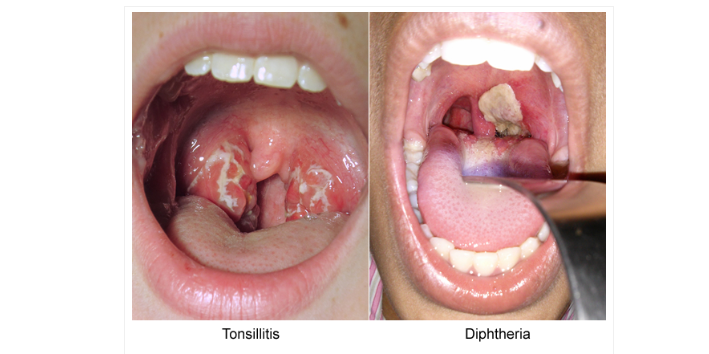
Diphtheria is a serious bacterial infection that mainly affects the throat and nose. It creates a thick gray membrane in the throat that can make breathing and swallowing very difficult. It is caused by a germ called Corynebacterium diphtheriae. Diphtheria can spread quickly from person to person and can be dangerous, especially for children. Modern treatment uses special antitoxin and antibiotics. In homeopathy, medicines are used only as supportive care to help symptoms. Homeopathy cannot replace hospital treatment, antitoxin, or antibiotics. Diphtheria needs immediate medical care.
(Images above show typical signs of diphtheria like thick gray membrane in the throat, swollen neck (bull neck), sore throat, and difficulty breathing.)
Causes
- Infection by diphtheria bacteria.
- Spreads through cough, sneeze, or close contact with an infected person.
- More common in children who are not vaccinated.
- Bacteria produce a strong toxin that harms the heart, nerves, and kidneys.
Symptoms
Common signs appear 2–5 days after infection:
- Sore throat and hoarseness
- Thick gray or white membrane covering the tonsils or throat
- Swollen neck glands (called bull neck)
- High fever and chills
- Difficulty swallowing or breathing
- Weakness, tiredness, and loss of appetite
- In serious cases: breathing problems, heart problems, or paralysis
Homeopathy Medicines with Key Symptoms and Doses
Homeopathic medicines are chosen according to the exact symptoms of the person. The following 10 remedies are sometimes used in homeopathy for supportive care in diphtheria. A qualified homeopath must select the right one after full examination. These are general guidelines only. Always get emergency hospital care first. Doses given in very simple form: 30C, 2 drops or 3-5 pellets in little water, 2 times a day (more frequent in serious cases under guidance).
Mercurius Cyanatus Very useful in diphtheria with dark membrane, bad breath, and great weakness. Throat is swollen and painful. Typical dose: 30C, 2 drops or 3-5 pellets, 2 times a day.
Diphtherinum Nosode made from diphtheria toxin. Used in cases with thick membrane, offensive breath, and when other remedies do not help fully. Typical dose: 30C, 2 drops or 3-5 pellets, 2 times a day (sparingly).
Kali Bichromicum For stringy, sticky discharge and tough gray membrane in throat. Pain is sharp and patient feels weak. Typical dose: 30C, 2 drops or 3-5 pellets, 2 times a day.
Lachesis Mutus Indicated when membrane is dark purple, left side is more affected, and patient feels worse after sleep. Throat is very sensitive. Typical dose: 30C, 2 drops or 3-5 pellets, 2 times a day.
Belladonna For early stage with bright red throat, high fever, and throbbing pain. Child is restless and sensitive to light. Typical dose: 30C, 2 drops or 3-5 pellets, 2 times a day.
Apis Mellifica Useful when throat is very swollen and puffy with little pain. Uvula is swollen like a bag of water. Typical dose: 30C, 2 drops or 3-5 pellets, 2 times a day.
Bromium For diphtheria with membrane in larynx causing hoarse voice and breathing difficulty. Better from sea air. Typical dose: 30C, 2 drops or 3-5 pellets, 2 times a day.
Phytolacca Decandra For dark red throat with pain going to ears. Membrane is grayish and glands are swollen. Typical dose: 30C, 2 drops or 3-5 pellets, 2 times a day.
Lac Caninum When membrane changes sides or is shiny. Throat pain is worse on one side then shifts. Typical dose: 30C, 2 drops or 3-5 pellets, 2 times a day.
Arsenicum Album For great anxiety, restlessness, and burning in throat. Patient feels very weak and chilly but wants small sips of water. Typical dose: 30C, 2 drops or 3-5 pellets, 2 times a day.
Important guidance: Diphtheria is a medical emergency. Get immediate hospital treatment with diphtheria antitoxin and antibiotics. Do not rely only on homeopathy. Vaccination (DPT or DTaP) is the best way to prevent diphtheria. Drink fluids, rest well, and isolate the patient to stop spread. This information is for education only and not a substitute for professional medical care. Consult a qualified doctor immediately for diagnosis and treatment, and a registered homeopath only for supportive care under medical supervision. Early treatment saves lives.