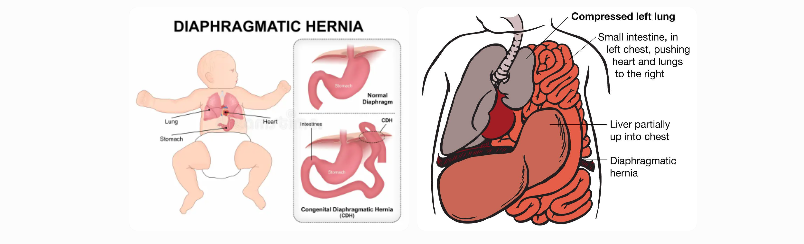
Diaphragmatic Hernia is a condition in which there is a defect or opening in the diaphragm — the dome-shaped muscle that separates the chest cavity from the abdomen. This allows abdominal organs (such as the stomach, intestines, or liver) to move upward into the chest. It can be congenital (present from birth due to incomplete diaphragm development) or acquired (usually from trauma or injury). In severe congenital cases, it can compress the lungs and affect breathing in newborns. In adults, it is often a hiatal hernia where part of the stomach pushes through the esophageal opening. In homeopathy, remedies are used only as supportive care to relieve associated symptoms like reflux, discomfort, or weakness while supporting overall vitality. Diaphragmatic hernia often requires surgical evaluation and management.

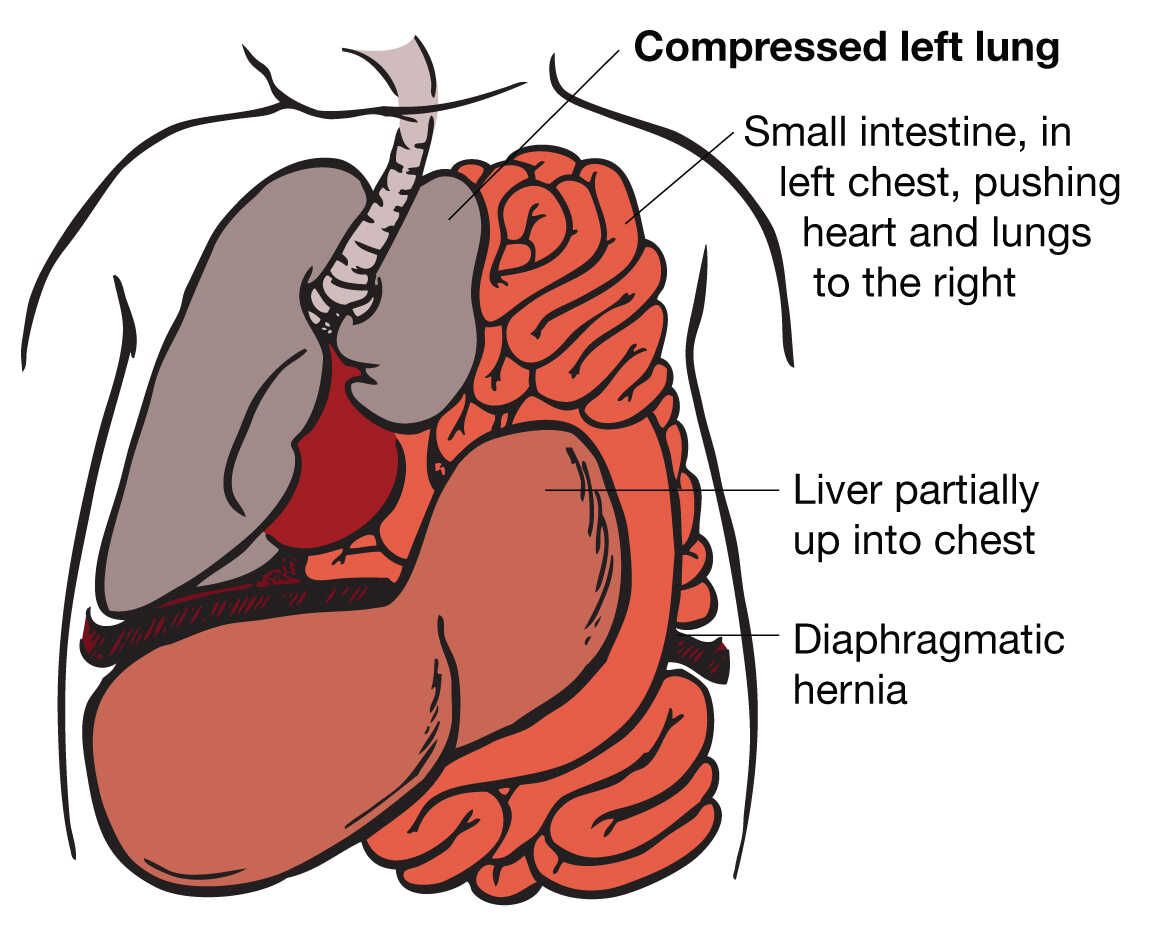
(Images above show diaphragmatic hernia — abdominal organs such as intestines or stomach protruding through a defect in the diaphragm into the chest cavity, compressing lungs and shifting the heart.)
Causes
Diaphragmatic hernia occurs due to:
- Congenital defect during fetal development (most common in newborns)
- Blunt or penetrating trauma to the abdomen or chest (e.g., accidents, falls)
- Surgical complications or iatrogenic causes
- Increased abdominal pressure from chronic coughing, heavy lifting, obesity, or pregnancy (in hiatal type)
Symptoms
Symptoms vary depending on the type and size:
- Difficulty breathing, rapid breathing, or shortness of breath
- Chest pain or discomfort
- Heartburn, acid reflux, sour belching, or nausea
- Abdominal pain, bloating, or vomiting
- In newborns: cyanosis (bluish skin), scaphoid (sunken) abdomen, and respiratory distress
- In mild cases: may be asymptomatic or cause only mild digestive issues
Homeopathy Medicines with Key Symptoms and Doses
Homeopathic remedies for diaphragmatic hernia focus on symptom relief such as reflux, breathing discomfort, and muscular weakness. They are selected based on individual symptoms and constitution. The following are sometimes considered for supportive management. Remedy selection must be determined only by a qualified homeopath after detailed case-taking, in close coordination with a surgeon or gastroenterologist. These are general guidelines only. Surgery is often needed for significant hernias.
Nux Vomica For hernia-like symptoms with digestive upset, sour belching, nausea, and irritability from overeating or stress. Symptoms are worse in the morning. Typical use: 30C, 3-5 pellets 1-2 times daily.
Robinia Excellent for intense heartburn and very sour vomiting or belching, especially at night. Useful in reflux associated with hiatal hernia. Typical use: 30C or lower potency, 3-5 pellets 1-2 times daily.
Natrum Phosphoricum For sour eructations, heartburn, and acidity with golden-yellow coating on the tongue. Helps regulate acid balance. Typical use: 6X or 30C, 3-5 pellets 1-2 times daily.
Carbo Vegetabilis For bloating, air hunger, and weak digestion with cold extremities and desire for fanning. Useful in cases with trapped gas and discomfort. Typical use: 30C, 3-5 pellets 1-2 times daily.
Lycopodium Clavatum For bloating and fullness after small meals, right-sided symptoms, and lack of confidence with digestive weakness. Typical use: 30C or 200C, 3-5 pellets 1-2 times daily.
Pulsatilla For changeable symptoms with sour or bitter taste, nausea from rich food, and desire for open air. Suited to mild, weepy persons. Typical use: 30C, 3-5 pellets 1-2 times daily.
Calcarea Carbonica For weak abdominal muscles in fair, sweaty, or obese persons with slow digestion and tendency to hernia-like protrusion. Typical use: 30C or 200C, 3-5 pellets once or twice weekly.
Rhus Toxicodendron For stiffness and weakness in muscles with pain better from motion and warmth. Supports muscular tone. Typical use: 30C, 3-5 pellets 1-2 times daily.
Phosphorus For burning sensations in the chest or stomach with thirst for cold drinks and anxiety. Typical use: 30C, 3-5 pellets 1-2 times daily (use cautiously).
Abies Nigra For sensation of a lump or constriction in the chest with digestive symptoms and history of overeating. Typical use: 30C, 3-5 pellets 1-2 times daily.
Important guidance: Diaphragmatic hernia, especially in infants or after trauma, can be life-threatening and often requires surgical repair. In adults with hiatal hernia, lifestyle changes (weight loss, small frequent meals, elevating head of bed, avoiding triggers) and medications for reflux are first-line. Homeopathy may help relieve symptoms such as heartburn, bloating, or discomfort as supportive care but must never replace proper medical or surgical management. Seek immediate medical attention for breathing difficulty, severe pain, or vomiting. This information is for educational purposes only and not a substitute for professional medical or homeopathic advice. Consult a qualified surgeon or gastroenterologist immediately for accurate diagnosis (via imaging like X-ray, CT, or endoscopy) and treatment, and a registered homeopath for individualized supportive remedy selection. Early intervention improves outcomes significantly.