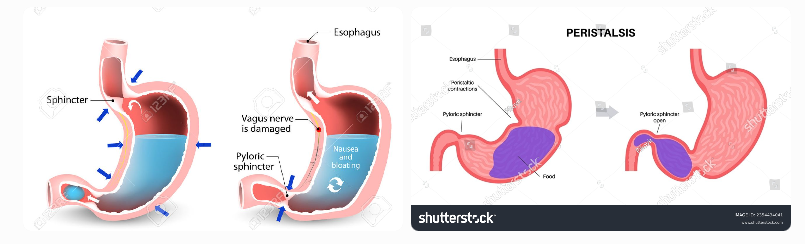
Diabetic Gastroparesis is a serious complication of long-standing diabetes in which the stomach muscles do not work properly and food empties too slowly from the stomach into the small intestine. This delayed gastric emptying occurs due to damage to the vagus nerve that controls stomach motility. It can cause significant discomfort and nutritional problems. In homeopathy, remedies are used only as supportive care to help relieve nausea, bloating, fullness, and digestive sluggishness while supporting overall vitality. Diabetic gastroparesis requires proper medical management including strict blood sugar control.
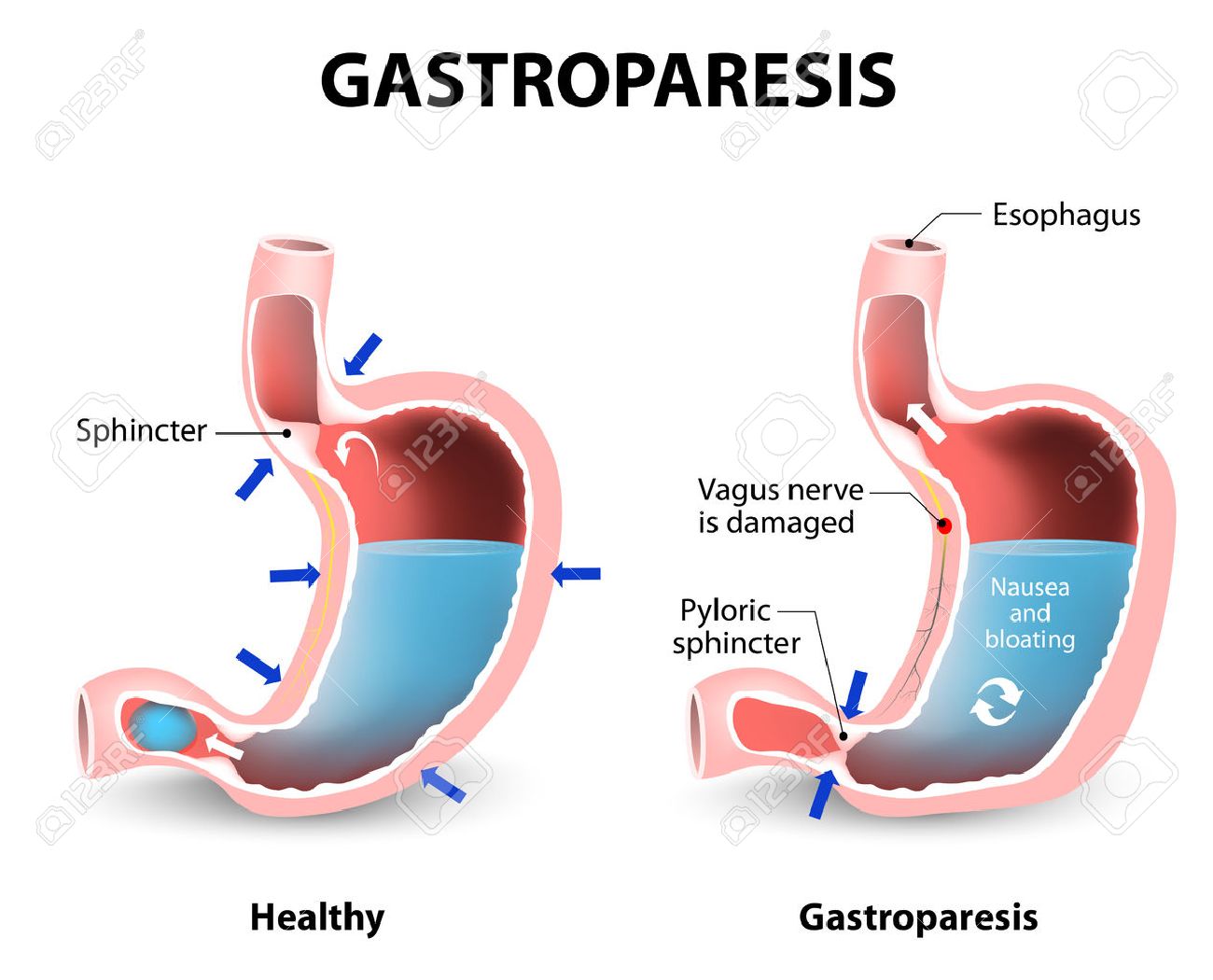

(Images above show diabetic gastroparesis — normal stomach with proper emptying versus delayed gastric emptying with food remaining in the stomach due to damaged vagus nerve.)
Causes
Diabetic gastroparesis is mainly caused by:
- Long-term high blood sugar damaging the vagus nerve (autonomic neuropathy)
- Poorly controlled diabetes (both type 1 and type 2)
- Fluctuating blood glucose levels affecting stomach muscle function
- Other contributing factors like certain medications, infections, or associated autoimmune conditions
Symptoms
Common symptoms include:
- Feeling full soon after starting a meal (early satiety)
- Nausea, vomiting (often undigested food hours after eating)
- Bloating, upper abdominal discomfort or pain
- Heartburn, acid reflux, or belching
- Loss of appetite, unintentional weight loss, and malnutrition
- Fluctuating blood sugar levels due to unpredictable food absorption
Homeopathy Medicines with Key Symptoms and Doses
Homeopathic remedies for diabetic gastroparesis are selected based on the individual’s symptoms, digestion pattern, and constitution. The following are commonly considered for supportive management. Remedy selection must be determined only by a qualified homeopath after detailed case-taking, in close coordination with a diabetologist or gastroenterologist. These are general guidelines only.
Nux Vomica For sluggish digestion with bloating, nausea, and irritability after eating. The person feels worse in the morning and from overeating or stress. Typical use: 30C, 3-5 pellets 1-2 times daily.
Lycopodium Clavatum For bloating and fullness even after small meals, especially in the lower abdomen. The person has low confidence and digestive weakness. Typical use: 30C or 200C, 3-5 pellets 1-2 times daily.
Arsenicum Album For burning pain, nausea, restlessness, and anxiety with thirst for small sips. Symptoms are worse at night and better from warmth. Typical use: 30C, 3-5 pellets 1-2 times daily (short term).
Pulsatilla For changeable symptoms with nausea from rich or fatty food. The person feels better in open air and craves sympathy. Typical use: 30C, 3-5 pellets 1-2 times daily.
Carbo Vegetabilis For extreme bloating, slow digestion, and air hunger with coldness and weakness. Useful when food feels like a heavy lump. Typical use: 30C, 3-5 pellets 1-2 times daily.
Ipecacuanha For constant nausea with clean tongue and vomiting of undigested food. No relief even after vomiting. Typical use: 30C, 3-5 pellets 1-2 times daily.
Robinia For intense acidity, sour vomiting, and heartburn with nausea that worsens at night. Typical use: 30C, 3-5 pellets 1-2 times daily.
China Officinalis For marked weakness, bloating, and debility after fluid or food loss from vomiting. Typical use: 30C, 3-5 pellets 1-2 times daily.
Natrum Sulphuricum For digestive sluggishness with liver involvement and symptoms worsened by damp weather. Typical use: 30C, 3-5 pellets 1-2 times daily.
Sulphur Often used as an intercurrent remedy in chronic cases with burning sensations and unhealthy tendency. Typical use: 30C or 200C, sparingly (once weekly under guidance).
Important guidance: Diabetic gastroparesis is managed by tight blood sugar control, small frequent low-fiber meals, medications to improve stomach motility (like metoclopramide), and sometimes dietary supplements or procedures. Homeopathy may help relieve nausea, bloating, and discomfort as supportive care but must never replace proper diabetic and gastroenterology management. Monitor blood glucose closely as absorption can be erratic. This information is for educational purposes only and not a substitute for professional medical or homeopathic advice. Consult a qualified diabetologist or gastroenterologist immediately for accurate diagnosis (via gastric emptying study) and treatment, and a registered homeopath for individualized supportive remedy selection. Good glycemic control and proper diet can significantly improve symptoms.