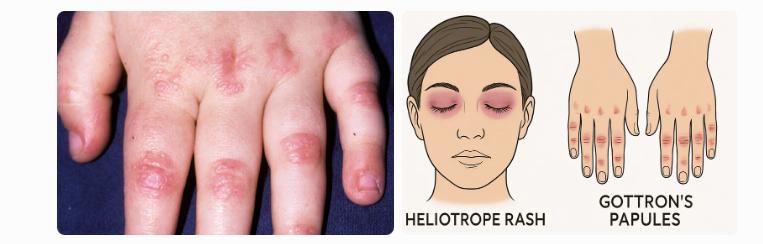
Dermatomyositis is a rare autoimmune disease that causes inflammation of the skin and muscles. It leads to a distinctive skin rash and progressive muscle weakness, especially in the muscles closest to the body (proximal muscles like shoulders, hips, and thighs). It can affect people of any age but is more common in adults (especially women) and children. In some cases, it may be associated with internal cancers. In homeopathy, remedies are chosen to support the immune system, reduce inflammation, ease muscle weakness, and improve skin symptoms as complementary supportive care only. It must always be used alongside conventional medical treatment under specialist supervision.


(Images above show characteristic features of dermatomyositis: heliotrope rash around the eyes, Gottron’s papules on the knuckles, and reddish-purple rash on the skin.)
Causes
Dermatomyositis is an autoimmune condition in which the body’s immune system mistakenly attacks its own healthy tissues (skin and muscles). The exact trigger is not fully known, but possible factors include:
- Genetic predisposition
- Environmental triggers (infections, certain medications, or UV exposure)
- Association with underlying cancers in some adults (paraneoplastic dermatomyositis)
- Hormonal influences (more common in women)
Symptoms
Common symptoms include:
- Skin rash: Violet or reddish-purple rash on the eyelids (heliotrope rash), face, neck, upper chest (shawl sign), back, elbows, and knuckles (Gottron’s papules)
- Muscle weakness: Difficulty rising from a chair, climbing stairs, lifting arms, or combing hair; weakness is usually symmetrical
- Fatigue and general tiredness
- Scaly, dry, or itchy skin
- Difficulty swallowing (dysphagia) in some cases
- Joint pain or swelling
- In children: calcinosis (hard lumps under the skin)
Homeopathy Medicines with Key Symptoms and Doses
Homeopathic remedies are selected based on the individual’s full symptom picture, including skin changes, muscle weakness, and constitution. The following are sometimes considered in classical homeopathy for supportive management. Remedy selection, potency, and repetition must be determined only by a qualified homeopath experienced in autoimmune conditions after detailed case-taking, in close coordination with a rheumatologist or dermatologist. These are general guidelines only.
Rhus Toxicodendron Indicated for muscle stiffness and weakness with pain that improves with continued movement and warmth. The person feels restless and the skin may show red, itchy eruptions. Typical use: 30C, 3-5 pellets 1-2 times daily.
Causticum Useful for progressive muscle weakness, especially with stiffness and burning sensations. Helps in cases with difficulty in swallowing or hoarseness. Typical use: 30C, 3-5 pellets 1-2 times daily.
Arnica Montana For bruised, sore feeling in muscles with a history of strain or trauma. The person feels everything is too hard and has general soreness. Typical use: 30C, 3-5 pellets 1-2 times daily (short term).
Belladonna For acute inflammatory phase with red, hot, throbbing skin rash and sudden muscle pain. Sensitivity to light and touch may be present. Typical use: 30C, 3-5 pellets 1-2 times daily (short term).
Calcarea Carbonica Suited to fair, sweaty persons with muscle weakness, fatigue, and slow recovery. Supports constitutional weakness in chronic cases. Typical use: 30C or 200C, 3-5 pellets once or twice weekly.
Sulphur Often used as an intercurrent remedy for burning, itchy skin rashes worse from heat. The person feels warm-blooded with unhealthy skin tendency. Typical use: 30C or 200C, sparingly (once weekly under guidance).
Arsenicum Album For burning pains in muscles and skin with great anxiety and restlessness. The person feels chilly but better from warmth. Typical use: 30C, 3-5 pellets 1-2 times daily (during weakness phases).
Ruta Graveolens Helpful for stiffness and weakness in tendons and muscles with bruised feeling, especially after overuse. Typical use: 30C, 3-5 pellets 1-2 times daily.
Silicea For delicate individuals with poor assimilation, recurrent infections, and slow healing. Supports vitality in chronic autoimmune conditions. Typical use: 6X or 30C, 3-5 pellets 1-2 times daily.
Graphites Indicated when there is thick, dry, cracked skin with sticky discharge and associated constipation. Typical use: 30C, 3-5 pellets 1-2 times daily.
Important guidance: Dermatomyositis is a serious autoimmune disease that requires regular monitoring by a rheumatologist or dermatologist. Standard treatment often includes corticosteroids, immunosuppressants, physical therapy, and sun protection. Homeopathy may offer supportive relief for symptoms but cannot replace conventional medical management, especially in cases with muscle weakness, swallowing difficulty, or associated malignancy. Regular blood tests, muscle enzymes (CK), and skin/muscle biopsy may be needed for diagnosis. This information is for educational purposes only and not a substitute for professional medical or homeopathic advice. Consult a qualified specialist immediately for diagnosis and treatment, and a registered homeopath experienced in autoimmune disorders for individualized supportive remedy selection. Early and proper care improves quality of life significantly.