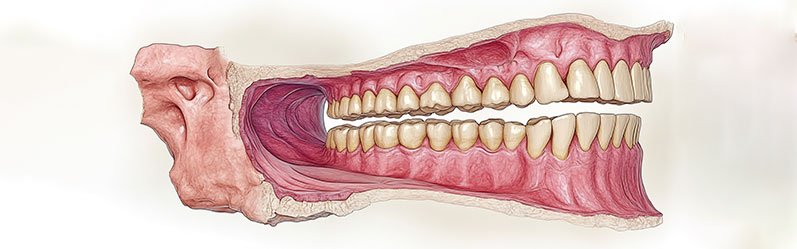
Dentinogenesis Imperfecta (DGI) is a rare genetic disorder that affects the development of dentin, the hard inner layer of the teeth beneath the enamel. It causes the teeth to become weak, brittle, and discolored, making them prone to rapid wear, chipping, breakage, and early loss. The condition can affect both primary (baby) teeth and permanent (adult) teeth. In homeopathy, remedies are used only as supportive care to help strengthen teeth, reduce sensitivity, support enamel and dentin health, and ease associated discomfort. Dentinogenesis Imperfecta is a structural genetic condition and requires regular dental care, including protective crowns, fillings, or other restorative treatments.
(Images above show classic features of dentinogenesis imperfecta — translucent, opalescent teeth with blue-gray or yellow-brown discoloration, bulbous crowns, and enamel chipping or wear.)
Causes
Dentinogenesis Imperfecta is primarily caused by:
- Genetic mutations in the DSPP gene, which is responsible for producing proteins essential for normal dentin formation
- Autosomal dominant inheritance (can be passed from one parent)
- In some cases, it occurs as part of osteogenesis imperfecta (brittle bone disease)
- Rarely, it can appear without family history due to new mutations
Symptoms
Common symptoms include:
- Teeth that appear translucent, opalescent, or shiny with blue-gray, yellow-brown, or amber discoloration
- Weak, brittle teeth that wear down quickly or chip easily
- Bulbous or bell-shaped crowns with short roots
- Rapid enamel loss exposing the softer dentin underneath
- Increased sensitivity to hot, cold, or sweet foods
- Early tooth loss, frequent fractures, and higher risk of dental abscesses
Homeopathy Medicines with Key Symptoms and Doses
Homeopathic remedies for dentinogenesis imperfecta are selected based on the individual’s constitution, tooth sensitivity, pain patterns, and overall vitality. They aim to provide supportive benefits for dental health and tissue strength. The following are sometimes considered. Remedy selection must be determined only by a qualified homeopath after detailed case-taking, in close coordination with a pediatric dentist or specialist. These are general guidelines only.
Calcarea Carbonica Suited to fair, sweaty persons with slow development and constitutional weakness. Supports bone and tooth mineralization in chronic cases. Typical use: 30C or 200C, 3-5 pellets once or twice weekly.
Calcarea Phosphorica Helpful for delayed or imperfect tooth development with weak enamel and dentin. Supports calcium-phosphorus metabolism. Typical use: 6X or 30C, 3-5 pellets 1-2 times daily.
Silicea For delicate persons with poor assimilation and tendency to weak, brittle structures. Supports tissue strength and healing. Typical use: 6X or 30C, 3-5 pellets 1-2 times daily.
Ruta Graveolens For soreness and weakness in teeth and gums with bruised feeling. Useful when there is strain or sensitivity from weak dentin. Typical use: 30C, 3-5 pellets 1-2 times daily.
Calcarea Fluorica Supports elasticity and strength of connective tissues, enamel, and dentin in chronic degenerative dental conditions. Typical use: 6X or 30C, 3-5 pellets 1-2 times daily.
Mercurius Solubilis For teeth that are prone to decay, sensitivity, and looseness with offensive breath or excessive salivation. Typical use: 30C, 3-5 pellets 1-2 times daily (short term).
Arnica Montana For soreness, bruising sensation, or pain after dental procedures or trauma to weak teeth. Typical use: 30C, 3-5 pellets 1-2 times daily (short term).
Hypericum Perforatum For sharp, shooting nerve pain or hypersensitivity in affected teeth. Typical use: 30C, 3-5 pellets 1-2 times daily.
Symphytum Officinale Supports bone and tooth healing in cases with tendency to fractures or weak roots. Typical use: 30C, 3-5 pellets 1-2 times daily.
Phosphorus For sensitive teeth with tendency to bleeding gums and weakness in constitutionally tall, slender persons. Typical use: 30C, 3-5 pellets 1-2 times daily (use cautiously).
Important guidance: Dentinogenesis Imperfecta has no cure as it is a genetic structural defect. Management focuses on protecting the teeth with stainless steel crowns (especially in children), composite bonding, veneers, or implants in adults, along with excellent oral hygiene and regular dental visits. Homeopathy may offer supportive benefits for overall vitality, tooth sensitivity, and tissue strength but must never replace specialized dental care. Early intervention prevents complications like abscesses and tooth loss. This information is for educational purposes only and not a substitute for professional medical or homeopathic advice. Consult a qualified pediatric dentist or dental specialist immediately for accurate diagnosis and restorative treatment, and a registered homeopath for individualized supportive remedy selection. With proper dental management, people with dentinogenesis imperfecta can maintain good oral function and appearance.