Dehydration occurs when the body loses more fluids than it takes in, so it does not have enough water to carry out normal functions. It can happen quickly in hot weather, during diarrhea, vomiting, fever, or heavy exercise. Mild dehydration can be corrected by drinking fluids, but severe dehydration is a medical emergency, especially in children and elderly people. In homeopathy, remedies are used supportively to help restore balance, reduce weakness, and support recovery after fluid loss. Homeopathy is not a substitute for drinking fluids or medical treatment. Rehydration with oral rehydration solution (ORS), water, or juices is the first and most important step.
:max_bytes(150000):strip_icc()/Health-dehydration-symptoms-7480908-Horiz-e2500f0828b746ee9d2e2b5257af60cb.jpg)
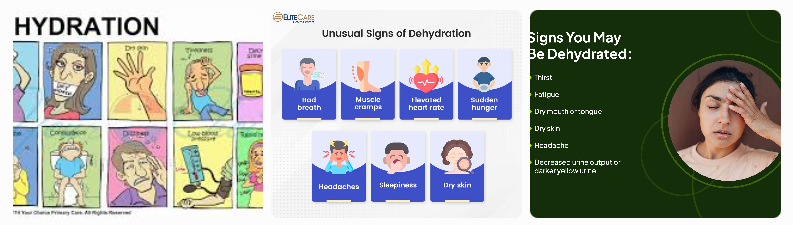
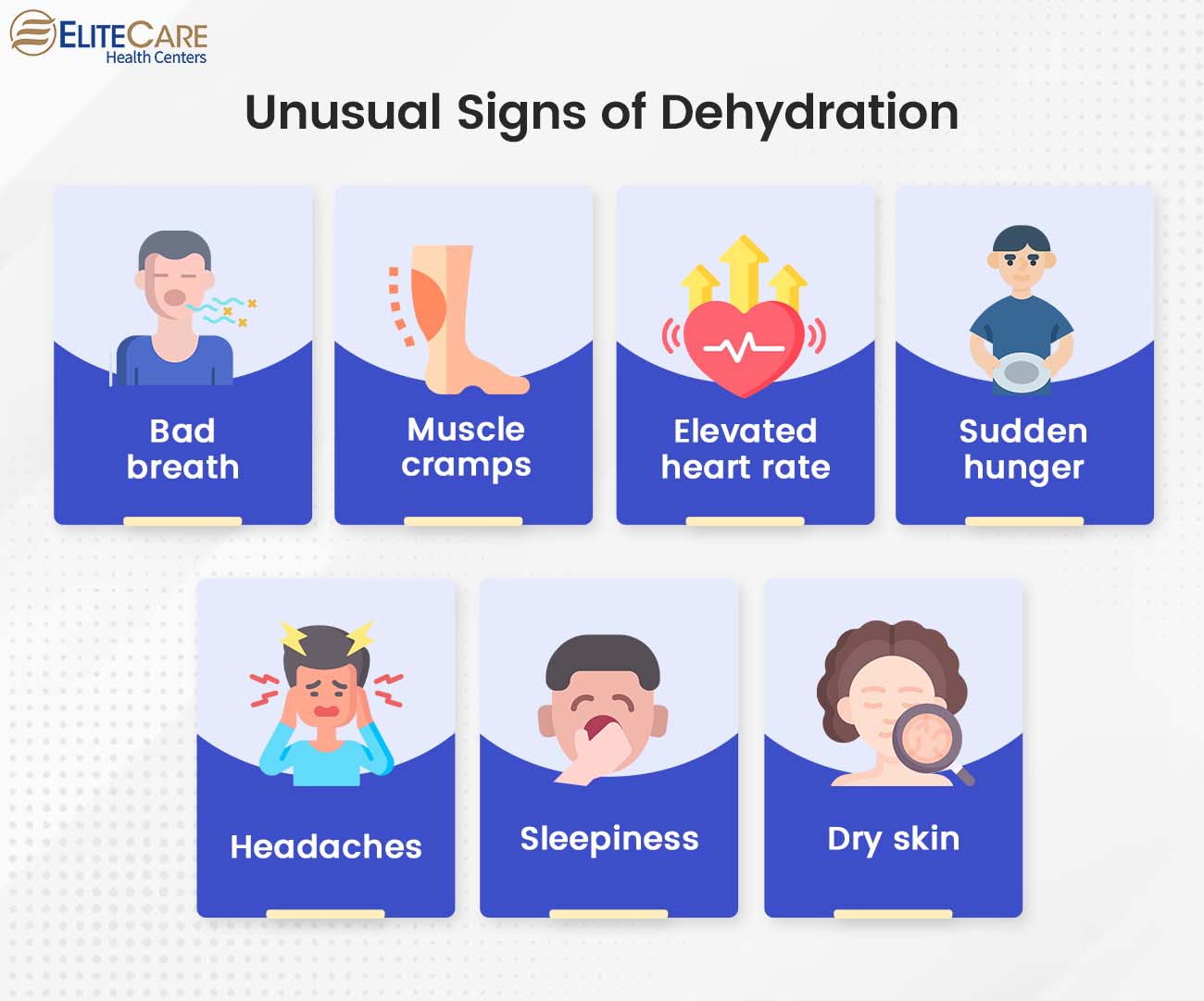
(Images above show common signs of dehydration such as dry mouth, dry skin, sunken eyes, tiredness, reduced urine, headache, and dizziness.)
Causes
Common causes of dehydration include:
- Excessive loss of fluids through vomiting, diarrhea, or dysentery
- High fever, heavy sweating in hot weather, or intense exercise
- Not drinking enough water or fluids
- Certain illnesses like diabetes or kidney problems
- Use of medicines that increase urine output
Symptoms
Typical symptoms of dehydration are:
- Feeling very thirsty
- Dry mouth and dry, sticky tongue
- Dry skin that does not bounce back when pinched
- Dark yellow or reduced urine
- Tiredness, weakness, and dizziness
- Headache and sunken eyes
- In severe cases: confusion, rapid heartbeat, or fainting
Homeopathy Medicines with Key Symptoms and Doses
Homeopathic remedies are selected according to the individual’s symptoms and the cause of dehydration. The following are commonly considered for supportive care in dehydration. Remedy selection must be done by a qualified homeopath after full case-taking. These are general guidelines only. Always prioritize rehydration with fluids and seek medical help if symptoms are severe.
China Officinalis One of the best remedies for weakness and exhaustion after loss of body fluids (from diarrhea, vomiting, or sweating). The person feels very weak, pale, and may have bloating. Typical use: 30C, 3-5 pellets 1-2 times daily.
Arsenicum Album Useful when there is great restlessness, anxiety, and burning sensations with weakness. The person feels chilly and wants small sips of water frequently. Typical use: 30C, 3-5 pellets 1-2 times daily (during weakness).
Carbo Vegetabilis Indicated for extreme weakness, coldness, and desire for fanning. The person feels faint after fluid loss and has bloating with belching. Typical use: 30C, 3-5 pellets 1-2 times daily.
Veratrum Album For collapse-like state with cold sweat, vomiting, and diarrhea. The person feels icy cold and may have cramps. Typical use: 30C, 3-5 pellets 1-2 times daily (in acute collapse under guidance).
Natrum Muriaticum Helpful when there is dryness of mouth and skin with craving for salt. The person feels emotionally withdrawn after fluid loss. Typical use: 30C, 3-5 pellets 1-2 times daily.
Phosphoric Acid For mental and physical exhaustion after prolonged fluid loss. There is indifference, weakness, and frequent urination or loose stools. Typical use: 30C, 3-5 pellets 1-2 times daily.
Cocculus Indicus For dizziness, weakness, and nausea from loss of fluids. The person feels worse from movement or riding. Typical use: 30C, 3-5 pellets 1-2 times daily.
Ipecacuanha Useful when dehydration is associated with constant nausea and vomiting that does not relieve the feeling. Typical use: 30C, 3-5 pellets 1-2 times daily (short term).
Bryonia Alba For dryness of mouth with great thirst for large quantities of water at long intervals. The person wants to lie still and feels worse from any movement. Typical use: 30C, 3-5 pellets 1-2 times daily.
Gelsemium For dizziness, heaviness of eyelids, and weakness with trembling after fluid loss. There is drowsiness and no thirst. Typical use: 30C, 3-5 pellets 1-2 times daily.
Important guidance: The main treatment for dehydration is to drink plenty of fluids — water, ORS, coconut water, or diluted fruit juices. In mild cases, this is enough. Severe dehydration (very dry mouth, no urine for many hours, sunken eyes, confusion) needs immediate hospital care with intravenous fluids. Homeopathy can be used as supportive care only after starting proper rehydration. This information is for educational purposes only and not a substitute for professional medical advice. Consult a qualified doctor immediately in cases of moderate to severe dehydration, and a registered homeopath for individualized remedy selection. Prevention is simple — drink enough water daily, especially in hot weather or during illness.