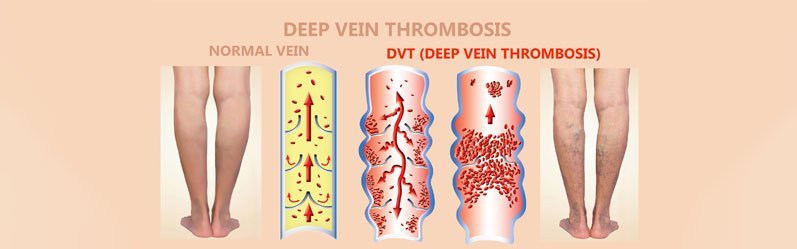
Deep Vein Thrombosis (DVT) is a serious medical condition in which a blood clot (thrombus) forms inside a deep vein, most commonly in the legs (usually the calf or thigh). If the clot breaks loose, it can travel to the lungs and cause a life-threatening condition called pulmonary embolism. DVT requires urgent conventional medical care, including blood thinners (anticoagulants) and sometimes hospital monitoring. In homeopathy, remedies are used only as supportive care to help reduce inflammation, improve circulation, and support recovery after the acute phase, never as a replacement for standard treatment.
(Images above show a normal vein versus a deep vein with blood clot formation, swelling in the leg, and possible risk of the clot traveling to the lungs.)
Causes
Common causes and risk factors for DVT include:
- Prolonged immobility (long flights, bed rest, sitting for long hours)
- Recent surgery or injury, especially to legs or pelvis
- Pregnancy and postpartum period
- Use of oral contraceptives or hormone therapy
- Obesity, smoking, and advanced age
- Certain medical conditions (cancer, heart failure, clotting disorders)
Symptoms
Typical symptoms of DVT (often in one leg) are:
- Swelling in the affected leg or foot
- Pain or tenderness in the calf or thigh (may feel like a cramp)
- Warmth and redness over the affected area
- Discoloration (bluish or reddish skin)
- In some cases, no noticeable symptoms until a complication occurs
Warning: Sudden shortness of breath, chest pain, or coughing blood can indicate pulmonary embolism — seek emergency medical help immediately.
Homeopathy Medicines with Key Symptoms and Doses
Homeopathic remedies are selected based on individual symptoms and constitution. They may be used supportively after the acute phase and under medical supervision. Remedy selection must be determined only by a qualified homeopath in close coordination with a vascular specialist or hematologist. These are general guidelines only. Never self-medicate for DVT.
Hamamelis Virginiana One of the leading remedies for venous congestion and DVT-like symptoms. There is bruised, sore feeling in the veins, swelling, and dark bleeding tendency. Typical use: 30C, 3-5 pellets 1-2 times daily.
Lachesis Mutus Indicated when the left leg is more affected, with bluish discoloration, sensitivity to touch, and worsening after sleep. Patient cannot tolerate tight clothing. Typical use: 30C, 3-5 pellets 1-2 times daily.
Pulsatilla Nigricans Useful when swelling and pain change location or intensity. The person feels better in open air and has a mild, weepy disposition. Typical use: 30C, 3-5 pellets 1-2 times daily.
Arnica Montana For soreness and bruised feeling after injury or strain that may lead to clot formation. Helps reduce trauma to blood vessels. Typical use: 30C, 3-5 pellets 1-2 times daily (short term).
Vipera Berus Indicated for severe swelling with bursting pain and bluish discoloration. The limb feels as if it will burst; worse from hanging down. Typical use: 30C, 3-5 pellets 1-2 times daily (use with care).
Belladonna For acute inflammation with throbbing pain, redness, and heat in the affected leg. Symptoms come suddenly. Typical use: 30C, 3-5 pellets 1-2 times daily (short term).
Carbo Vegetabilis For sluggish circulation with coldness, bloating, and weakness. The person feels faint and desires fresh air. Typical use: 30C, 3-5 pellets 1-2 times daily.
Calcarea Fluorica Supports elasticity of blood vessel walls in chronic or recurrent venous problems. Useful as a tissue salt for hardened veins. Typical use: 6X or 30C, 3-5 pellets 1-2 times daily.
Sulphur Often used as an intercurrent remedy when there is burning, itching, or unhealthy skin tendency with poor circulation. Typical use: 30C or 200C, sparingly (once weekly under guidance).
Apis Mellifica For swelling with stinging or burning pain that is relieved by cold applications. The skin looks shiny and puffy. Typical use: 30C, 3-5 pellets 1-2 times daily.
Important guidance: Deep Vein Thrombosis is a medical emergency. Do not rely on homeopathy alone. Standard treatment includes blood-thinning medicines, compression stockings, and sometimes clot-dissolving therapy. Seek immediate hospital care if you suspect DVT. After the acute phase, lifestyle measures like regular movement, staying hydrated, avoiding prolonged sitting, and wearing compression stockings help prevent recurrence. This information is for educational purposes only and not a substitute for professional medical or homeopathic advice. Consult a qualified vascular specialist or hematologist immediately for diagnosis and treatment, and a registered homeopath only for supportive care under medical supervision. Early detection and proper management can prevent life-threatening complications.