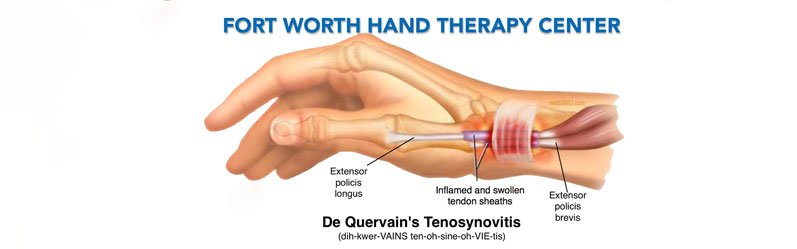
De Quervain’s Tenosynovitis (also called De Quervain’s syndrome) is a painful condition that affects the tendons on the thumb side of the wrist. The sheath (synovium) surrounding the abductor pollicis longus and extensor pollicis brevis tendons becomes inflamed and thickened, causing pain and restricted movement. It is common in new mothers (due to repetitive lifting of the baby), people who do repetitive hand/wrist movements, and middle-aged women. In homeopathy, remedies are used only as supportive care to reduce pain, inflammation, and stiffness while supporting tendon and sheath healing. Rest, splinting, and conventional treatment (including corticosteroid injection if needed) are often required for proper recovery.
(Images above show De Quervain’s Tenosynovitis — swelling and inflammation on the thumb side of the wrist, with the characteristic Finkelstein test position that reproduces sharp pain.)
Causes
De Quervain’s Tenosynovitis is mainly caused by:
- Repetitive thumb and wrist movements (lifting, gripping, twisting)
- Overuse injury from activities like texting, knitting, gardening, or holding a baby
- Hormonal changes (common during pregnancy and postpartum)
- Direct trauma or rheumatoid arthritis in some cases
Symptoms
Typical symptoms include:
- Pain and tenderness on the thumb side of the wrist, especially near the base of the thumb
- Pain that worsens with thumb movement or gripping
- Swelling and sometimes a visible bump over the affected tendons
- Stiffness and weakness in the thumb and wrist
- Positive Finkelstein test (pain when the thumb is tucked inside the fist and the wrist is bent toward the little finger)
Homeopathy Medicines with Key Symptoms and Doses
Homeopathic remedies for De Quervain’s Tenosynovitis are chosen based on the exact character of pain, modalities, and individual constitution. The following are commonly considered for supportive management. Remedy selection must be determined only by a qualified homeopath after detailed case-taking, in coordination with an orthopedic specialist or physiotherapist. These are general guidelines only.
Ruta Graveolens One of the top remedies for tendon and sheath inflammation with bruised, sore pain. Especially useful when there is stiffness and pain from overuse. Typical use: 30C, 3-5 pellets 1-2 times daily.
Rhus Toxicodendron For stiffness and pain that improves with continued gentle movement and warmth. The person feels restless; pain is worse after rest. Typical use: 30C, 3-5 pellets 1-2 times daily.
Arnica Montana For soreness and bruised feeling in the wrist after repetitive strain or minor trauma. Helps reduce inflammation. Typical use: 30C, 3-5 pellets 1-2 times daily (short term).
Bryonia Alba For sharp pain that is worse from the slightest movement and better from complete rest or pressure. Typical use: 30C, 3-5 pellets 1-2 times daily.
Calcarea Fluorica Supports connective tissue and tendon sheath health in chronic or recurrent cases with stiffness. Typical use: 6X or 30C, 3-5 pellets 1-2 times daily.
Silicea Useful in chronic cases with slow healing and weakness of tendons. Supports tissue strength. Typical use: 6X or 30C, 3-5 pellets 1-2 times daily.
Hypericum Perforatum For sharp, shooting nerve pain along the thumb and wrist with tingling or hypersensitivity. Typical use: 30C, 3-5 pellets 1-2 times daily.
Apis Mellifica For puffy swelling with stinging or burning pain that is better from cold applications. Typical use: 30C, 3-5 pellets 1-2 times daily.
Ledum Palustre For swelling and pain that feels better from cold applications; useful when the part feels cold to touch. Typical use: 30C, 3-5 pellets 1-2 times daily.
Sulphur Often used as an intercurrent remedy in chronic cases with burning sensations and unhealthy skin tendency. Typical use: 30C or 200C, sparingly (once weekly under guidance).
Important guidance: The cornerstone of managing De Quervain’s Tenosynovitis is rest, thumb spica splinting, avoiding repetitive thumb movements, and ice application. Physiotherapy and anti-inflammatory measures are often helpful. In persistent cases, a corticosteroid injection or rarely surgery (release of the tendon sheath) may be needed. Homeopathy may help reduce pain and inflammation as supportive care but must not replace proper rest and medical evaluation. This information is for educational purposes only and not a substitute for professional medical or homeopathic advice. Consult a qualified orthopedic doctor or hand specialist for accurate diagnosis and management, and a registered homeopath for individualized supportive remedy selection. Early intervention usually leads to good recovery.