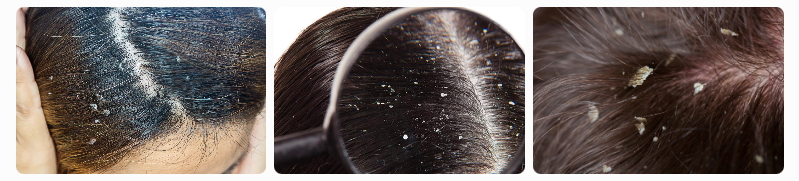
Dandruff is a common, non-contagious scalp condition characterized by excessive flaking of dead skin cells from the scalp. It often causes visible white or yellowish flakes on the scalp, hair, and shoulders. While not dangerous, it can be embarrassing and may cause itching and irritation. In homeopathy, remedies are used only as supportive care to help reduce flaking, itching, and scalp inflammation while improving overall scalp health. Good hygiene and regular hair care are essential for long-term control.
(Images above show typical dandruff — white or yellowish flakes on the scalp and hair, with possible redness and mild scaling.)
Causes
Dandruff is mainly caused by:
- Overgrowth of a yeast-like fungus called Malassezia on the scalp
- Excess oil (sebum) production
- Dry scalp or sensitivity to hair products
- Poor hygiene, stress, or hormonal changes
- Underlying conditions like seborrheic dermatitis, psoriasis, or eczema
Symptoms
Common symptoms include:
- White or yellowish flakes on the scalp, hair, and shoulders
- Itchy or irritated scalp
- Redness or mild inflammation in severe cases
- Oily or dry scalp depending on the type
- Flakes that become more noticeable in winter or with infrequent washing
Homeopathy Medicines with Key Symptoms and Doses
Homeopathic remedies for dandruff are selected based on the type of scaling, itching, scalp condition, and the person’s constitution. The following are commonly considered for supportive management. Remedy selection must be determined only by a qualified homeopath after detailed case-taking. These are general guidelines only.
Sulphur For intense itching and burning of the scalp with dry, flaky dandruff. Symptoms are worse from heat or washing; scalp feels unhealthy. Typical use: 30C or 200C, sparingly (once weekly under guidance).
Graphites For thick, sticky, honey-like crusts or greasy dandruff with cracking behind the ears. Itching is prominent. Typical use: 30C, 3-5 pellets 1-2 times daily.
Natrum Muriaticum For dry, white, flaky dandruff with oily scalp at the hairline. Often linked to emotional stress or grief. Typical use: 30C, 3-5 pellets 1-2 times daily.
Thuja Occidentalis For dandruff with dry, scaly patches and a tendency to warty or abnormal skin growths. History of vaccinations may be present. Typical use: 30C, 3-5 pellets 1-2 times daily (short courses).
Mezereum For thick, white, or yellowish crusts with intense itching and possible oozing. Painful when scratched. Typical use: 30C, 3-5 pellets 1-2 times daily.
Kali Sulphuricum For yellow, sticky dandruff with scaling and itching that is worse in warm weather. Typical use: 6X or 30C, 3-5 pellets 1-2 times daily.
Calcarea Carbonica Suited to fair, sweaty persons with moist, sour-smelling dandruff and constitutional sluggishness. Typical use: 30C or 200C, 3-5 pellets once or twice weekly.
Petroleum For dry, cracked, and rough scalp with intense itching. Symptoms are worse in winter. Typical use: 30C, 3-5 pellets 1-2 times daily.
Arsenicum Album For burning and itching with dry, scaly dandruff. The person feels chilly but better from warmth. Typical use: 30C, 3-5 pellets 1-2 times daily (short term).
Sanicula For offensive, sticky dandruff with sour-smelling sweat and tendency to skin eruptions. Typical use: 30C, 3-5 pellets 1-2 times daily.
Important guidance: Dandruff is best managed with regular washing using a gentle anti-dandruff shampoo (containing ketoconazole, zinc pyrithione, or selenium sulfide), avoiding harsh hair products, and maintaining a healthy diet. If the condition is severe, persistent, or accompanied by redness and hair loss, consult a dermatologist to rule out other scalp conditions like psoriasis or seborrheic dermatitis. Homeopathy may help reduce flaking and itching as supportive care but must not replace proper scalp hygiene. This information is for educational purposes only and not a substitute for professional medical or homeopathic advice. Consult a qualified dermatologist for accurate diagnosis and management, and a registered homeopath for individualized supportive remedy selection. With consistent care, dandruff can usually be well controlled.