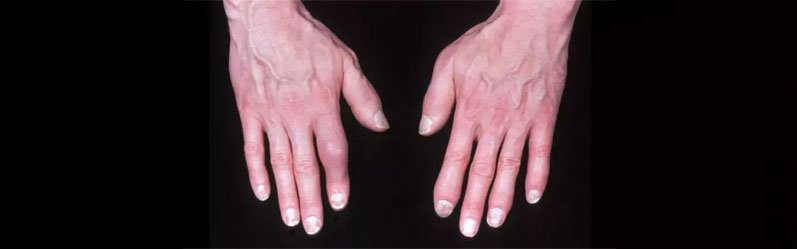
Dactylitis (also known as sausage digit) is a painful inflammation of an entire finger or toe. The affected digit becomes swollen, red, and sausage-shaped due to inflammation of the soft tissues, tendons, and sometimes the bone or joint. It is commonly seen in conditions like psoriatic arthritis, reactive arthritis, sickle cell disease, tuberculosis, or sarcoidosis. In children, it may occur in sickle cell crisis. In homeopathy, remedies are used as supportive care to reduce pain, swelling, and inflammation. Dactylitis requires proper medical evaluation to identify and treat the underlying cause (e.g., anti-inflammatory drugs, antibiotics, or disease-modifying medicines).
(Images above show typical dactylitis — uniform swelling of an entire finger or toe giving a “sausage-like” appearance, with redness and tenderness.)
Causes
Common causes of dactylitis include:
- Psoriatic arthritis (most frequent in adults)
- Reactive arthritis (after infection)
- Sickle cell disease (in children, during crisis)
- Infections (tuberculosis, syphilis, or bacterial)
- Sarcoidosis or inflammatory bowel disease
Symptoms
Typical symptoms include:
- Painful, red, and markedly swollen finger or toe (sausage-shaped)
- Tenderness on touch or movement
- Stiffness and reduced mobility of the digit
- Warmth over the affected area
- In some cases: fever or general malaise if infection is present
- Usually affects one or a few digits asymmetrically
Homeopathy Medicines with Key Symptoms and Doses
Homeopathic remedies are chosen according to the individual symptom picture and the underlying cause. The following are commonly considered for supportive relief in dactylitis. Remedy selection must be determined only by a qualified homeopath after detailed case-taking, in coordination with a rheumatologist or physician. These are general guidelines only.
Belladonna For acute, sudden inflammation with intense redness, throbbing pain, heat, and swelling. The digit is very sensitive to touch. Typical use: 30C, 3-5 pellets 1-2 times daily (short term).
Apis Mellifica Indicated for puffy, shiny swelling with stinging or burning pain that is better from cold applications. Typical use: 30C, 3-5 pellets 1-2 times daily.
Rhus Toxicodendron Useful when there is stiffness and pain that improves with continued movement and warmth. The person feels restless. Typical use: 30C, 3-5 pellets 1-2 times daily.
Bryonia Alba For pain that is worse from the slightest movement and better from absolute rest or pressure. The person wants to lie still. Typical use: 30C, 3-5 pellets 1-2 times daily.
Arsenicum Album For burning pain with great anxiety and restlessness. The person feels chilly but better from warmth. Typical use: 30C, 3-5 pellets 1-2 times daily.
Silicea Helpful in chronic or recurrent cases with slow healing and tendency to suppuration. Supports tissue strength. Typical use: 6X or 30C, 3-5 pellets 1-2 times daily.
Mercurius Solubilis For painful swelling with offensive discharge or swollen glands if infection is present. Symptoms worse at night. Typical use: 30C, 3-5 pellets 1-2 times daily (short term).
Calcarea Fluorica Supports connective tissue and bone health in chronic cases with hard swelling or joint involvement. Typical use: 6X or 30C, 3-5 pellets 1-2 times daily.
Sulphur Often used as an intercurrent remedy for chronic inflammation with burning and unhealthy skin tendency. Typical use: 30C or 200C, sparingly (once weekly under guidance).
Hypericum Perforatum For sharp, shooting nerve pain along the digit with tingling or numbness. Useful when there is nerve involvement. Typical use: 30C, 3-5 pellets 1-2 times daily.
Important guidance: Dactylitis needs proper medical evaluation to identify the underlying disease (e.g., psoriatic arthritis, sickle cell crisis, or infection). Treatment may include anti-inflammatory medicines, antibiotics, or disease-specific therapy. Homeopathy can provide supportive relief from pain and swelling but must not replace conventional diagnosis and treatment. Rest the affected digit, avoid trauma, and apply warm or cold compresses as advised. This information is for educational purposes only and not a substitute for professional medical or homeopathic advice. Consult a qualified rheumatologist or physician immediately for accurate diagnosis and management, and a registered homeopath for individualized supportive remedy selection. Early and proper care prevents long-term joint damage.