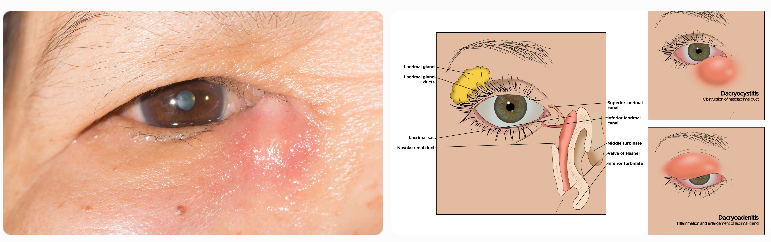
Dacryocystitis is an inflammation or infection of the lacrimal sac (the small pouch located at the inner corner of the eye where tears collect before draining into the nose). It occurs when the nasolacrimal duct (tear drainage pathway) becomes blocked, causing tears and bacteria to stagnate and multiply in the sac. It can be acute (sudden and painful) or chronic (recurrent with milder symptoms). In homeopathy, remedies are used as supportive care to reduce inflammation, relieve pain, and promote drainage, but they do not replace antibiotics, warm compresses, or surgical intervention (dacryocystorhinostomy) when needed.
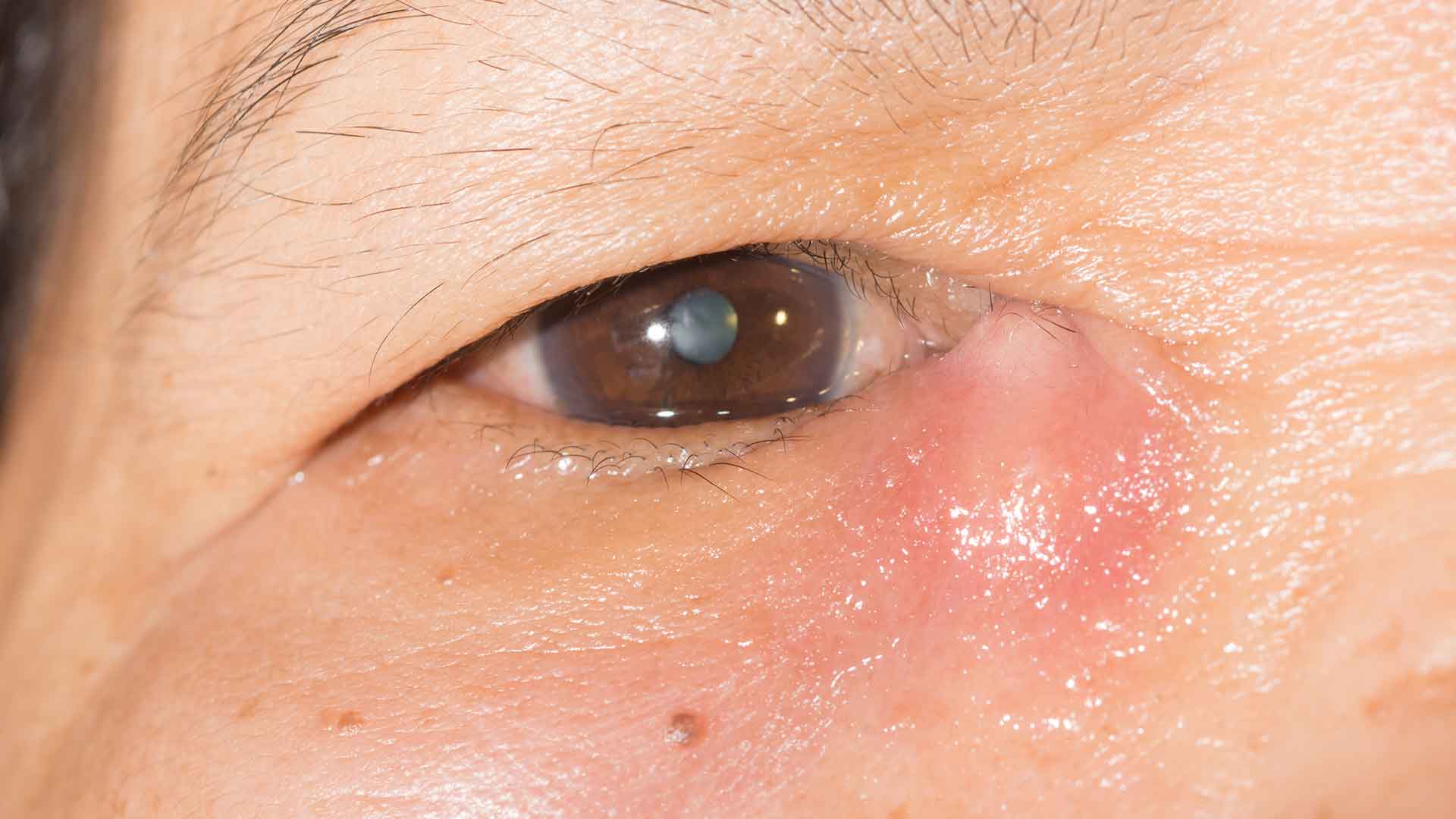
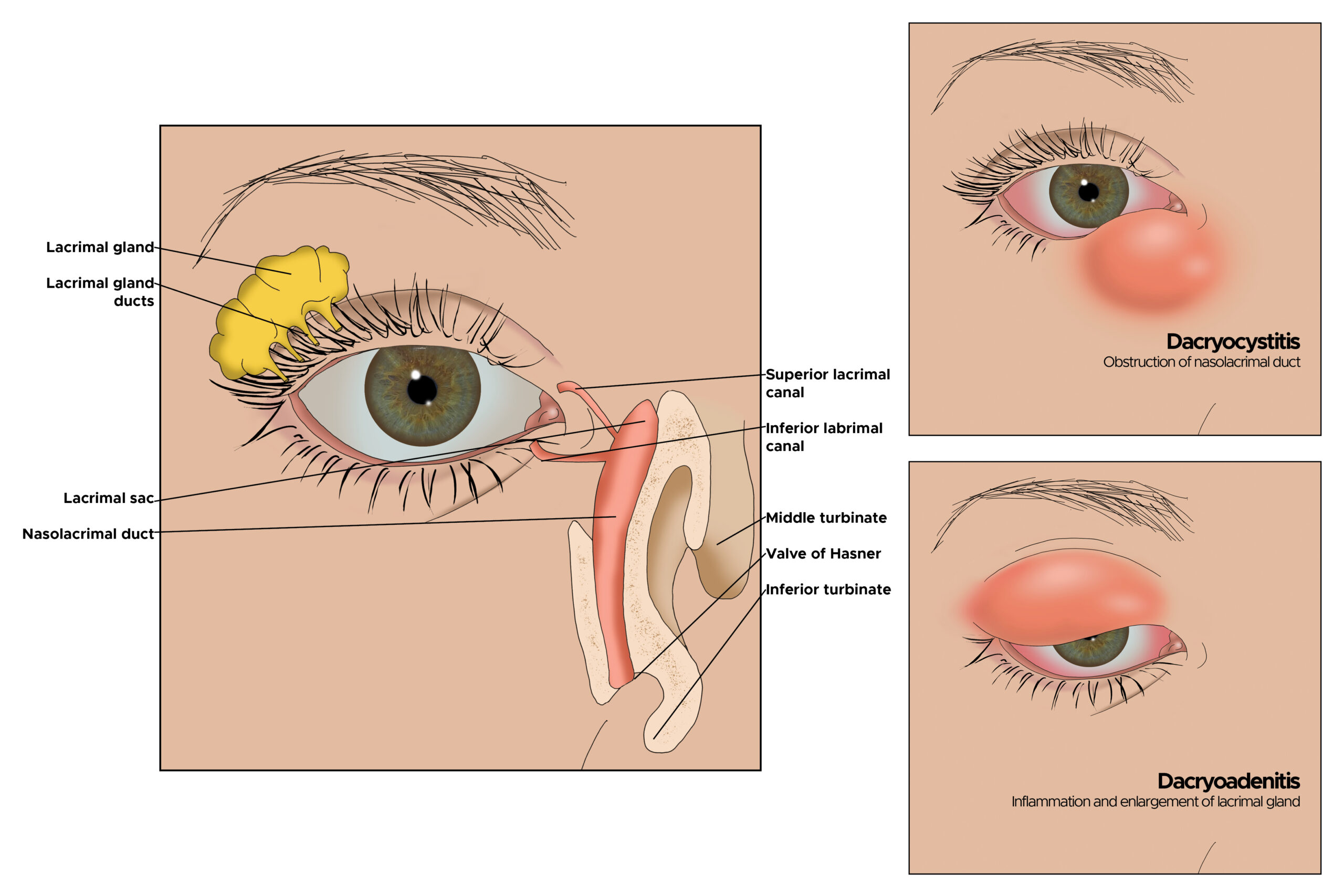
(Images above show typical signs of dacryocystitis — swelling, redness, and tenderness at the inner corner of the eye near the lacrimal sac, along with anatomical illustration of blocked nasolacrimal duct.)
Causes
Dacryocystitis is mainly caused by:
- Blockage of the nasolacrimal duct due to infection, inflammation, or congenital narrowing (especially in infants)
- Bacterial infection (commonly Staphylococcus or Streptococcus)
- Trauma, surgery, or tumors in rare cases
- More common in infants (congenital) and adults over 40 years (acquired)
Symptoms
Common symptoms include:
- Pain, redness, and swelling at the inner corner of the eye
- Tenderness when pressing on the lacrimal sac
- Excessive tearing or watering of the eye
- Pus or mucus discharge from the inner corner of the eye (may be expressed on pressure)
- Crusting of eyelids, especially in the morning
- In acute cases: fever and severe pain
- In chronic cases: recurrent mild swelling and discharge
Homeopathy Medicines with Key Symptoms and Doses
Homeopathic remedies are selected based on the exact symptom picture. The following are commonly considered for supportive management of dacryocystitis. Remedy selection must be determined only by a qualified homeopath after detailed case-taking, in coordination with an ophthalmologist or ENT specialist. These are general guidelines only.
Belladonna Best for acute dacryocystitis with sudden onset of intense redness, throbbing pain, heat, and swelling. The area is very sensitive to touch. Typical use: 30C, 3-5 pellets 1-2 times daily (short term).
Hepar Sulphuris Indicated when there is pus formation, extreme sensitivity to touch, and splinter-like pain. The slightest draft of air aggravates symptoms. Typical use: 30C, 3-5 pellets 1-2 times daily (short term).
Silicea Useful in chronic or recurrent cases with slow healing and tendency to suppuration. Helps promote drainage and tissue repair. Typical use: 6X or 30C, 3-5 pellets 1-2 times daily.
Pulsatilla Nigricans For thick, yellowish-green discharge with mild swelling. Symptoms are changeable and the person feels better in open air. Typical use: 30C, 3-5 pellets 1-2 times daily.
Mercurius Solubilis For offensive discharge, swollen glands, and pain worse at night with excessive salivation. Typical use: 30C, 3-5 pellets 1-2 times daily (short term).
Euphrasia Officinalis Helpful when there is profuse watering, burning, and irritation of the eye along with lacrimal sac involvement. Typical use: 30C, 3-5 pellets 1-2 times daily.
Apis Mellifica For puffy, stinging swelling with burning pain relieved by cold applications. Typical use: 30C, 3-5 pellets 1-2 times daily.
Arsenicum Album For burning pain with great restlessness and anxiety. The person feels chilly but better from warmth. Typical use: 30C, 3-5 pellets 1-2 times daily.
Calcarea Sulphurica Supports healing of suppurating wounds with thick yellow discharge. Useful in stubborn cases. Typical use: 6X or 30C, 3-5 pellets 1-2 times daily.
Sulphur Often used as an intercurrent remedy in chronic cases with unhealthy skin tendency and burning sensations. Typical use: 30C or 200C, sparingly (once weekly under guidance).
Important guidance: Acute dacryocystitis often requires antibiotics and warm compresses. In infants, gentle massage of the lacrimal sac (Crigler massage) may help. Chronic or recurrent cases may need surgical correction (dacryocystorhinostomy). Homeopathy can provide supportive relief from pain and inflammation but must be used only under medical supervision. If there is high fever, severe swelling, or vision changes, seek immediate medical care. This information is for educational purposes only and not a substitute for professional medical or homeopathic advice. Consult a qualified ophthalmologist or ENT specialist for proper diagnosis and treatment, and a registered homeopath for individualized supportive remedy selection. Early and proper management prevents complications.