Congenital Rubella Syndrome (CRS) is a group of serious birth defects that occur when a pregnant woman contracts the rubella virus (German measles) and passes it to her developing fetus, especially during the first trimester. The virus can cause widespread damage to multiple organs and systems, leading to lifelong disabilities. CRS is now rare in countries with high vaccination coverage (MMR vaccine), but it remains a concern in areas with low immunization rates. In homeopathy, remedies are selected based on the child’s individual constitutional picture, specific symptoms, developmental delays, and associated features. Homeopathy may provide supportive care to improve vitality and manage certain symptoms, but it is not a substitute for conventional medical management. Prevention through maternal vaccination before pregnancy is the most effective strategy. Affected children require multidisciplinary care including pediatric specialists, hearing aids/cochlear implants, eye surgery, cardiac management, and early intervention therapies.
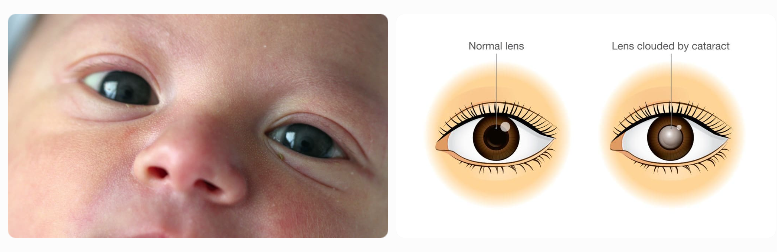
(Images above illustrate classic features of Congenital Rubella Syndrome, including the characteristic "blueberry muffin" rash (purpura due to dermal extramedullary hematopoiesis), cataracts causing white pupillary reflex, and associated congenital anomalies like heart defects or microcephaly.)
Causes
CRS occurs when the rubella virus crosses the placenta and infects the fetus. The risk is highest if the mother is infected in the first 12 weeks of pregnancy (up to 85% chance of defects). Key factors include:
- Maternal rubella infection during pregnancy (especially first trimester)
- Lack of maternal immunity (no prior infection or vaccination)
- Intrauterine transmission of the togavirus (Rubella virus)
- No specific treatment for the virus itself once fetal infection occurs
Symptoms
The classic triad of CRS includes:
- Sensorineural hearing loss (most common, often bilateral and profound)
- Eye abnormalities — cataracts (cloudy lens, white pupillary reflex), glaucoma, retinopathy ("salt and pepper" appearance)
- Congenital heart defects — patent ductus arteriosus (PDA), pulmonary artery stenosis, septal defects
Other common features:
- "Blueberry muffin" rash (purplish spots due to skin bleeding)
- Low birth weight, microcephaly (small head), developmental delay
- Enlarged liver/spleen (hepatosplenomegaly), jaundice, anemia, thrombocytopenia
- Bone lesions, meningoencephalitis, intellectual disability in severe cases
Symptoms and severity vary; some infants may appear normal at birth but develop issues later.
Homeopathy Medicines with Key Symptoms and Doses
Homeopathic remedies for Congenital Rubella Syndrome are chosen according to the child’s totality of symptoms, constitutional type, and developmental features. They are used supportively alongside conventional medical care (thyroid screening if needed, cardiac management, hearing/eye interventions, and rehabilitation). The following remedies are sometimes considered in classical homeopathy for rubella-related effects or similar congenital conditions. Remedy selection, potency, and repetition must be determined only by a qualified homeopath experienced in pediatric cases after detailed case-taking and in coordination with pediatric specialists. These are general guidelines only.
Baryta Carbonica Indicated for children with delayed physical and mental development, slow learning, enlarged glands, and hearing or speech difficulties. The child appears timid, physically underdeveloped, and may have recurrent infections. Typical use: 30C or 200C, 3-5 pellets once or twice weekly (sparingly in infants/children).
Calcarea Carbonica Suited to fair, flabby children with sweaty head, delayed milestones, large fontanelles, and tendency to prolonged jaundice or constipation. Supports constitutional weakness and slow development. Typical use: 30C or 200C, 3-5 pellets once or twice weekly.
Silicea Helpful in delicate, chilly children with poor assimilation, recurrent infections, and slow healing. Promotes vitality and supports tissue strength in cases with developmental sluggishness or ear involvement. Typical use: 6X or 30C, 3-5 pellets 1-2 times daily (monitor closely).
Pulsatilla Nigricans For changeable symptoms, thick discharges, and mild, weepy disposition. Useful when there is ear involvement, eye inflammation, or symptoms better in open air. Typical use: 30C, 3-5 pellets 1-2 times daily.
Mercurius Solubilis Indicated when there is chronic ear discharge, offensive secretions, swollen glands, or hearing loss with excessive salivation. Symptoms worse at night or with temperature changes. Typical use: 30C, 3-5 pellets 1-2 times daily (short term).
Causticum For stiffness, weakness, or paralytic tendencies in muscles/nerves with associated hearing or speech issues. Symptoms worse from cold dry air; useful in progressive developmental weakness. Typical use: 30C, 3-5 pellets 1-2 times daily.
Natrum Muriaticum For emotionally reserved children with dryness, craving for salt, or history of suppression. May support cases with eye or developmental issues linked to emotional factors. Typical use: 30C, 3-5 pellets 1-2 times daily.
Important guidance: Congenital Rubella Syndrome has no cure, but early medical intervention greatly improves outcomes. Management includes hormone replacement (if needed), surgery for cataracts/heart defects, hearing aids or cochlear implants, speech therapy, and developmental support. Vaccination of women before pregnancy prevents CRS. Homeopathy may offer constitutional support for vitality and associated symptoms but cannot reverse structural damage caused by the virus. Regular monitoring by a pediatrician, ENT specialist, ophthalmologist, and cardiologist is essential. This information is for educational purposes only and not a substitute for professional medical or homeopathic advice. Always consult a qualified pediatric specialist for diagnosis and management, and a registered homeopath experienced in pediatric cases for individualized remedy selection. Prevention through MMR vaccination is the best protection.