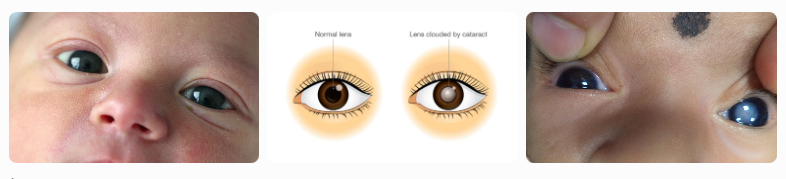
Congenital Cataract is a clouding (opacity) of the eye’s natural lens that is present at birth or develops shortly after birth. It is one of the leading causes of preventable childhood blindness. Unlike age-related cataracts, congenital cataracts interfere with normal visual development in infants, which can lead to amblyopia (lazy eye) or permanent vision impairment if not addressed promptly. In homeopathy, remedies are selected based on the child’s overall constitution, associated symptoms, family history, and the specific nature of the opacity. Homeopathy may support general eye health and slow progression in early or mild cases, but it is not a substitute for timely surgical intervention when the cataract is dense and affecting vision. Surgery (lens aspiration with or without intraocular lens implantation) is the standard treatment, often followed by visual rehabilitation and amblyopia therapy.
Causes
Congenital cataracts can be:
- Genetic/hereditary (most common — autosomal dominant in many cases)
- Due to intrauterine infections (e.g., rubella, toxoplasmosis, cytomegalovirus — TORCH infections)
- Metabolic disorders (e.g., galactosemia)
- Chromosomal abnormalities (e.g., Down syndrome, Trisomy 13/18)
- Maternal factors during pregnancy (diabetes, medications, radiation, or trauma)
- Idiopathic (unknown cause in many unilateral cases)
Symptoms
In newborns and infants, symptoms may be subtle and noticed by parents or during routine check-ups:
- White or greyish pupillary reflex (leukocoria) instead of normal red reflex
- Cloudy or hazy appearance in the pupil
- Poor visual fixation, lack of eye contact, or delayed visual milestones
- Nystagmus (involuntary eye movements) or strabismus (squint)
- Squinting, head tilting, or preference for one eye
- In older children: blurred vision, photophobia, or frequent changes in refractive error
Unilateral (one eye) cataracts may go unnoticed longer than bilateral ones.
Homeopathy Medicines with Key Symptoms and Doses
Homeopathic remedies for congenital cataract are selected according to the totality of symptoms and the child’s constitution. The following are among those classically indicated or mentioned in homeopathic literature for cataract (including congenital/early-onset cases). Remedy choice, potency, and repetition must be determined by a qualified homeopath experienced in pediatric cases after full case-taking. Surgery remains the primary treatment when vision is significantly affected. These are general guidelines only.
Calcarea Carbonica Indicated when there is a sensation of looking through a mist or veil. Suits fair, chubby children with sweaty head, delayed milestones, and tendency to catch colds. Often useful in slow-developing opacities with constitutional weakness. Typical use: 30C or 200C, 3-5 pellets once or twice weekly (sparingly in children).
Calcarea Fluorica Useful for hardening or thickening of tissues with opaque spots. Indicated in cases with a tendency toward hard swellings, joint issues, or bone spurs. Symptoms may improve with warmth. Typical use: 6X or 30C, 3-5 pellets 1-2 times daily (often in tissue salt form).
Causticum Helpful in cases with stiffness or weakness around the eyes, as if eye muscles are affected. Vision feels veiled; patient may rub eyes for relief. Useful in young individuals or when linked to cold exposure. Typical use: 30C, 3-5 pellets 1-2 times daily.
Silicea Indicated for slow-healing tendencies or opacities after suppressed discharges or eyestrain. Suits delicate children with sweaty feet, sensitivity to cold, and splinter-like sensations. Promotes expulsion and healing. Typical use: 6X or 30C, 3-5 pellets 1-2 times daily (monitor closely).
Phosphorus For misty or veiled vision with a tendency toward easy bleeding or degenerative changes. Patient may see halos or dark spots; fears darkness; suits tall, slender, sensitive children. Typical use: 30C, 3-5 pellets 1-2 times daily (use cautiously).
Cineraria Maritima Frequently used (often as eye drops) for early opacities and corneal issues. Traditionally considered supportive in traumatic or early cataracts to help maintain lens transparency. Typical use: Mother tincture or low potency drops — 1-2 drops in the affected eye 3-4 times daily (external use under guidance).
Natrum Muriaticum For recurrent or stress-related visual issues with dryness or mapped appearance. Suits emotionally reserved children with craving for salt and history of grief or suppression. Typical use: 30C, 3-5 pellets 1-2 times daily.
Conium Maculatum Indicated for slowly developing opacities, especially after injury or in older children/adolescents. Dim vision worse in artificial light; heavy eyelids; vertigo may be associated. Typical use: 30C, 3-5 pellets 1-2 times daily.
Important guidance: Congenital cataract is a medical emergency in terms of visual development. Dense cataracts require early surgical removal (ideally within the first few weeks/months of life) to prevent irreversible amblyopia. Homeopathy may be used supportively to improve general vitality and eye health, but it cannot replace surgery when the lens opacity is significant. Regular ophthalmologic follow-up, patching therapy (if unilateral), and refractive correction are essential. Supportive measures include good nutrition, avoiding eye rubbing, and protecting from bright light. This information is for educational purposes only and not a substitute for professional medical or homeopathic advice. Always consult a qualified pediatric ophthalmologist for diagnosis and management, and a registered homeopath experienced in eye conditions for individualized remedy selection. Early intervention is critical for the best visual outcome in children.