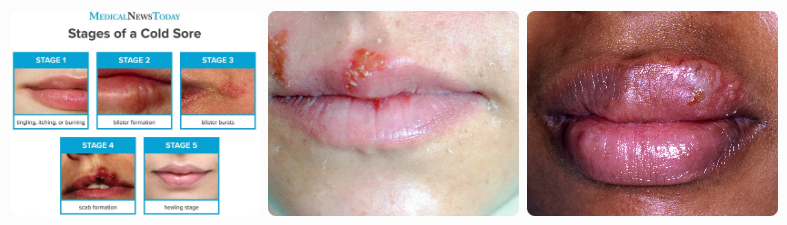
Cold Sores, also known as herpes labialis or fever blisters, are small, painful, fluid-filled blisters that typically appear on or around the lips, mouth, or sometimes the nose. They are caused by the herpes simplex virus type 1 (HSV-1), which remains dormant in the body after initial infection and can reactivate periodically. In homeopathy, remedies are selected individually based on the stage of the outbreak, the character of the blisters, associated symptoms (burning, itching, tingling), triggers, and the person’s constitution. Homeopathy aims to reduce the intensity and frequency of outbreaks, promote faster healing, and strengthen the body’s resistance. It is commonly used as a supportive approach. Recurrent or severe cold sores should be evaluated by a doctor, especially in immunocompromised individuals.
(Images above show the typical stages and appearance of cold sores: tingling/early stage, blister formation, bursting with crusting, and healing phase, along with clinical photos of active lesions on the lips.)
Causes
Cold sores are primarily triggered by the reactivation of the latent HSV-1 virus (sometimes HSV-2). Common triggers include:
- Stress, emotional upset, or fatigue
- Weakened immunity due to illness, fever, or medications
- Exposure to sunlight (UV rays), cold or windy weather
- Hormonal changes (menstruation, pregnancy)
- Physical trauma to the lips or illness (cold, flu)
- Once infected, the virus stays in the body lifelong and can reactivate when the immune system is low.
Symptoms
Typical symptoms progress in stages:
- Prodromal stage: Tingling, itching, burning, or tightness around the lips 1–2 days before blisters appear
- Blister stage: Small, painful, fluid-filled clusters of blisters on a red base
- Ulcer stage: Blisters burst, leaving shallow, painful sores that ooze
- Crusting and healing stage: Sores form a yellowish crust, then scab and heal over 7–10 days
- Associated symptoms: Swollen lymph nodes, mild fever, or general discomfort during outbreaks
Recurrent episodes are usually milder than the first infection.
Homeopathy Medicines with Key Symptoms and Doses
Homeopathic remedies work best when matched closely to the individual symptom picture. The following are commonly considered for cold sores based on traditional materia medica. Remedy selection, potency, and frequency must be determined by a qualified homeopath after detailed case evaluation. These are general guidelines only. Stop when clear improvement begins and reassess. Self-medication is not advised for recurrent cases.
Natrum Muriaticum One of the most frequently indicated remedies for recurrent cold sores, especially on the lips or corners of the mouth. Blisters are watery, with burning or smarting pain; often triggered by stress, grief, or sun exposure. Cracked lips and strong craving for salt are common. Typical use: 30C or 200C, 3-5 pellets 1-2 times daily during outbreaks (use higher potency sparingly for constitutional treatment).
Rhus Toxicodendron Indicated when cold sores are accompanied by intense itching, burning, and restlessness. Blisters are small, red, and surrounded by inflammation; worse from cold or damp weather, better from warmth. Often follows exposure to cold. Typical use: 30C, 3-5 pellets 2-3 times daily during active blister stage.
Apis Mellifica Suited for swollen, stinging, or burning cold sores with rosy-red inflammation and puffiness. Pain is relieved by cold applications; patient feels thirstless. Useful when swelling is prominent. Typical use: 30C, 3-5 pellets 2-3 times daily in early swollen stage.
Mercurius Solubilis Helpful for painful, ulcerated cold sores with offensive saliva or bad breath. Blisters may ooze yellowish fluid; pain is worse at night or from temperature changes; swollen glands may be present. Typical use: 30C, 3-5 pellets 1-2 times daily during ulcerative phase.
Hepar Sulphuris Indicated when cold sores are extremely sensitive to touch or cold air, with splinter-like pains. Blisters tend to suppurate or form pus; patient is chilly and irritable. Typical use: 30C, 3-5 pellets 2-3 times daily when sensitivity or suppuration is marked.
Dulcamara Useful for cold sores triggered by cold, damp weather or sudden temperature changes. Blisters appear after getting wet or chilled; itching and burning with thick crusts. Typical use: 30C, 3-5 pellets 1-2 times daily when weather is a clear trigger.
Graphites For cold sores with thick, sticky, honey-like discharge or crusts that ooze. Skin is dry and cracked; useful in persons with tendency to eczema or constipation. Typical use: 30C, 3-5 pellets 1-2 times daily during crusting stage.
Nitric Acid Indicated for very painful, splinter-like or cutting pains in the sores. Ulcers have irregular edges and bleed easily; worse from touch or cold drinks. Typical use: 30C, 3-5 pellets 1-2 times daily for sharp, painful ulcers.
Sulphur Helpful as an intercurrent remedy in chronic recurrent cold sores when other remedies do not fully act. Burning and itching; patient is warm-blooded and symptoms worsen from heat or bathing. Typical use: 30C or 200C, used sparingly (single dose or once weekly under guidance).
Important guidance: Cold sores are highly contagious during the blister and oozing stage — avoid kissing, sharing utensils, or touching the area. Supportive measures include keeping the area clean and dry, using sunscreen on lips, managing stress, and avoiding known triggers. Conventional antiviral creams (e.g., acyclovir) may be used alongside homeopathy for faster relief in severe outbreaks. This information is for educational purposes only and not a substitute for professional medical or homeopathic advice. Consult a qualified doctor (especially if outbreaks are very frequent or severe) and a registered homeopath for personalized treatment.