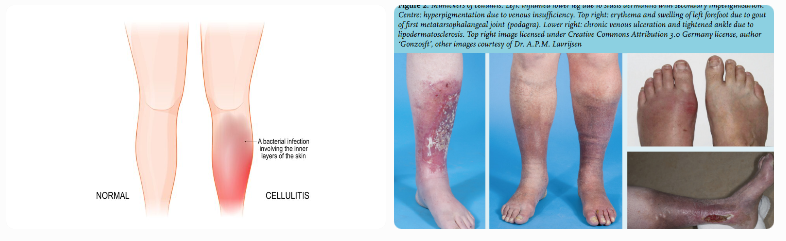
Cellulitis is a common bacterial infection of the deeper layers of the skin (dermis and subcutaneous tissue). It usually affects the legs but can occur anywhere on the body. In conventional medicine it requires prompt antibiotic treatment because it can spread rapidly and lead to serious complications. In homeopathy, remedies are chosen individually based on the specific symptoms, location, modalities (what improves or worsens the condition), and the person’s overall state. Homeopathy may be used supportively alongside conventional care to reduce inflammation, swelling, pain, and promote healing, but it is not a substitute for antibiotics in acute or spreading cellulitis. Professional medical evaluation is essential, especially if there is fever, rapid spread, or underlying conditions like diabetes.
(Images above show a clear comparison of normal leg skin versus cellulitis with marked redness, swelling, and inflammation, along with clinical examples of affected lower limbs.)
Causes
Cellulitis most often occurs when bacteria (commonly Streptococcus or Staphylococcus) enter the skin through a break such as a cut, crack, insect bite, ulcer, surgical wound, or athlete’s foot. Risk factors include weakened immunity, diabetes, poor circulation, lymphedema, obesity, previous cellulitis, chronic skin conditions (eczema, psoriasis), and intravenous drug use.
Symptoms
Typical symptoms develop quickly and include:
- Redness and warmth of the affected skin that spreads rapidly
- Swelling and tightness
- Pain or tenderness (often severe even to light touch)
- Shiny, stretched appearance of the skin
- Fever, chills, fatigue, or swollen lymph nodes
- In some cases, blisters, streaks (lymphangitis), or pus formation
Homeopathy Medicines with Key Symptoms and Doses
Homeopathic remedies work best when matched closely to the individual symptom picture. The following are among the commonly considered remedies for cellulitis based on traditional materia medica. Remedy selection, potency, and repetition must be guided by a qualified homeopath after full evaluation. These are general guidelines only. Stop when clear improvement begins and reassess. Self-medication is not advised, especially in acute cases.
Belladonna Indicated in the early, violent stage with sudden onset of bright red, hot, swollen, shiny skin that looks erysipelatous. Throbbing pain, high sensitivity to touch or jar, flushed face, and fever with delirium-like restlessness. Symptoms worse from touch, light, noise; better from rest in semi-erect position. Typical use: 30C, 3-5 pellets every 1-2 hours in acute phase (taper as improvement occurs).
Apis Mellifica Suited for marked puffiness and rosy-red swelling with stinging, burning pain like insect bites. The skin feels hot but the patient is thirstless. Swelling spreads quickly; better from cold applications, open air, and motion; worse from heat and pressure. Often right-sided. Typical use: 30C, 3-5 pellets 2-4 times daily during active swelling.
Rhus Toxicodendron Useful when there is red, swollen skin with intense itching or restlessness. Pain and stiffness are relieved by continued motion and warmth. The person feels anxious and restless at night. Often indicated in early stages or when symptoms follow exposure to damp/cold. Typical use: 30C or 200C, 3-5 pellets 2-3 times daily.
Lachesis Indicated for left-sided cellulitis or when symptoms are worse after sleep. The affected area is purplish-red, very sensitive to touch (cannot bear even the weight of clothes), with bluish discoloration or tendency to bleed. Patient is talkative and feels worse from heat. Typical use: 30C, 3-5 pellets 1-2 times daily (use cautiously and under guidance).
Ledum Palustre Helpful for cellulitis following insect bites, punctured wounds, or cold applications that seem to aggravate. The area is swollen, cold to touch, yet pain is relieved by cold applications. Skin may look mottled or have a bluish tinge. Typical use: 30C, 3-5 pellets 2-3 times daily.
Silicea Indicated when there is suppuration (pus formation), slow healing, or unhealthy skin with tendency for every small injury to fester. Stitching pains, offensive discharge, and sensitivity to cold. Suits chronic or recurrent cases with weak immunity. Typical use: 6X or 30C, 3-5 pellets 2-3 times daily (monitor closely).
Hepar Sulphuris For highly sensitive, inflamed areas with extreme pain from slightest touch. Suppuration is imminent or present; the patient is chilly and irritable. Discharge may be thick and offensive. Symptoms worse from cold; better from warmth. Typical use: 30C, 3-5 pellets 2-4 times daily in suppurative stage.
Arsenicum Album Useful for burning pain with great anxiety and restlessness. The skin may look bluish or blackish with weakness and prostration. Thirst for small sips of water; symptoms worse midnight to 3 am, better from warmth. Typical use: 30C, 3-5 pellets every 2-4 hours during burning phase (taper quickly).
Pyrogenium Indicated in septic states with high fever, offensive discharges, and feeling of soreness all over. The pulse may be out of proportion to temperature. Useful when infection seems to linger or there is a septic tendency. Typical use: 30C or 200C, sparingly under professional guidance.
Calendula Officinalis Primarily for open wounds or after drainage in cellulitis to promote healthy granulation and prevent further infection. Helps in healing torn or suppurating tissues with raw, inflamed appearance. Typical use: 30C, 3-5 pellets 2-3 times daily or as tincture for external gentle cleansing (diluted).
Important guidance: Cellulitis is a medical emergency if spreading rapidly, accompanied by high fever, or in immunocompromised individuals. Seek immediate conventional medical care (antibiotics may be life-saving). Homeopathy can be used supportively after or alongside medical treatment for symptom relief and faster recovery. Combine with rest, elevation of the affected part, warm (not hot) compresses as advised, and good hygiene. Chronic or recurrent cellulitis needs thorough investigation for underlying causes. This information is educational and not a replacement for professional medical or homeopathic advice. Always consult a qualified doctor and registered homeopath for safe, individualized treatment.