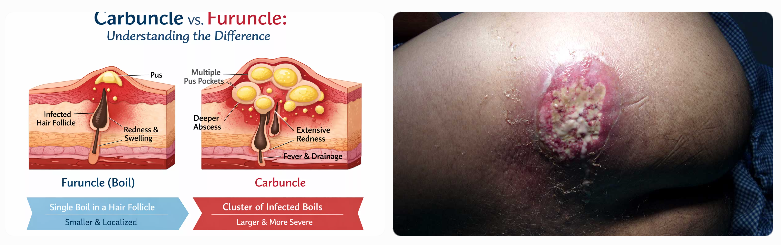
Carbuncle is a deep, painful bacterial skin infection that forms a cluster of interconnected boils (furuncles) involving multiple hair follicles and surrounding tissue. It is larger and more severe than a single boil, often developing a central area with multiple pus-filled heads. In conventional medicine, carbuncles frequently require medical attention, including antibiotics and sometimes surgical drainage, especially if they are large, on the face/neck, or accompanied by fever. In homeopathy, remedies are selected individually based on the specific symptoms, stage of the infection, pain characteristics, discharge, and the person’s constitution. Homeopathy may be used supportively to promote drainage, reduce inflammation, relieve pain, and aid healing, but it is not a substitute for proper medical care in acute or spreading cases.
(Images above illustrate the difference between a single furuncle/boil and a carbuncle with multiple pus pockets, along with a clinical view of a typical carbuncle showing redness, swelling, and pus discharge.)
Causes
Carbuncles are primarily caused by bacterial infection, most commonly Staphylococcus aureus (including MRSA in some cases). Bacteria enter through small breaks in the skin, hair follicles, or existing skin conditions. Risk factors include poor hygiene, diabetes, weakened immunity, obesity, poor nutrition, friction from clothing, shaving, or underlying skin disorders. They commonly appear on the back of the neck, shoulders, thighs, or buttocks.
Symptoms
Symptoms usually develop gradually and include:
- A large, red, swollen, and painful lump under the skin
- Multiple pus-filled heads or openings on the surface
- Throbbing or burning pain with tenderness
- Warmth and hardness around the affected area
- Possible fever, fatigue, chills, or swollen nearby lymph nodes
- Yellowish-white pus discharge that may be thick or offensive once it drains
- Slow healing with risk of scarring
Homeopathy Medicines with Key Symptoms and Doses
Homeopathic remedies work best when matched closely to the individual symptom picture. The following are commonly considered for carbuncles based on traditional materia medica. Remedy selection, potency, and frequency must be determined by a qualified homeopath after detailed case evaluation. These are general guidelines only. Stop when clear improvement begins and reassess. Self-medication is not advised, especially in acute or severe infections.
Belladonna Indicated in the initial inflammatory stage with sudden onset of bright red, hot, swollen, and throbbing pain. The area is very sensitive to touch or slightest jar. High fever with flushed face and restlessness may be present. Symptoms are worse from touch, light, and noise. Typical use: 30C, 3-5 pellets every 1-2 hours in the early violent stage (taper as improvement sets in).
Silicea Highly useful when there is slow maturation of the carbuncle or tendency for pus formation with delayed drainage. Stitching or splinter-like pains; the discharge may be thin and offensive. Helps promote natural expulsion of pus and healing in chronic or recurrent cases. Suits individuals with weak immunity or sweaty feet/hands. Typical use: 6X or 30C, 3-5 pellets 2-3 times daily (monitor closely for progress).
Hepar Sulphuris Suited for extremely painful, sensitive carbuncles where even slight touch causes intense pain (as if a splinter is present). The area is suppurating with thick, yellow, offensive pus. The patient is chilly, irritable, and feels better from warmth. Typical use: 30C, 3-5 pellets 2-4 times daily during the suppurative stage.
Myristica Sebifera Often called the “homeopathic knife,” it is indicated to hasten suppuration and promote easy drainage of pus in deep-seated abscesses and carbuncles. Useful when the swelling is hard and pus is forming but not breaking through. Typical use: 30C, 3-5 pellets 2-3 times daily until drainage occurs.
Arsenicum Album Helpful when there is intense burning pain with great anxiety and restlessness. The skin may appear bluish or gangrenous in severe cases. Thirst for small sips of water; symptoms worse from midnight to 3 a.m. and better from warmth. Suits debilitated or septic states. Typical use: 30C, 3-5 pellets every 2-4 hours during burning phase (taper quickly).
Lachesis Indicated for left-sided carbuncles or when the area is purplish-blue, very sensitive to touch (cannot tolerate tight clothing), and bleeds easily. The patient is talkative and feels worse after sleep or from heat. Typical use: 30C, 3-5 pellets 1-2 times daily under professional guidance.
Tarentula Cubensis Useful for severe, painful carbuncles with bluish-purple discoloration and intense burning or stinging pain. Helps in septic conditions with marked prostration. Often considered when other remedies do not act sufficiently. Typical use: 30C or 200C, sparingly (1-2 times daily as needed).
Sulphur Indicated in chronic or recurrent carbuncles with burning sensation and itching. The skin is unhealthy with tendency for every minor injury to suppurate. Suits warm-blooded individuals with skin complaints. Often used as an intercurrent remedy. Typical use: 30C or 200C, used sparingly (e.g., single dose or once weekly).
Calendula Officinalis Primarily for promoting clean healing after drainage or in open wounds from the carbuncle. Helps prevent secondary infection and supports healthy granulation of tissue. Can be used externally as diluted tincture for gentle cleansing. Typical use: 30C, 3-5 pellets 2-3 times daily or as directed.
Echinacea Angustifolia Supports the immune response in septic or recurrent infections. Useful when there is marked weakness with tendency for boils and carbuncles. Helps in blood purification and resistance against infection. Typical use: 30C, 3-5 pellets 2-3 times daily (often in low potency or as tincture under guidance).
Important guidance: Carbuncles, especially large ones, on the face, or with systemic symptoms (fever, chills, rapid spread), require immediate conventional medical evaluation and often antibiotics or drainage to prevent complications like sepsis. Homeopathy can be used supportively alongside medical treatment for better symptom relief and healing. Maintain good hygiene, avoid squeezing the lesion, use warm compresses (as advised), and ensure proper nutrition and rest. People with diabetes or weakened immunity need extra caution. This information is for educational purposes only and not a substitute for professional medical or homeopathic advice. Always consult a qualified doctor and registered homeopath for safe, individualized care.