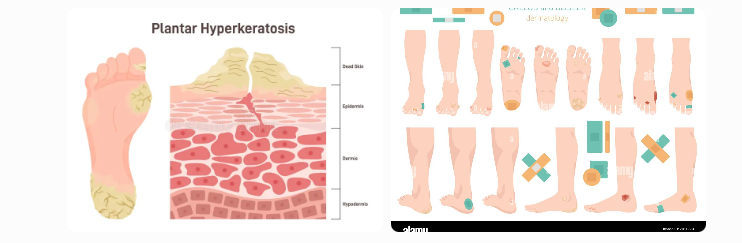
Calluses (also known as callosities) are areas of thickened, hardened skin that develop as a natural protective response to repeated friction, pressure, or irritation. They are usually painless or mildly uncomfortable and commonly appear on the soles of the feet, heels, palms, or fingers. In homeopathy, treatment is individualized based on the person's constitution, the nature of the callus (hard, soft, painful, inflamed), location, associated symptoms, and modalities (what makes it better or worse). Homeopathy aims to reduce the thickening, relieve discomfort, and address the tendency to form calluses rather than just removing the surface layer. It is often combined with proper foot care, well-fitting footwear, and avoidance of pressure points. Always consult a qualified homeopath or doctor for personalized prescription, especially if there is pain, infection, or underlying conditions like diabetes.
(Images above illustrate normal skin versus areas affected by calluses/corns, showing thickened, hardened layers on the foot and cross-sectional views of hyperkeratosis.)
Causes
Calluses form due to repeated mechanical stress on the skin. Common causes include:
- Ill-fitting shoes or high heels causing pressure on specific areas.
- Walking barefoot or on hard/uneven surfaces.
- Occupational activities involving repetitive hand use (e.g., manual labor, sports, or playing instruments).
- Foot deformities such as bunions, hammertoes, or abnormal gait.
- Excessive body weight increasing pressure on feet.
- Dry skin or lack of proper moisturization making skin more prone to thickening.
Symptoms
Typical symptoms include:
- Thick, rough, yellowish or grayish patches of hardened skin.
- Reduced sensitivity in the affected area compared to surrounding skin.
- Mild pain or tenderness when pressure is applied (more common in corns than broad calluses).
- Cracking or fissuring in severe cases, leading to discomfort or secondary infection.
- Location-specific issues: on feet — pain while walking; on hands — interference with grip or fine work.
Homeopathy Medicines with Key Symptoms and Doses
Homeopathic remedies are selected according to symptom similarity. The following are commonly indicated for calluses and corns. Remedy selection, potency, and repetition must be guided by a qualified homeopath after full case evaluation. General guidelines only: use 3–5 pellets (or as directed), stop when improvement starts, and reassess. Self-medication is not recommended for long-term use.
Antimonium Crudum Indicated for large, hard, horny calluses or corns, especially on the soles of the feet near the toes. Thickened skin with great sensitiveness while walking (especially on hard surfaces or stone pavements). Aching, stitching pains; corns may be inflamed or tender to touch. Suits people with tendency to gain weight or digestive issues like alternating constipation/diarrhea. Typical use: 30C, 3-5 pellets once or twice daily during active discomfort (short term).
Silicea Useful for soft corns between the toes or inflamed calluses with tendency to pus formation, stitching, burning, or tearing pains. Helps in cases with suppuration or when the skin is sensitive and slow to heal. Often suited to delicate individuals with sweaty feet or weak immunity. Typical use: 6X or 30C, 3-5 pellets 2–3 times daily as needed (monitor closely).
Thuja Occidentalis Helpful for calluses or corns with a tendency toward warty growths or when there is a history of vaccination/suppressed eruptions. Useful for hard, painful thickenings that recur. Suits individuals with moist skin or sycotic constitution. Typical use: 30C or 200C, sparingly (e.g., once daily or as single doses under guidance).
Nitric Acid Indicated for very painful corns or calluses with splinter-like, pricking, or sharp pains. Skin may crack or bleed easily; worse from touch or pressure. Suits sensitive persons who are chilly and irritable. Typical use: 30C, 3-5 pellets 1–2 times daily during painful episodes.
Ferrum Picricum For old, hard, longstanding calluses or corns that are discolored (yellowish-brown) and resistant to other treatments. Thickened skin with pressing or aching pain; useful when corns reappear after removal. Typical use: 30C, 3-5 pellets once or twice daily.
Sulphur When there is burning sensation in the callused area or soles, with excessive sweating of feet. Hard coating yields gradually; suits warm-blooded individuals with skin complaints and itching. Typical use: 30C or 200C, used sparingly (often as intercurrent remedy).
Lycopodium Clavatum For painful callosities on soles with tearing pain while walking; skin thick and indurated. Right-sided complaints or digestive weakness may be present. Suits anticipatory, anxious individuals. Typical use: 30C or 200C, 3-5 pellets once daily or as needed.
Ranunculus Bulbosus Indicated for corns or calluses with sharp, shooting pains, especially if bluish or inflamed. Useful for painful thickenings from pressure or friction. Typical use: 30C, 3-5 pellets 1–2 times daily.
Hepar Sulphuris For inflamed, sensitive calluses or corns with suppuration tendency; extreme pain from slight touch. Chilly patients who are very sensitive to cold and drafts. Typical use: 30C, 3-5 pellets 1–2 times daily in acute inflammation.
Graphites Helpful for rough, cracked, hard calluses with sticky or oozing discharge in fissures. Suits persons with dry, unhealthy skin and constipation. Typical use: 30C, 3-5 pellets once or twice daily.
Important guidance: Homeopathy works best with constitutional matching and supportive measures like wearing properly fitted shoes, using cushioned insoles, soaking feet in warm water followed by gentle pumice stone use (not aggressive), and moisturizing regularly. Avoid self-surgery or over-the-counter corn plasters without guidance if you have diabetes or poor circulation, as complications can arise. Persistent or painful calluses warrant medical evaluation to rule out underlying issues. This information is for educational purposes only and not a substitute for professional homeopathic or medical advice. Consult a registered practitioner for safe and effective treatment.