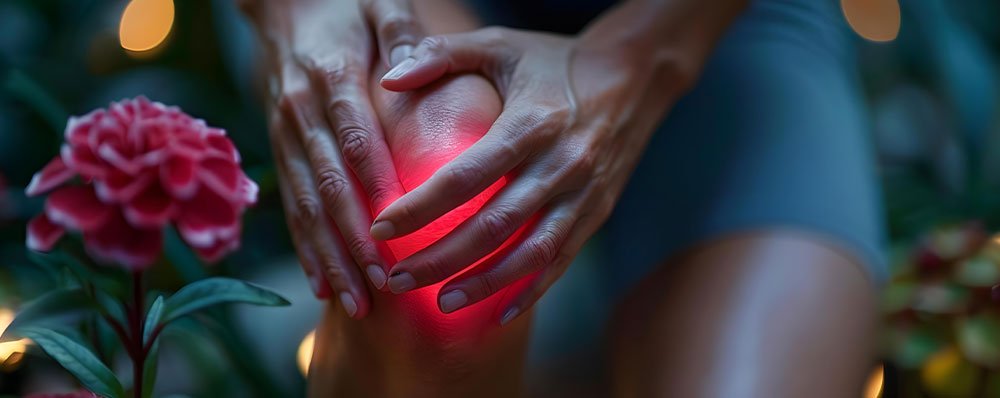
Bursitis of the Knee (also called prepatellar bursitis, infrapatellar bursitis, pes anserine bursitis, or suprapatellar bursitis depending on the affected bursa) is inflammation of one of the small fluid-filled sacs (bursae) around the knee joint that reduce friction between bones, tendons, and muscles. The most common type is prepatellar bursitis (“housemaid’s knee”), often from prolonged kneeling, repeated trauma, or infection.
Common Symptoms of Knee Bursitis
- Painful swelling over the front of the knee (prepatellar) or inner knee (pes anserine)
- Redness, warmth, and tenderness over the swollen area
- Pain worse with kneeling, squatting, climbing stairs, or direct pressure
- Stiffness and limited knee movement (especially flexion)
- In septic bursitis: fever, chills, severe pain, rapid swelling, pus discharge
- Chronic cases: recurrent swelling, thickened bursa wall, “squishy” feel
Important disclaimer Acute septic (infectious) bursitis is a medical emergency requiring urgent antibiotics (often IV) ± aspiration/drainage — delay can lead to septic arthritis or systemic infection. Homeopathy has no scientific evidence (no RCTs or high-quality studies accepted by orthopedics or rheumatology guidelines) that it can reduce bursal inflammation, resolve infection, prevent recurrence, or replace proper diagnosis (ultrasound/MRI, aspiration for culture if septic suspected) and treatment (rest, ice, NSAIDs, aspiration, antibiotics, or surgical bursectomy in chronic cases).
Never rely on homeopathy alone — especially if fever, rapid swelling, redness spreading, or pus is present. Consult an orthopedic surgeon or rheumatologist promptly for:
- Clinical exam + ultrasound (to confirm bursa inflammation vs joint effusion)
- Aspiration if septic bursitis suspected (Gram stain, culture, cell count)
- Blood tests (CRP, ESR, CBC) if infection suspected
In Hyderabad, seek evaluation at orthopedic departments of Apollo, Yashoda, Care Hospitals, KIMS, Sunshine Hospitals, or NIMS.
Homeopathic Medicines for Knee Bursitis (Supportive / Symptomatic Only)
Remedies are chosen based on pain type, swelling, modalities (better/worse), and cause (trauma, overuse, cold exposure, etc.).
- Rhus Toxicodendron (Rhus Tox) The most commonly prescribed remedy for inflammatory bursitis with stiffness. Key indications: Stiffness and pain worst on initial movement or after rest/sleep; better continued gentle motion, warmth, warm applications, walking; pain worse cold/damp weather; restlessness; suits overuse, repetitive kneeling, or inflammatory bursitis that improves with movement. Typical potency and dose: 30C — 3–5 pellets every 2–4 hours during acute painful/stiff flare (first 3–7 days), then 2–3 times daily until improvement. Chronic: 200C single dose or once every 1–2 weeks (under guidance).
- Bryonia Alba First-line when pain is markedly worse from the slightest motion. Key indications: Sharp, stitching, tearing pain in bursa; worse any movement, coughing, breathing, turning; better absolute rest, hard pressure, lying on painful side; great thirst for large cold drinks; suits acute bursitis with severe guarding and immobility. Typical potency and dose: 30C — 3–5 pellets every 2–4 hours in acute phase (usually short-term 2–5 days); taper quickly as pain eases.
- Ruta Graveolens Specific for deep periosteal/bursal pain after trauma or overuse. Key indications: Deep bruised, sore feeling in bursa/tendons; pain from kneeling, repetitive strain, or direct trauma; worse cold/damp; better warmth/motion; suits prepatellar or infrapatellar bursitis from prolonged kneeling or pressure. Typical potency and dose: 30C — 3–5 pellets 2–3 times daily for 5–10 days (acute to subacute phase); 200C single dose for chronic soreness.
- Ledum Palustre For cold, swollen bursitis with pain traveling upward. Key indications: Swollen, cold-to-touch bursa; pain starts in knee and ascends; better cold applications/ice; suits traumatic or septic bursitis with cold sensation despite inflammation. Typical potency and dose: 30C — 3–5 pellets 2–3 times daily during painful/swollen phase (short-term 5–10 days).
- Arnica Montana For initial trauma, bruising, and soreness after injury. Key indications: Sore, bruised feeling after blow, fall, or repeated trauma; swelling and discoloration; worse touch/jarring; suits acute post-traumatic bursitis (e.g., after kneeling injury or fall on knee). Typical potency and dose: 30C or 200C — 3–5 pellets every 2–4 hours for first 24–48 hours after trauma (acute phase); reduce quickly.
Other frequently considered remedies (supportive):
- Apis mellifica — sudden, stinging, edematous swelling, better cold
- Belladonna — very acute, hot, red, throbbing inflammation
- Silicea — chronic, slow-healing bursitis with fistula or poor resolution
General notes on use:
- Acute painful/swollen phase: low potencies (30C), repeated 2–4 times daily for 3–7 days
- Chronic or recurrent bursitis: higher potencies (200C) given infrequently (weekly/monthly) constitutionally
- Perceived reduction in pain, swelling, or stiffness may be noticed in days to weeks if remedy matches
- Always combine with:
- Rest and avoidance of kneeling/pressure
- Ice packs (10–15 min every 2–3 hours first 48 hours)
- Compression bandage (not too tight)
- NSAIDs (ibuprofen) or paracetamol for pain/inflammation
- Aspiration + antibiotics if septic bursitis confirmed
Re-evaluate with orthopedic surgeon if:
- Swelling/pain worsens after 3–5 days
- Fever, chills, or spreading redness appears
- No improvement or recurrent episodes
- Inability to fully extend/flex knee
Professional homeopathic prescribing may help reduce acute pain and inflammation supportively in non-septic bursitis, but the foundation of management is rest, ice, compression, anti-inflammatories, and medical evaluation (especially to rule out septic bursitis). Seek orthopedic evaluation promptly if swelling is large, painful, or not improving.