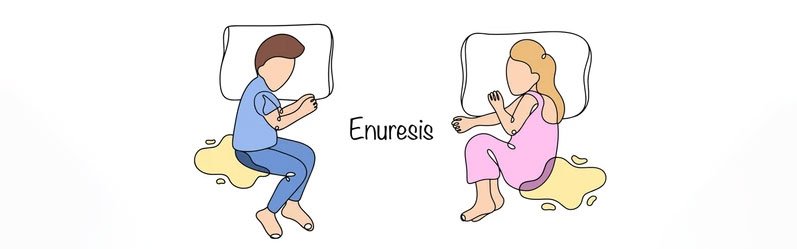
Enuresis (commonly known as bedwetting) is the involuntary passage of urine during sleep in a child who is old enough to have achieved bladder control (usually after 5 years of age). It can be nocturnal (nighttime only), diurnal (daytime), or both. Most children outgrow it naturally, but persistent cases can cause emotional distress. In homeopathy, remedies are used only as supportive care to help strengthen bladder control, reduce anxiety, and support nervous system balance. Enuresis often has underlying physical or emotional causes and requires proper evaluation.
(Images above show enuresis — child wetting the bed at night due to inability to control urine during sleep.)
Causes
Enuresis can result from:
- Delayed maturation of bladder control or nervous system
- Deep sleep pattern (child does not wake up when bladder is full)
- Small bladder capacity or excessive urine production at night
- Emotional stress, anxiety, or family changes
- Urinary tract infections, constipation, or diabetes (less common)
Symptoms
Common symptoms include:
- Repeated bedwetting during sleep (at least twice a week for 3 months)
- Daytime wetting or urgency in some cases
- Embarrassment, low self-esteem, or social withdrawal
- Disturbed sleep for the child and family
- In some cases: associated constipation or daytime urinary symptoms
Homeopathy Medicines with Key Symptoms and Doses
Homeopathic remedies for enuresis are highly individualized based on the child’s temperament, sleep pattern, and associated symptoms. They are used only as supportive care alongside behavioral measures (limiting fluids before bed, regular toilet routine, positive reinforcement). The following are commonly considered. Remedy selection must be determined only by a qualified homeopath after detailed case-taking. These are general guidelines only.
Causticum For enuresis in children who wet the bed especially in the first part of the night. Often associated with weak bladder or paralytic tendency. Typical use: 30C, 3-5 pellets 1-2 times daily.
Kreosotum For profuse, strong-smelling urine with sudden urging. The child wets the bed soon after falling asleep. Typical use: 30C, 3-5 pellets 1-2 times daily.
Equisetum For enuresis with frequent urging and pain in the bladder region even after passing urine. Typical use: 30C, 3-5 pellets 1-2 times daily.
Belladonna For sudden involuntary urination during deep sleep with hot, flushed face and possible nightmares. Typical use: 30C, 3-5 pellets 1-2 times daily (short term).
Sepia For enuresis in children (especially girls) with bearing-down sensation and emotional indifference or irritability. Typical use: 30C, 3-5 pellets 1-2 times daily.
Pulsatilla For mild, weepy, and affectionate children with changeable symptoms. Bedwetting worse in warm rooms. Typical use: 30C, 3-5 pellets 1-2 times daily.
Calcarea Carbonica For fair, sweaty, and sluggish children who are fearful and have delayed milestones. Typical use: 30C or 200C, 3-5 pellets once or twice weekly.
Silicea For delicate, sensitive, and chilly children with weakness and recurrent bedwetting. Typical use: 6X or 30C, 3-5 pellets 1-2 times daily.
Natrum Muriaticum For emotionally reserved children with bedwetting linked to grief or stress. Craving for salt. Typical use: 30C, 3-5 pellets 1-2 times daily.
Sulphur For chronic cases with offensive urine and unhealthy skin tendency. Typical use: 30C or 200C, sparingly (once weekly under guidance).
Important guidance: Enuresis is common and many children outgrow it by age 7–10. Management includes limiting fluids 1–2 hours before bed, regular daytime toilet habits, bed alarms, and positive reinforcement. Homeopathy may help strengthen bladder control and reduce anxiety as supportive care but must never replace pediatric evaluation to rule out underlying medical causes (infection, constipation, diabetes, etc.). This information is for educational purposes only and not a substitute for professional medical or homeopathic advice. Consult a qualified pediatrician for persistent bedwetting in a child, and a registered homeopath for individualized supportive remedy selection. With patience and consistent care, most children stop bedwetting successfully.