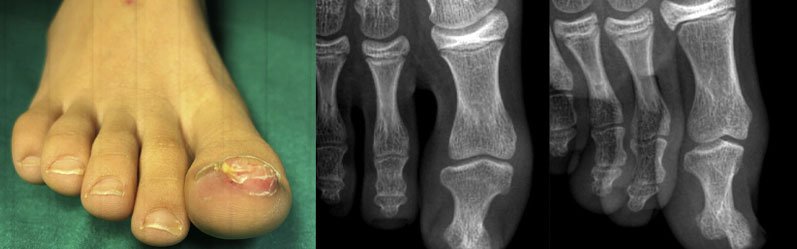
Exostosis (also known as osteochondroma) is a benign bony growth or outgrowth that develops on the surface of a bone. It is one of the most common benign bone tumors, usually appearing during childhood or adolescence. While generally harmless, large exostoses can cause pain, deformity, or pressure on nearby nerves and tissues. In homeopathy, remedies are used only as supportive care to help reduce pain, swelling, and growth tendency while supporting bone health. Exostosis requires proper orthopedic evaluation to rule out complications or malignant transformation (rare).
(Images above show exostosis — bony outgrowths projecting from the surface of long bones, commonly near joints like the knee.)
Causes
Exostosis is primarily caused by:
- Genetic factors (hereditary multiple exostoses)
- Abnormal growth of cartilage at the growth plate during childhood
- Trauma or repeated stress to the bone in some cases
- Rarely associated with radiation exposure
Symptoms
Common symptoms include:
- Painless, hard lump or swelling near a joint or on a bone
- Pain if the growth presses on nerves, muscles, or tendons
- Restricted movement or deformity in the affected area
- Limping or difficulty using the limb if near the knee or hip
- In rare cases: fracture of the stalk or malignant change (very rare)
Homeopathy Medicines with Key Symptoms and Doses
Homeopathic remedies for exostosis are selected based on the location, pain, growth characteristics, and the person’s constitution. They are used only as supportive care. The following are commonly considered. Remedy selection must be determined only by a qualified homeopath after detailed case-taking, in coordination with an orthopedic specialist. These are general guidelines only.
Calcarea Fluorica Top remedy for bony growths and exostoses. Supports elasticity of connective tissue and helps reduce hard swellings. Typical use: 6X or 30C, 3-5 pellets 1-2 times daily.
Silicea For exostosis with weakness, slow healing, and sensitivity. Helps in cases with recurrent bony growths. Typical use: 6X or 30C, 3-5 pellets 1-2 times daily.
Hecla Lava Specific for bony outgrowths and exostoses, especially of the jaw or long bones. Typical use: 30C, 3-5 pellets 1-2 times daily.
Ruta Graveolens For exostosis with deep bone pain and periosteal involvement after injury or strain. Typical use: 30C, 3-5 pellets 1-2 times daily.
Symphytum For bone-related growths and pain, supporting bone healing. Typical use: 30C, 3-5 pellets 1-2 times daily.
Calcarea Carbonica For fair, sweaty persons with sluggish metabolism and tendency to bony swellings. Typical use: 30C or 200C, 3-5 pellets once or twice weekly.
Phosphorus For sensitive, tall persons with burning bone pain and easy bleeding tendency. Typical use: 30C, 3-5 pellets 1-2 times daily (use cautiously).
Lycopodium Clavatum For right-sided exostosis with digestive weakness and lack of confidence. Typical use: 30C or 200C, 3-5 pellets 1-2 times daily.
Thuja Occidentalis For exostosis with history of suppressed eruptions or vaccinations. Typical use: 30C, 3-5 pellets 1-2 times daily (short courses).
Sulphur Often used as an intercurrent remedy in chronic cases with burning or unhealthy tendency. Typical use: 30C or 200C, sparingly (once weekly under guidance).
Important guidance: Exostosis is diagnosed by X-ray or MRI. Most cases are monitored; surgical removal is done only if there is pain, functional impairment, or suspicion of malignancy. Homeopathy may help reduce pain and slow growth tendency as supportive care but must never replace orthopedic evaluation. Avoid trauma to the affected area. This information is for educational purposes only and not a substitute for professional medical or homeopathic advice. Consult a qualified orthopedic specialist for any bony swelling or exostosis, and a registered homeopath for individualized supportive remedy selection. Regular monitoring is essential to ensure the growth remains benign.