Endometrial Cancer is a type of cancer that begins in the endometrium, the inner lining of the uterus. It is one of the most common gynecological cancers, particularly affecting women after menopause. When detected early, it has a good prognosis. In homeopathy, remedies are used only as supportive or palliative care to help relieve symptoms such as abnormal bleeding, pelvic pain, weakness, and emotional distress while supporting overall vitality. Endometrial cancer requires prompt conventional medical management including surgery, radiation, chemotherapy, or hormonal therapy.
:max_bytes(150000):strip_icc()/endometrial-cancer-overview-2616643_final1-fb0b1543cb434f88b1e709a48b3b7df0.png)
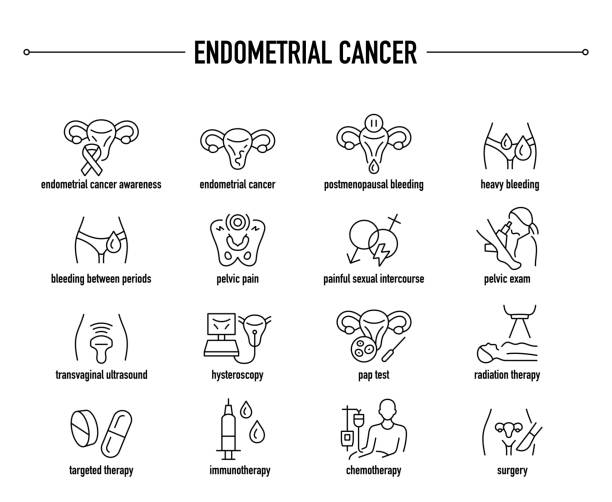
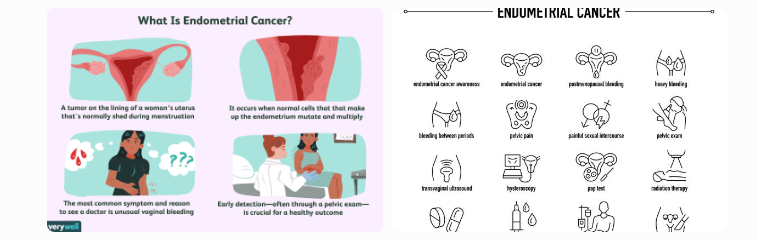
(Images above show endometrial cancer — tumor growth in the uterine lining and common symptoms like abnormal bleeding.)
Causes
Endometrial cancer is mainly linked to:
- Prolonged exposure to estrogen without balancing progesterone (e.g., obesity, late menopause, hormone replacement therapy)
- Conditions like polycystic ovary syndrome (PCOS) or diabetes
- Genetic factors (Lynch syndrome) or family history
- Age (most common after menopause), nulliparity, and tamoxifen use
Symptoms
Common symptoms include:
- Abnormal vaginal bleeding, especially after menopause or between periods
- Heavy or prolonged menstrual bleeding
- Pelvic pain or pressure
- Pain during intercourse
- Unexplained weight loss or fatigue in advanced stages
- Watery or blood-tinged vaginal discharge
Homeopathy Medicines with Key Symptoms and Doses
Homeopathic remedies for endometrial cancer are highly individualized and used only as supportive or palliative care. They are never a substitute for standard cancer treatment. The following are sometimes considered in palliative settings. Remedy selection must be determined only by a qualified and experienced homeopath after detailed case-taking, in close coordination with an oncologist or gynecologist. These are general guidelines only.
Sepia For bearing-down sensation in the pelvis with exhaustion, hormonal imbalance, and emotional indifference. Often suited for menopausal women. Typical use: 30C, 3-5 pellets 1-2 times daily or 200C weekly.
Lachesis Muta For left-sided pelvic symptoms, hot flushes, and sensitivity. Symptoms worse before bleeding and better after flow starts. Typical use: 30C, 3-5 pellets sparingly.
Sabina For heavy, bright red bleeding with clots and sharp, shooting pain from sacrum to pubis. Typical use: 30C, 3-5 pellets 1-2 times daily during discomfort (short term).
Phosphorus For burning sensations, easy bleeding tendency, and great weakness with thirst for cold drinks. Typical use: 30C, 3-5 pellets 1-2 times daily (use cautiously under guidance).
Arsenicum Album For marked anxiety, restlessness, burning pain, and extreme prostration. Better from warmth. Typical use: 30C, 3-5 pellets 1-2 times daily (short term).
Carbo Vegetabilis For extreme weakness, air hunger, bloating, and collapse-like states in advanced disease. Typical use: 30C, 3-5 pellets 1-2 times daily (short term).
China Officinalis For profound debility and weakness after blood loss or fluid depletion with bloating. Typical use: 30C, 3-5 pellets 1-2 times daily.
Hydrastis Canadensis For thick, ropy discharge or ulceration with marked weakness. Typical use: 30C, 3-5 pellets 1-2 times daily.
Silicea For slow-healing tendency and weakness in chronic or post-treatment states. Typical use: 6X or 30C, 3-5 pellets 1-2 times daily.
Sulphur Often used as an intercurrent remedy in chronic cases with burning or unhealthy tendency. Typical use: 30C or 200C, sparingly (once weekly under guidance).
Important guidance: Endometrial cancer is usually diagnosed by endometrial biopsy, ultrasound, or hysteroscopy. Standard treatment includes hysterectomy (often with removal of ovaries and lymph nodes), followed by radiation or chemotherapy if needed. Early-stage disease has excellent survival rates. Homeopathy may help manage symptoms and improve quality of life as supportive or palliative care but must never replace oncology treatment. Follow your doctor’s advice strictly regarding diet, rest, and follow-up. This information is for educational purposes only and not a substitute for professional medical or homeopathic advice. Consult a qualified gynecologic oncologist immediately for any postmenopausal bleeding or abnormal vaginal bleeding, and a registered homeopath experienced in palliative care for individualized supportive remedy selection. Early detection and proper treatment significantly improve outcomes.