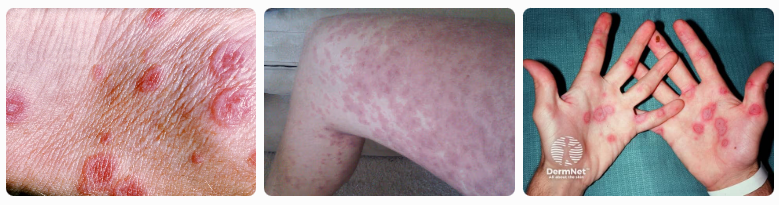
Erythema refers to redness of the skin caused by increased blood flow in the superficial capillaries. It is not a disease itself but a sign that can appear in many conditions, ranging from simple sunburn or allergic reactions to more specific patterns like erythema multiforme or erythema nodosum. In homeopathy, remedies are used only as supportive care to help reduce redness, itching, burning, and associated inflammation while supporting skin recovery. Erythema requires proper evaluation to identify the underlying cause.
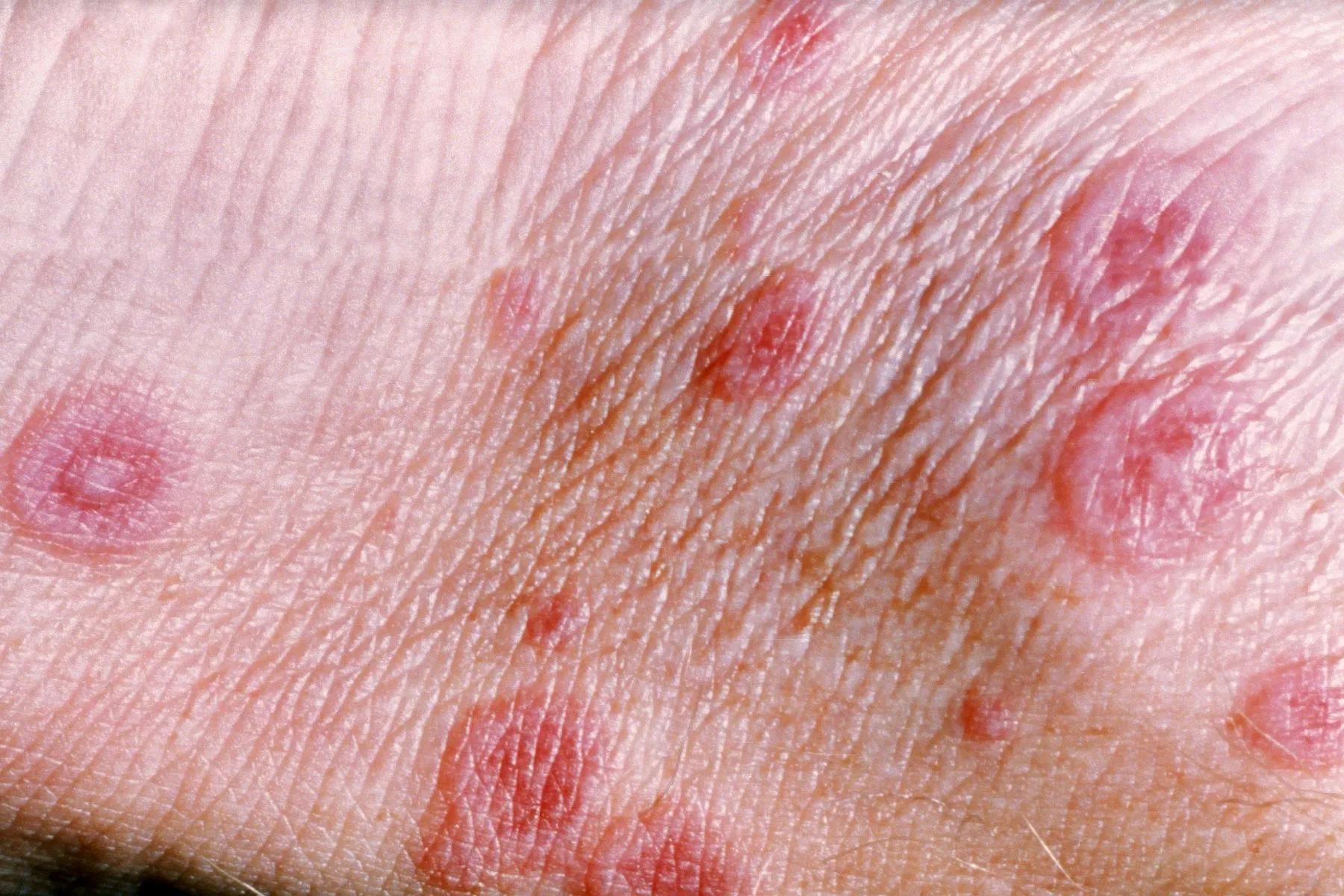
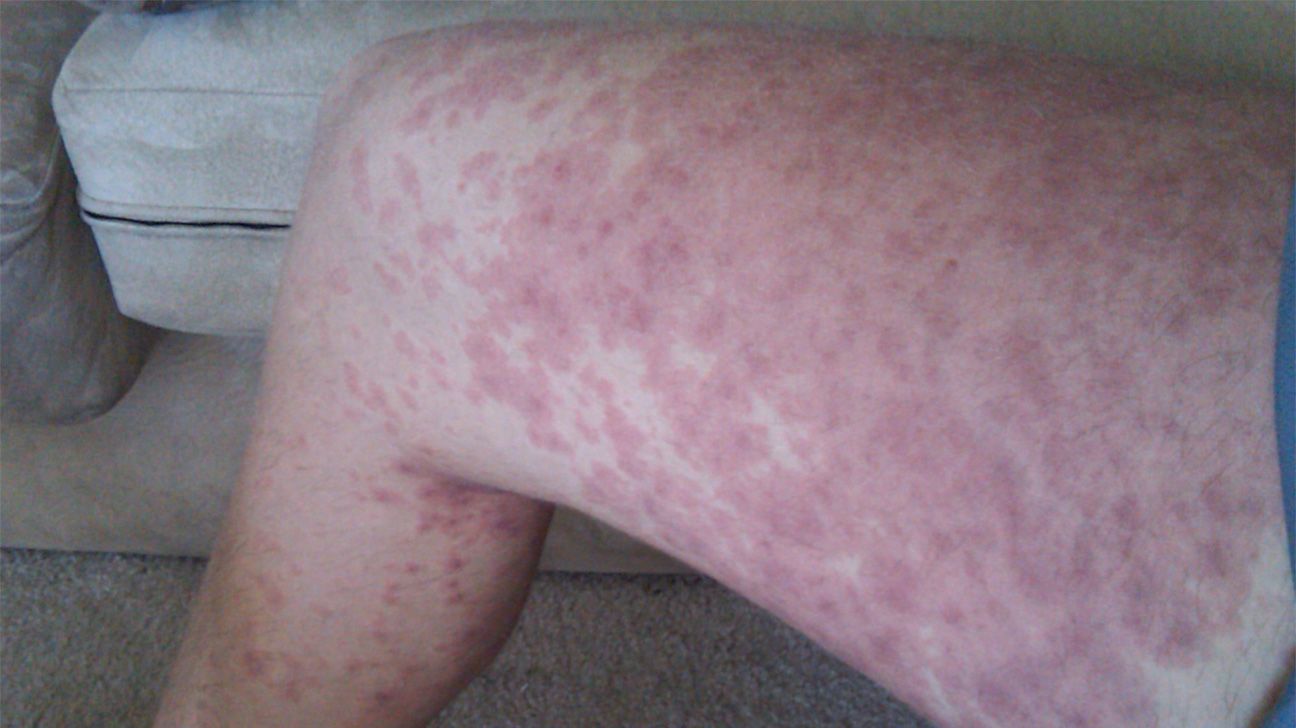
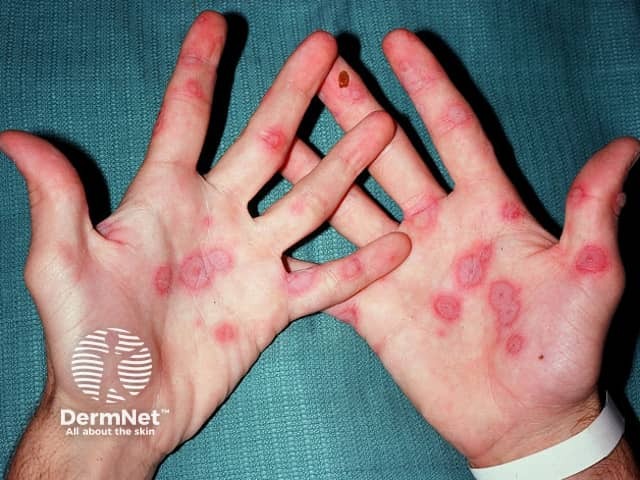
(Images above show erythema — skin redness with flat or target-like patches, often seen in erythema multiforme or inflammatory reactions.)
Causes
Erythema can be caused by:
- Infections (viral, bacterial, or fungal)
- Allergic reactions or drug eruptions
- Autoimmune conditions or inflammatory diseases
- Sun exposure, heat, or physical irritation
- Underlying systemic issues like rheumatic fever or inflammatory bowel disease
Symptoms
Common symptoms include:
- Red, warm patches or spots on the skin
- Itching, burning, or stinging sensation
- Flat or slightly raised areas that may form rings or target shapes
- In some cases: swelling, blisters, or joint pain
- Symptoms may appear suddenly and can be localized or widespread
Homeopathy Medicines with Key Symptoms and Doses
Homeopathic remedies for erythema are selected based on the type of redness, itching, associated symptoms, and the person’s constitution. They are used only as supportive care. The following are commonly considered. Remedy selection must be determined only by a qualified homeopath after detailed case-taking, in coordination with a dermatologist. These are general guidelines only.
Belladonna For bright red, hot, throbbing erythema with sudden onset. Skin is sensitive to touch and may have feverish symptoms. Typical use: 30C, 3-5 pellets 1-2 times daily (short term).
Apis Mellifica For rosy-red, puffy swelling with stinging or burning pain. Better from cold applications and thirstlessness. Typical use: 30C, 3-5 pellets 1-2 times daily (short term).
Arsenicum Album For burning redness with anxiety, restlessness, and dry skin. Better from warmth and small sips of water. Typical use: 30C, 3-5 pellets 1-2 times daily (short term).
Rhus Toxicodendron For red, swollen, blistering erythema with intense itching and restlessness. Better from warm applications and continued motion. Typical use: 30C, 3-5 pellets 1-2 times daily.
Sulphur For unhealthy-looking red skin with burning and itching that worsens from heat or washing. Often used as an intercurrent remedy. Typical use: 30C or 200C, sparingly (once weekly under guidance).
Natrum Muriaticum For redness linked to emotional stress or sun exposure with dry skin and craving for salt. Typical use: 30C, 3-5 pellets 1-2 times daily.
Pulsatilla For changeable, itchy redness with mild, weepy disposition. Better in open air and worse in warm rooms. Typical use: 30C, 3-5 pellets 1-2 times daily.
Graphites For thick, sticky discharge or cracking in chronic red patches. Typical use: 30C, 3-5 pellets 1-2 times daily.
Mercurius Solubilis For red, inflamed skin with moistness, offensive odor, or glandular involvement. Typical use: 30C, 3-5 pellets 1-2 times daily (short term).
Hepar Sulphuris For very sensitive, red areas with pus-forming tendency or stitching pain. Better from warmth. Typical use: 30C, 3-5 pellets 1-2 times daily (short term).
Important guidance: Erythema is a symptom, not a disease. Identifying and treating the underlying cause (infection, allergy, autoimmune issue, etc.) is essential. Management may include avoiding triggers, topical soothing agents, or systemic treatment as advised by a doctor. Homeopathy may help reduce redness, itching, and discomfort as supportive care but must never replace proper medical evaluation. This information is for educational purposes only and not a substitute for professional medical or homeopathic advice. Consult a qualified dermatologist for accurate diagnosis and management of any persistent skin redness, and a registered homeopath for individualized supportive remedy selection. With proper care, most cases of erythema resolve well.