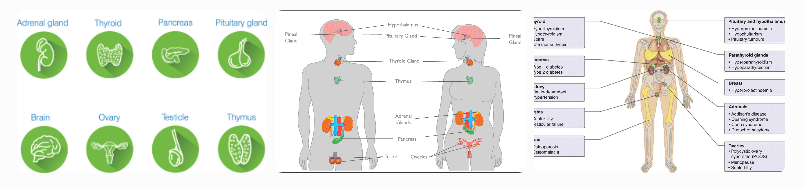
Endocrine Disorder refers to any condition that disrupts the normal function of the endocrine system — a network of glands that produce and release hormones directly into the bloodstream to regulate metabolism, growth, reproduction, mood, and energy levels. Common examples include thyroid disorders (hypothyroidism/hyperthyroidism), diabetes, adrenal issues (Cushing’s or Addison’s), and pituitary or parathyroid problems. In homeopathy, remedies are used only as supportive care to help balance hormonal function, reduce symptoms like fatigue or mood changes, and support overall vitality. Endocrine disorders require accurate diagnosis through blood tests and specialist care.

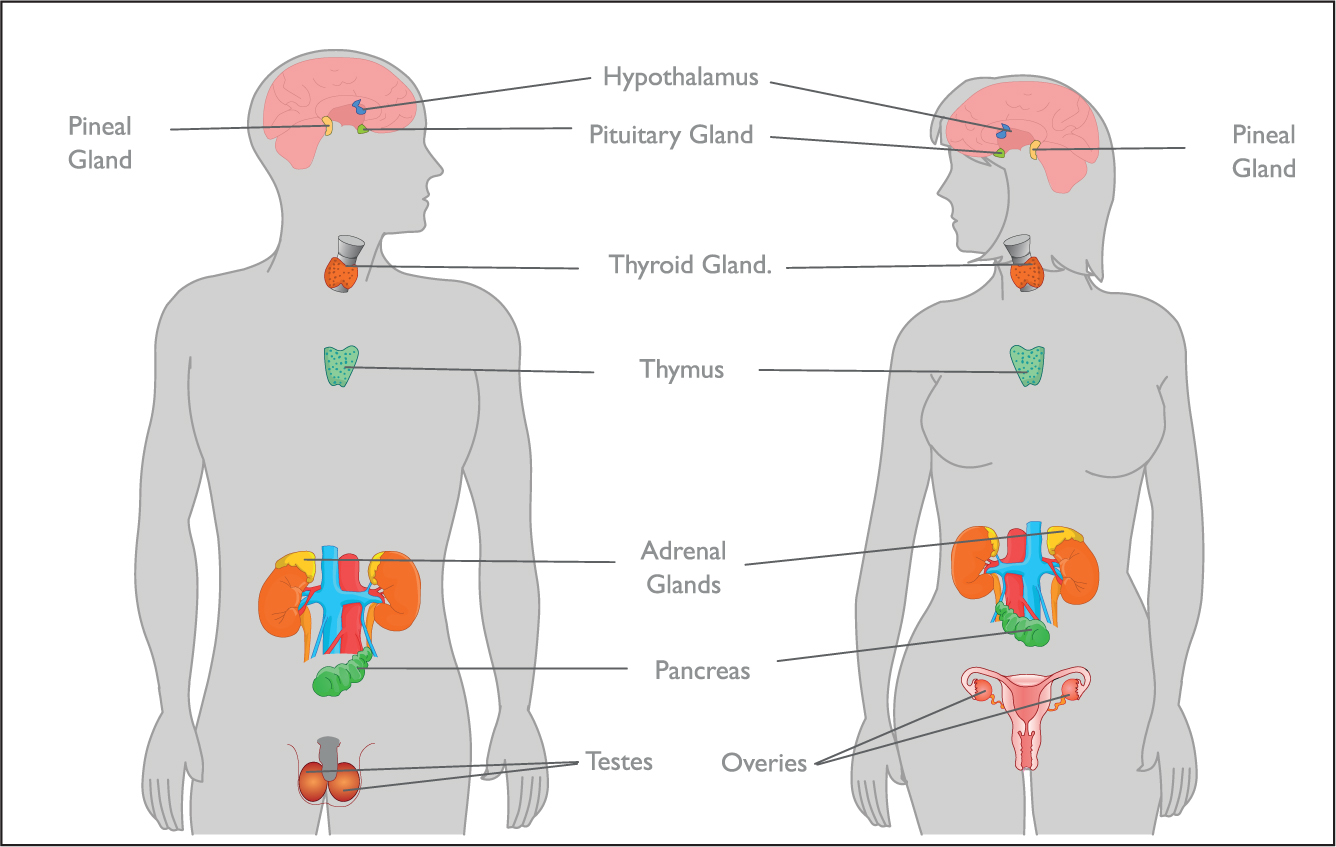

(Images above show the endocrine system — major glands including pituitary, thyroid, adrenal, pancreas, ovaries/testes, and common disorders affecting hormone balance.)
Causes
Endocrine disorders can arise from:
- Autoimmune conditions (e.g., Hashimoto’s or Graves’ disease)
- Genetic factors or congenital defects
- Tumors, infections, or injury to glands
- Hormonal imbalances due to stress, medications, or environmental toxins
- Lifestyle factors like poor diet, obesity, or radiation exposure
Symptoms
Symptoms vary widely depending on the affected gland but commonly include:
- Fatigue, weight gain or loss, and temperature intolerance
- Irregular periods, infertility, or mood swings
- Increased thirst, frequent urination, or excessive hunger
- Slow growth in children, hair loss, or skin changes
- Anxiety, depression, muscle weakness, or high/low blood pressure
Homeopathy Medicines with Key Symptoms and Doses
Homeopathic remedies for endocrine disorders are highly individualized based on the specific gland involved, symptom picture, and constitutional type. They are used only as supportive care alongside conventional diagnosis and treatment. The following are commonly considered. Remedy selection must be determined only by a qualified homeopath after detailed case-taking, in close coordination with an endocrinologist. These are general guidelines only.
Sepia For hormonal imbalance in women with bearing-down sensation, exhaustion, and emotional indifference. Often suited for thyroid or menstrual-related endocrine issues. Typical use: 30C, 3-5 pellets 1-2 times daily.
Calcarea Carbonica For sluggish metabolism, weight gain, cold sensitivity, and slow development. Suited to fair, sweaty persons with thyroid or parathyroid tendencies. Typical use: 30C or 200C, 3-5 pellets once or twice weekly.
Natrum Muriaticum For emotional suppression, grief, and thyroid-related symptoms with craving for salt and dryness. Typical use: 30C, 3-5 pellets 1-2 times daily.
Lycopodium Clavatum For digestive weakness, right-sided complaints, and lack of confidence with endocrine fatigue or blood sugar issues. Typical use: 30C or 200C, 3-5 pellets 1-2 times daily.
Arsenicum Album For anxiety, restlessness, burning sensations, and exhaustion in chronic endocrine weakness. Better from warmth. Typical use: 30C, 3-5 pellets 1-2 times daily (short term).
Thyroidinum For symptoms of thyroid imbalance (hypo or hyper) with fatigue, weight changes, and sensitivity to cold or heat. Typical use: 30C or 200C, 3-5 pellets sparingly (under guidance).
Pulsatilla For changeable hormonal symptoms with weepy, mild disposition. Better in open air and worse in warm rooms. Typical use: 30C, 3-5 pellets 1-2 times daily.
Sulphur Often used as an intercurrent remedy in chronic cases with burning, itching, or unhealthy tendency affecting multiple endocrine functions. Typical use: 30C or 200C, sparingly (once weekly under guidance).
Silicea For weakness, slow healing, and sensitivity in chronic endocrine disorders with poor vitality. Typical use: 6X or 30C, 3-5 pellets 1-2 times daily.
Graphites For sluggish metabolism, obesity, and skin issues linked to endocrine imbalance. Typical use: 30C, 3-5 pellets 1-2 times daily.
Important guidance: Endocrine disorders are diagnosed through hormone level tests, imaging, and specialist evaluation. Treatment may include hormone replacement, medications, or surgery depending on the specific condition (e.g., insulin for diabetes, thyroxine for hypothyroidism). Homeopathy may help relieve symptoms and support balance as supportive care but must never replace proper medical management by an endocrinologist. Maintain a healthy diet, exercise, stress management, and regular check-ups. This information is for educational purposes only and not a substitute for professional medical or homeopathic advice. Consult a qualified endocrinologist for accurate diagnosis and treatment of any endocrine disorder, and a registered homeopath for individualized supportive remedy selection. Early detection and proper management can greatly improve quality of life.