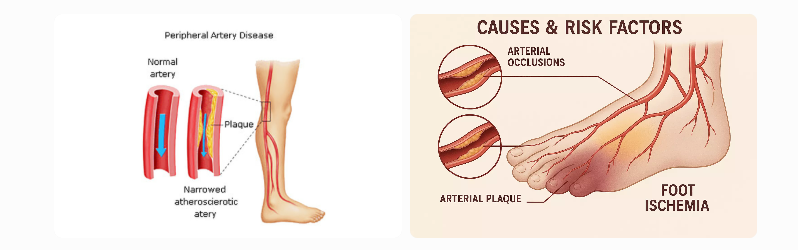
Diabetic Angiopathy is a vascular complication of long-standing diabetes in which high blood sugar damages the walls of blood vessels, leading to narrowing, hardening, and reduced blood flow. It includes both microangiopathy (affecting small vessels, e.g., in eyes and kidneys) and macroangiopathy (affecting larger arteries, e.g., in heart, brain, and legs). Poor circulation can result in serious issues like diabetic foot ulcers, ischemia, or increased risk of heart attack and stroke. In homeopathy, remedies are used only as supportive care to help improve circulation, reduce tissue damage, and support overall vitality. Diabetic angiopathy requires strict blood sugar control and medical management by a diabetologist or vascular specialist.


(Images above show diabetic angiopathy — narrowed arteries due to plaque, reduced blood flow to the legs/feet, and ischemic changes leading to poor circulation.)
Causes
Diabetic angiopathy is mainly caused by:
- Chronic high blood sugar damaging the inner lining (endothelium) of blood vessels
- Inflammation, oxidative stress, and thickening of vessel walls
- Poorly controlled diabetes (both type 1 and type 2)
- Associated factors: high blood pressure, high cholesterol, smoking, and obesity
Symptoms
Common symptoms depend on the affected vessels and include:
- Cold or numb extremities (hands and feet)
- Pain in legs while walking (claudication) that improves with rest
- Slow-healing wounds or ulcers on feet/legs
- Changes in skin color (pale, bluish, or reddish)
- Fatigue, reduced exercise tolerance, or erectile dysfunction
- In advanced cases: gangrene or critical limb ischemia
Homeopathy Medicines with Key Symptoms and Doses
Homeopathic remedies for diabetic angiopathy are selected based on circulation issues, pain, coldness, and the person’s constitution. They are used only as supportive care alongside strict glycemic control. The following are sometimes considered. Remedy selection must be determined only by a qualified homeopath after detailed case-taking, in close coordination with a diabetologist or vascular specialist. These are general guidelines only.
Secale Cornutum For cold, bluish extremities with burning pain (better from cold). Useful in poor circulation with gangrenous tendency. Typical use: 30C, 3-5 pellets 1-2 times daily (under expert guidance).
Arsenicum Album For burning pain, restlessness, anxiety, and extreme coldness with thirst for small sips. Better from warmth. Typical use: 30C, 3-5 pellets 1-2 times daily (short term).
Carbo Vegetabilis For cold, bluish limbs with air hunger, exhaustion, and collapse-like weakness. Typical use: 30C, 3-5 pellets 1-2 times daily (short term).
Lachesis Muta For bluish discoloration with extreme sensitivity to touch, often left-sided. Symptoms worse after sleep. Typical use: 30C, 3-5 pellets 1-2 times daily (short term).
Pulsatilla For changeable symptoms with cold extremities that improve in open air. Mild, weepy persons. Typical use: 30C, 3-5 pellets 1-2 times daily.
Rhus Toxicodendron For stiffness and restlessness with pain better from warm applications and continued motion. Typical use: 30C, 3-5 pellets 1-2 times daily.
Silicea For slow-healing ulcers or weakness in chronic poor circulation cases. Typical use: 6X or 30C, 3-5 pellets 1-2 times daily.
Calcarea Fluorica Supports elasticity of blood vessels in chronic circulatory weakness. Typical use: 6X or 30C, 3-5 pellets 1-2 times daily.
Lycopodium Clavatum For right-sided symptoms, digestive weakness, and lack of confidence. Typical use: 30C or 200C, 3-5 pellets 1-2 times daily.
Sulphur Often used as an intercurrent remedy in chronic cases with burning sensations. Typical use: 30C or 200C, sparingly (once weekly under guidance).
Important guidance: Diabetic angiopathy is prevented and managed by strict blood sugar, blood pressure, and cholesterol control, quitting smoking, regular exercise, and foot care. Medications to improve blood flow or procedures (angioplasty, bypass) may be needed in advanced cases. Homeopathy may help improve circulation and relieve symptoms as supportive care but must never replace proper diabetic and vascular management. Inspect feet daily and seek immediate help for non-healing wounds. This information is for educational purposes only and not a substitute for professional medical or homeopathic advice. Consult a qualified diabetologist or vascular specialist immediately for accurate diagnosis and treatment, and a registered homeopath for individualized supportive remedy selection. Good diabetes control can significantly slow progression and prevent complications.