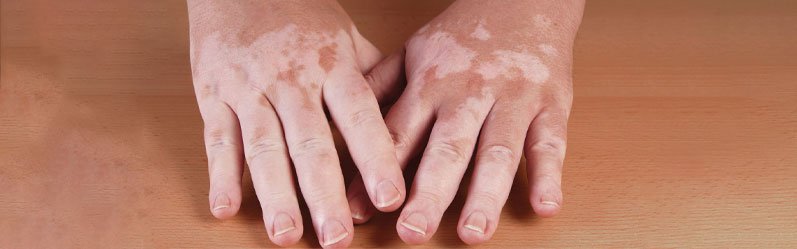
Dyschromia refers to any abnormality in skin pigmentation, resulting in either darker (hyperpigmentation) or lighter (hypopigmentation) patches compared to the surrounding skin. It is not a disease itself but a visible sign of various underlying conditions affecting melanin production or distribution. Common forms include melasma, vitiligo, post-inflammatory hyperpigmentation, and solar lentigines. In homeopathy, remedies are used only as supportive care to help balance skin pigmentation, reduce discoloration, and support overall skin health. Dyschromia requires proper dermatological evaluation to identify the cause and rule out serious conditions.
(Images above show dyschromia — irregular patches of hyperpigmentation or hypopigmentation on the face and body.)
Causes
Dyschromia can be caused by:
- Hormonal changes (melasma during pregnancy or with oral contraceptives)
- Sun exposure (photo-induced pigmentation)
- Inflammation or injury to the skin (post-inflammatory hyperpigmentation)
- Autoimmune conditions (vitiligo)
- Genetic factors, medications, or nutritional deficiencies
- Aging or chronic skin irritation
Symptoms
Common features include:
- Darker (brown, black, or gray) or lighter (white or pale) patches on the skin
- Irregular borders and varying sizes
- Commonly affected areas: face (melasma), hands, neck, or body folds
- No pain or itching in most cases, though some may have mild irritation
- Psychological distress due to cosmetic appearance
Homeopathy Medicines with Key Symptoms and Doses
Homeopathic remedies for dyschromia are selected based on the type of pigmentation, location, associated symptoms, and the person’s constitution. The following are commonly considered for supportive management. Remedy selection must be determined only by a qualified homeopath after detailed case-taking, in coordination with a dermatologist. These are general guidelines only.
Sepia For brownish pigmentation, especially on the face (chloasma/melasma) in women with hormonal imbalance or exhaustion. Typical use: 30C, 3-5 pellets 1-2 times daily.
Natrum Muriaticum For pigmentation linked to emotional stress, grief, or sun exposure. Skin is dry and the person craves salt. Typical use: 30C, 3-5 pellets 1-2 times daily.
Sulphur For unhealthy skin with burning, itching, or irregular pigmentation. Often used as an intercurrent remedy. Typical use: 30C or 200C, sparingly (once weekly under guidance).
Thuja Occidentalis For pigmentation or warty growths with history of suppressed eruptions or vaccinations. Typical use: 30C, 3-5 pellets 1-2 times daily (short courses).
Arsenicum Album For dry, scaly skin with burning sensations and anxiety. Better from warmth. Typical use: 30C, 3-5 pellets 1-2 times daily (short term).
Calcarea Carbonica For fair, sweaty persons with constitutional sluggishness and tendency to skin discoloration. Typical use: 30C or 200C, 3-5 pellets once or twice weekly.
Lycopodium Clavatum For right-sided pigmentation or digestive-linked skin issues with lack of confidence. Typical use: 30C or 200C, 3-5 pellets 1-2 times daily.
Graphites For thick, dry, cracked skin with sticky tendency and abnormal pigmentation. Typical use: 30C, 3-5 pellets 1-2 times daily.
Silicea For delicate skin with poor vitality and slow-changing pigmentation issues. Typical use: 6X or 30C, 3-5 pellets 1-2 times daily.
Phosphorus For sensitive skin with easy flushing or pigmentation changes in tall, slender persons. Typical use: 30C, 3-5 pellets 1-2 times daily (use cautiously).
Important guidance: Dyschromia is managed by treating the underlying cause (hormonal balance, sun protection, topical agents like hydroquinone or retinoids under dermatologist guidance). Strict sun protection (broad-spectrum sunscreen) is essential. Homeopathy may help balance pigmentation and improve skin health as supportive care but must never replace proper dermatological assessment. Avoid self-medication with bleaching agents. This information is for educational purposes only and not a substitute for professional medical or homeopathic advice. Consult a qualified dermatologist for accurate diagnosis and management of any abnormal skin pigmentation, and a registered homeopath for individualized supportive remedy selection. With consistent care and sun protection, many cases of dyschromia can be improved.