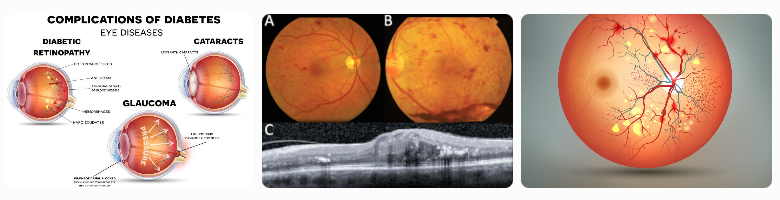
Diabetic Eye Disease (also known as Diabetic Retinopathy) is a common and serious complication of long-standing diabetes that damages the blood vessels in the light-sensitive tissue at the back of the eye (retina). It is the leading cause of blindness in working-age adults. It includes non-proliferative and proliferative stages and can also lead to diabetic macular edema. In homeopathy, remedies are used only as supportive care to help reduce retinal stress, support circulation, ease symptoms like blurred vision, and improve overall vitality. Diabetic eye disease requires regular monitoring and conventional treatment by an ophthalmologist (retina specialist).
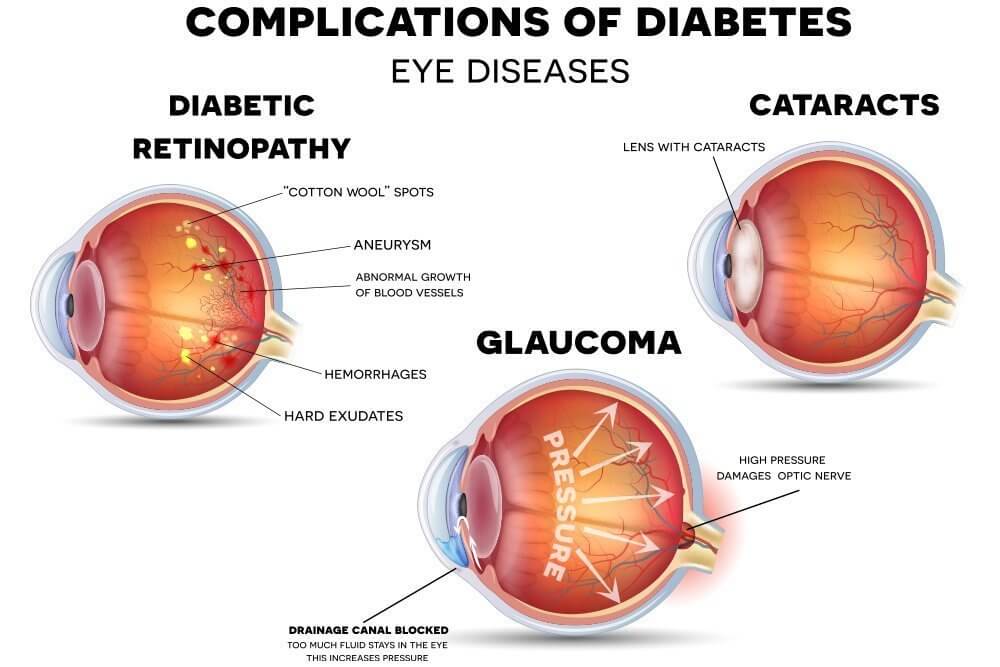
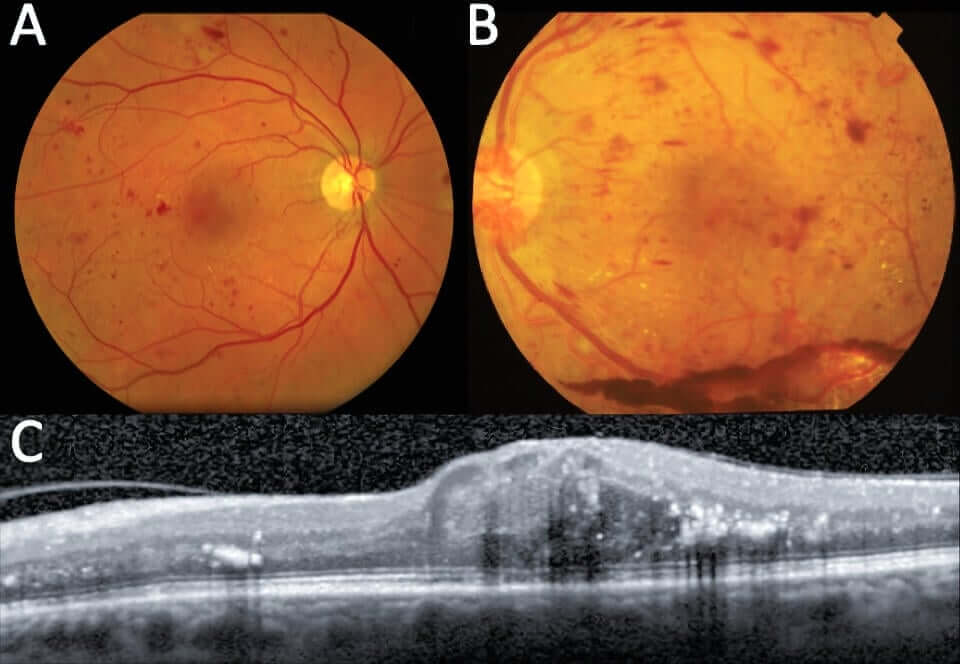
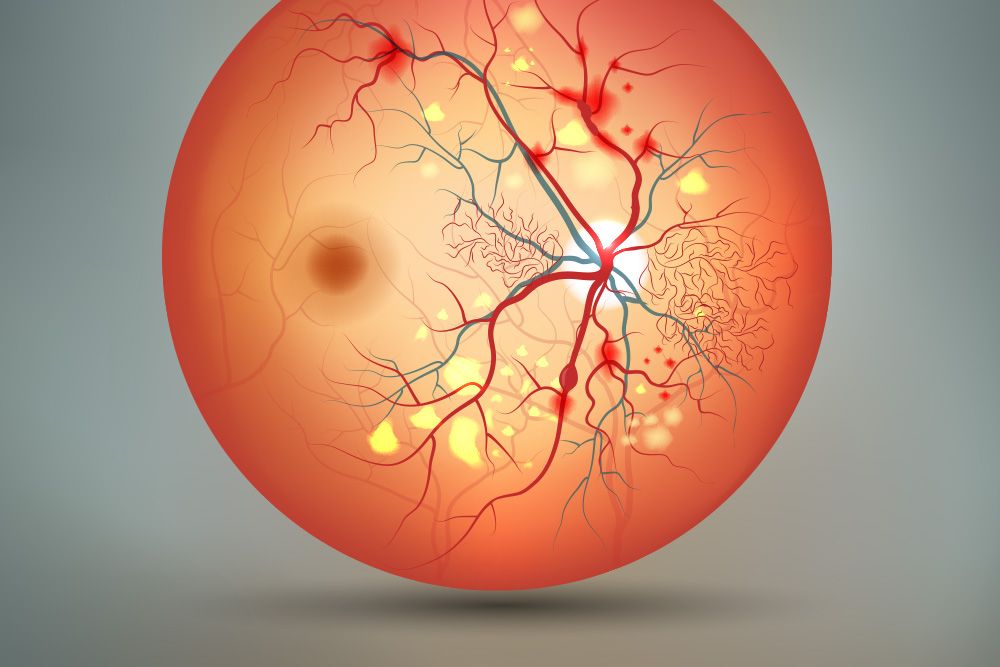
(Images above show diabetic eye disease / diabetic retinopathy — damaged retinal blood vessels, hemorrhages, exudates, cotton-wool spots, and neovascularization.)
Causes
Diabetic eye disease is primarily caused by:
- Long-term high blood sugar damaging the tiny blood vessels in the retina
- Poorly controlled diabetes (both type 1 and type 2)
- Duration of diabetes (risk increases with time)
- Associated factors like high blood pressure, high cholesterol, smoking, and kidney disease
Symptoms
Common symptoms include:
- Blurred or fluctuating vision
- Dark or empty spots (floaters) in the field of vision
- Difficulty seeing at night or in low light
- Colors appearing faded or washed out
- Sudden vision loss in advanced stages (due to bleeding or retinal detachment)
- Often no symptoms in early stages (detected only on routine eye exam)
Homeopathy Medicines with Key Symptoms and Doses
Homeopathic remedies for diabetic eye disease are selected based on the individual’s symptoms, constitution, and blood sugar control. They are used only as supportive care alongside strict glycemic control and regular eye check-ups. The following are sometimes considered. Remedy selection must be determined only by a qualified homeopath after detailed case-taking, in close coordination with an ophthalmologist and diabetologist. These are general guidelines only.
Phosphorus For blurred vision, floaters, or retinal bleeding tendency in sensitive, fearful persons who crave cold drinks. Typical use: 30C, 3-5 pellets 1-2 times daily (use cautiously under guidance).
Arsenicum Album For burning sensations in the eyes with anxiety, restlessness, and extreme weakness. Better from warmth. Typical use: 30C, 3-5 pellets 1-2 times daily (short term).
Calcarea Carbonica For fair, sweaty persons with constitutional sluggishness and slow recovery from eye strain or diabetic complications. Typical use: 30C or 200C, 3-5 pellets once or twice weekly.
Silicea For weakness, slow healing tendency, and sensitivity in chronic diabetic eye issues. Typical use: 6X or 30C, 3-5 pellets 1-2 times daily.
Lycopodium Clavatum For right-sided symptoms, digestive weakness, and lack of confidence accompanying eye complaints. Typical use: 30C or 200C, 3-5 pellets 1-2 times daily.
Natrum Muriaticum For dry eyes or blurred vision linked to emotional stress or grief in diabetic patients. Typical use: 30C, 3-5 pellets 1-2 times daily.
Gelsemium For heaviness in the eyes, blurred vision, and trembling with nervousness or anticipatory anxiety. Typical use: 30C, 3-5 pellets 1-2 times daily.
China Officinalis For marked debility, weakness, and visual disturbances after fluid or blood loss. Typical use: 30C, 3-5 pellets 1-2 times daily.
Sulphur Often used as an intercurrent remedy in chronic cases with burning sensations or unhealthy tendency. Typical use: 30C or 200C, sparingly (once weekly under guidance).
Secale Cornutum For cold extremities with burning pain and poor circulation in advanced diabetic complications affecting the eyes. Typical use: 30C, 3-5 pellets 1-2 times daily (under expert guidance).
Important guidance: Diabetic eye disease is best prevented and managed by strict blood sugar, blood pressure, and cholesterol control, regular dilated eye exams (at least once a year), and timely treatment such as laser therapy, anti-VEGF injections, or surgery. Homeopathy may help relieve symptoms and support eye health as supportive care but must never replace ophthalmologic monitoring and conventional treatment. Maintain good diabetes control and protect eyes from strain. This information is for educational purposes only and not a substitute for professional medical or homeopathic advice. Consult a qualified ophthalmologist (retina specialist) immediately for accurate diagnosis and management, and a registered homeopath for individualized supportive remedy selection. Early detection and proper diabetes management can prevent vision loss.