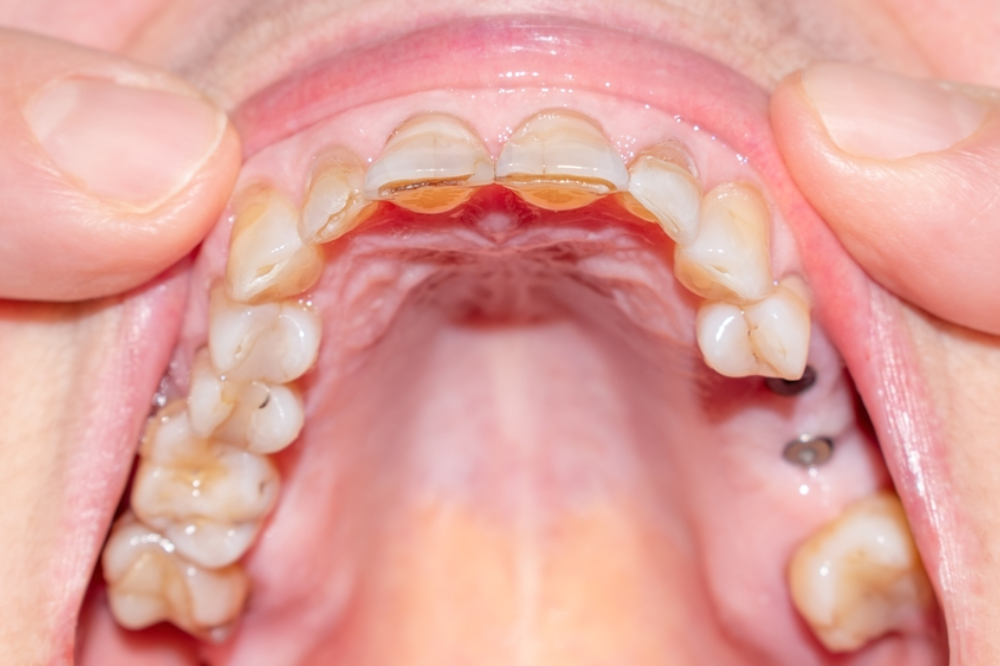
Dentin Hypersensitivity (also known as sensitive teeth) is a common dental condition in which the dentin layer of the tooth becomes exposed, causing sharp, sudden pain or discomfort when the teeth come into contact with hot, cold, sweet, sour, or acidic foods/drinks, or even cold air. It occurs when the protective enamel or gum tissue wears away, exposing the microscopic tubules in the dentin that connect to the tooth nerve. In homeopathy, remedies are used only as supportive care to help reduce nerve sensitivity, soothe pain, and support tooth and gum health. Dentin hypersensitivity requires professional dental evaluation to identify and treat the underlying cause (such as enamel erosion, gum recession, or tooth wear).
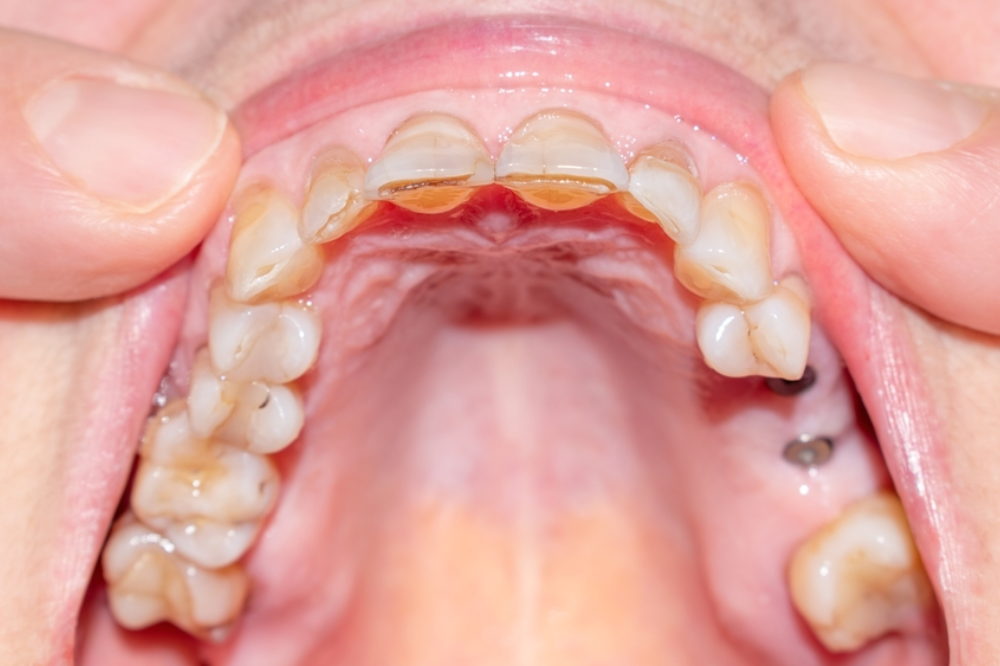
(Images above show dentin hypersensitivity — exposed dentin at the gum line or on tooth necks, leading to sensitivity to temperature and touch.)
Causes
Dentin hypersensitivity is mainly caused by:
- Gum recession exposing the tooth root
- Enamel erosion from acidic foods/drinks, aggressive brushing, or acid reflux
- Tooth wear from grinding (bruxism) or abrasion
- Dental procedures, cracked teeth, or whitening treatments
- Periodontal disease or poor oral hygiene
Symptoms
Common symptoms include:
- Sharp, shooting pain or discomfort in one or more teeth
- Pain triggered by cold air, hot/cold/sweet/sour foods or drinks
- Sensitivity that comes and goes or lasts for a few seconds
- Discomfort while brushing or flossing
- No pain at rest, but intense reaction to stimuli
Homeopathy Medicines with Key Symptoms and Doses
Homeopathic remedies for dentin hypersensitivity are selected based on the character of pain, triggers, and individual constitution. The following are commonly considered for supportive management. Remedy selection must be determined only by a qualified homeopath after detailed case-taking, in coordination with a dentist. These are general guidelines only. Good oral hygiene and desensitizing toothpaste are essential.
Magnesia Phosphorica For sharp, shooting, or neuralgic pain in sensitive teeth, often relieved by warmth or pressure. Excellent for nerve-related sensitivity. Typical use: 6X or 30C, 3-5 pellets 1-2 times daily.
Chamomilla For hypersensitive teeth with intense pain and irritability. Pain is worse from cold drinks or at night; the person is oversensitive. Typical use: 30C, 3-5 pellets 1-2 times daily (short term).
Plantago Major For tooth sensitivity with radiating nerve pain, especially to ears or head. Useful when pain is worse from cold air or touch. Typical use: 30C, 3-5 pellets 1-2 times daily.
Coffea Cruda For tooth sensitivity triggered by hot drinks or worse at night with extreme sensitivity to pain. Typical use: 30C, 3-5 pellets 1-2 times daily (short term).
Hypericum Perforatum For sharp, shooting nerve pain in sensitive or injured teeth with tingling or hypersensitivity. Typical use: 30C, 3-5 pellets 1-2 times daily.
Belladonna For throbbing or sudden intense sensitivity with redness or inflammation around the gums. Typical use: 30C, 3-5 pellets 1-2 times daily (short term).
Mercurius Solubilis For sensitive teeth with excessive salivation, bad breath, or loose gums. Pain worse at night. Typical use: 30C, 3-5 pellets 1-2 times daily (short term).
Staphysagria For sensitivity after dental procedures or in persons who suppress emotions. Teeth feel sore or bruised. Typical use: 30C, 3-5 pellets 1-2 times daily.
Arnica Montana For soreness and sensitivity after trauma, dental work, or grinding. Helps reduce inflammation. Typical use: 30C, 3-5 pellets 1-2 times daily (short term).
Calcarea Fluorica Supports enamel and dentin strength in chronic cases with tendency to sensitivity or cracks. Typical use: 6X or 30C, 3-5 pellets 1-2 times daily.
Important guidance: Dentin hypersensitivity is best managed by using desensitizing toothpaste (containing potassium nitrate or stannous fluoride), gentle brushing with a soft toothbrush, avoiding acidic foods/drinks, and treating the root cause (gum recession, enamel erosion, or grinding). In severe cases, dental procedures like fluoride varnish, bonding, or gum grafts may be needed. Homeopathy may help reduce nerve sensitivity and discomfort as supportive care but must never replace proper dental evaluation and treatment. Maintain excellent oral hygiene and visit your dentist regularly. This information is for educational purposes only and not a substitute for professional medical or homeopathic advice. Consult a qualified dentist immediately for accurate diagnosis and management of sensitive teeth, and a registered homeopath for individualized supportive remedy selection. With proper care, most cases of dentin hypersensitivity can be effectively controlled.