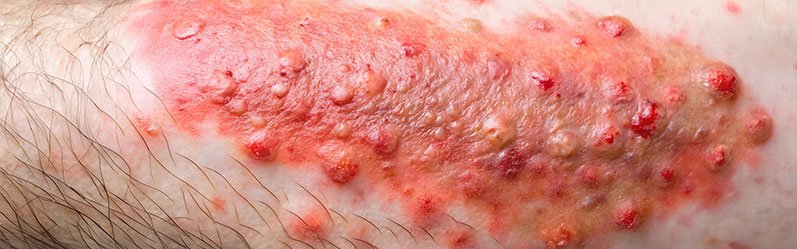
Atopic Dermatitis (also known as Eczema) is a chronic, inflammatory skin condition characterized by dry, itchy, and inflamed skin. It often starts in childhood and can persist into adulthood, though it may improve with age. It is part of the "atopic triad" along with asthma and allergic rhinitis. In homeopathy, remedies are used only as supportive care to help reduce intense itching, inflammation, dryness, and skin sensitivity while supporting overall skin health. Atopic dermatitis is a chronic condition that requires long-term management and trigger avoidance.
(Images above show typical atopic dermatitis — red, dry, scaly, and intensely itchy skin with lichenification in chronic cases, commonly affecting flexures like elbow creases and behind the knees.)
Causes
Atopic dermatitis is caused by a combination of:
- Genetic factors (defects in skin barrier proteins like filaggrin)
- Immune system over-reactivity (Th2 dominant response)
- Environmental triggers: allergens (dust mites, pollen, foods), irritants (soaps, wool), dry climate, and stress
- Impaired skin barrier allowing moisture loss and allergen entry
Symptoms
Common symptoms include:
- Intense itching, especially at night
- Dry, scaly, red, or inflamed skin
- Weeping, crusting, or oozing in acute flares
- Thickened, leathery skin (lichenification) in chronic cases
- Common sites: face, neck, elbow creases, behind knees, wrists, and ankles
- Sleep disturbance and emotional distress due to constant itching
Homeopathy Medicines with Key Symptoms and Doses
Homeopathic remedies for atopic dermatitis are highly individualized based on the type of eruption, itching character, modalities, and constitution. The following are commonly considered for supportive management. Remedy selection must be determined only by a qualified homeopath after detailed case-taking, in coordination with a dermatologist. These are general guidelines only.
Sulphur For dry, rough, intensely itchy skin with burning. Itching is worse from warmth or washing; the skin feels unhealthy. Typical use: 30C or 200C, sparingly (once weekly under guidance).
Graphites For thick, sticky, honey-like discharge with cracking and fissuring, especially in skin folds. Itching is prominent. Typical use: 30C, 3-5 pellets 1-2 times daily.
Rhus Toxicodendron For red, swollen, blistering eruptions with intense itching and restlessness. Better from warm applications and continued motion. Typical use: 30C, 3-5 pellets 1-2 times daily.
Petroleum For very dry, cracked, and rough skin with deep fissures. Symptoms are much worse in winter. Typical use: 30C, 3-5 pellets 1-2 times daily.
Natrum Muriaticum For dry, raw skin with clear fluid or crusting. Often linked to emotional stress or suppressed grief. Typical use: 30C, 3-5 pellets 1-2 times daily.
Arsenicum Album For burning and itching with dry, scaly skin. The person feels chilly but better from warmth and anxiety is marked. Typical use: 30C, 3-5 pellets 1-2 times daily (short term).
Mezereum For thick crusts with violent itching and oozing. Painful when scratched. Typical use: 30C, 3-5 pellets 1-2 times daily.
Calcarea Carbonica For fair, sweaty persons with moist or sour-smelling eruptions and constitutional sluggishness. Typical use: 30C or 200C, 3-5 pellets once or twice weekly.
Hepar Sulphuris For very sensitive, pus-forming eruptions with stitching pain. Better from warmth. Typical use: 30C, 3-5 pellets 1-2 times daily (short term).
Silicea For slow-healing or chronic cases with weakness and tendency to suppuration. Typical use: 6X or 30C, 3-5 pellets 1-2 times daily.
Important guidance: Atopic dermatitis is best managed by identifying and avoiding triggers, using emollients (moisturizers) daily, and short courses of topical steroids or calcineurin inhibitors during flares. Severe cases may need systemic treatment. Homeopathy may help reduce itching, inflammation, and recurrence as supportive care but must never replace proper dermatological management. Maintain skin hydration, avoid harsh soaps, and wear soft cotton clothing. This information is for educational purposes only and not a substitute for professional medical or homeopathic advice. Consult a qualified dermatologist for accurate diagnosis and management, and a registered homeopath for individualized supportive remedy selection. With consistent care and trigger avoidance, most people can achieve good control over symptoms.