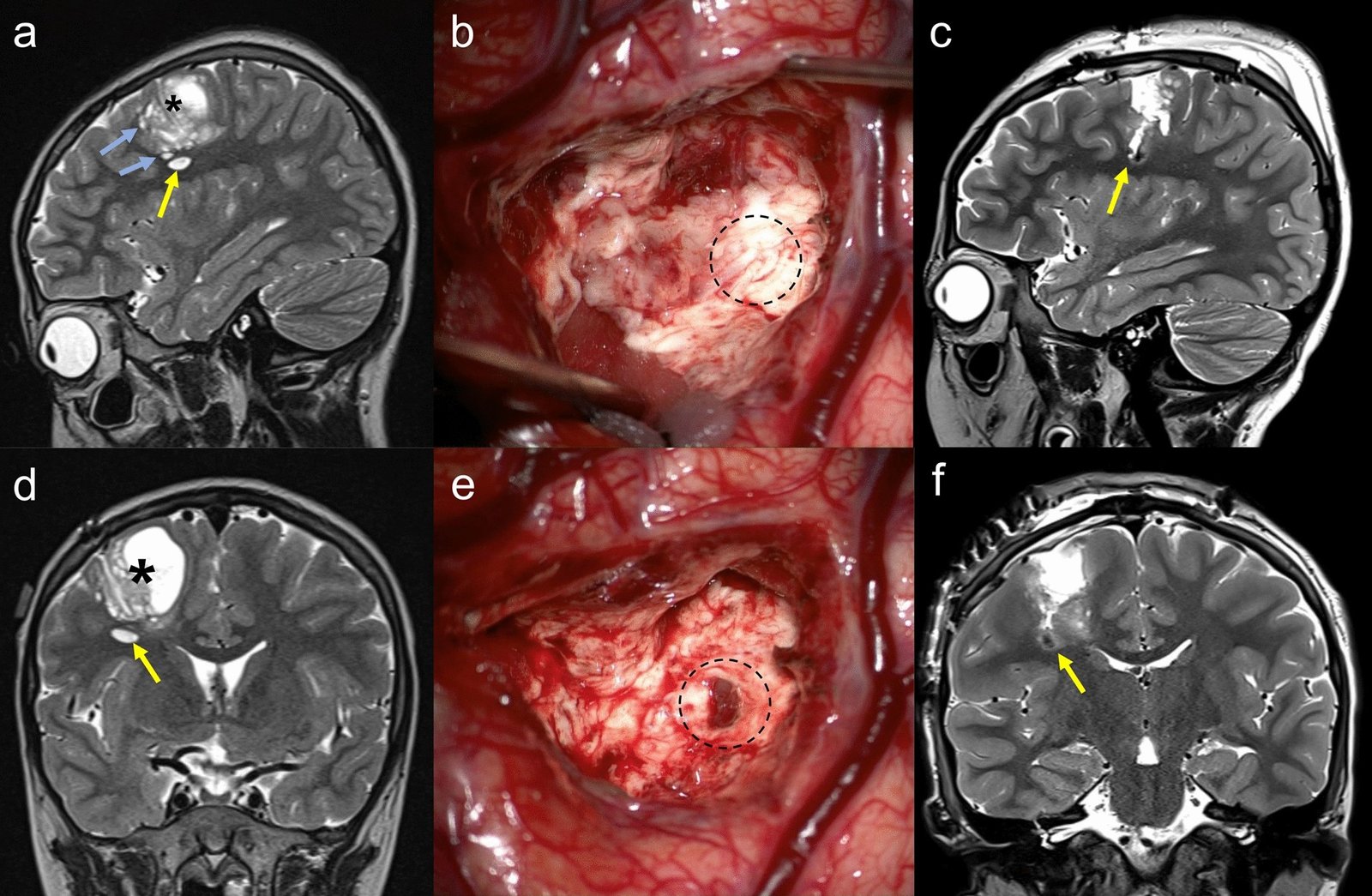
Dysembryoplastic Neuroepithelial Tumor (DNET) is a rare, benign (WHO grade 1) brain tumor that usually develops in children and young adults. It most often arises in the temporal lobe (sometimes frontal or other areas) and is strongly associated with long-standing, drug-resistant seizures. Although it is non-cancerous and grows very slowly, it can disrupt normal brain function. In homeopathy, remedies are used only as supportive care to help manage symptoms such as seizures, headaches, or post-surgical effects while supporting overall vitality and nervous system balance. DNET requires specialist neurosurgical and neurological management — surgery is often curative.
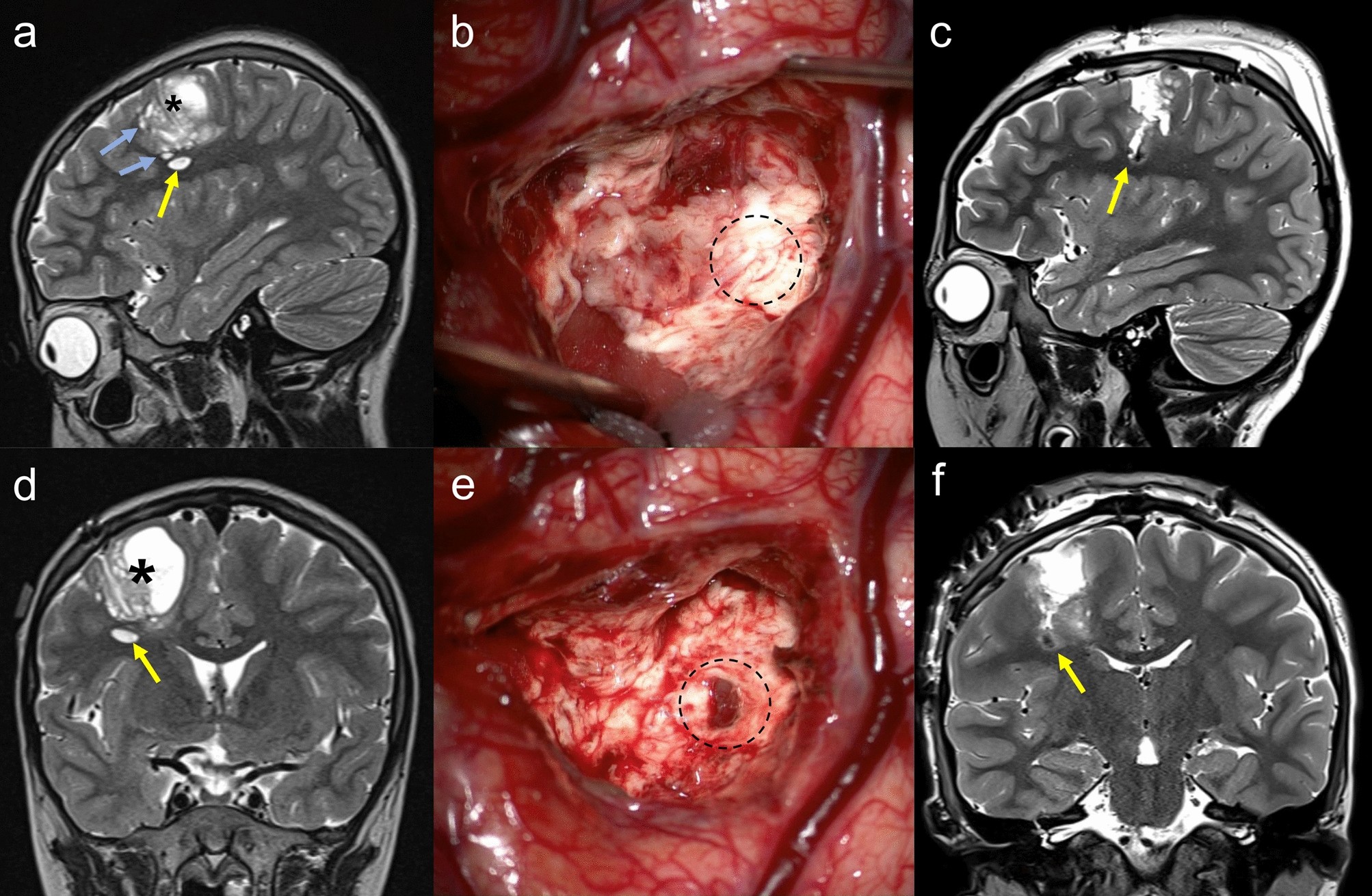
(Images above show typical MRI and surgical views of dysembryoplastic neuroepithelial tumor — a bubbly, multicystic cortical lesion, often in the temporal lobe, with characteristic appearance on imaging.)
Causes
The exact cause is not fully understood, but contributing factors include:
- Developmental abnormalities during brain formation in early life
- Genetic mutations or chromosomal changes in glial and neuronal cells
- It is considered a developmental (hamartomatous) lesion rather than a true neoplasm
- No strong link to environmental toxins or family history in most cases
Symptoms
Common symptoms include:
- Intractable (drug-resistant) focal seizures, often starting in childhood
- Headaches or pressure-like sensations
- Behavioral changes, learning difficulties, or mild neurological deficits
- In some cases: visual disturbances or focal weakness depending on tumor location
- Symptoms may persist for years before diagnosis
Homeopathy Medicines with Key Symptoms and Doses
Homeopathic remedies for dysembryoplastic neuroepithelial tumor are highly individualized and focus on symptom relief, seizure control, and nervous system support. They are used only as supportive care after neurosurgical evaluation and in coordination with an oncologist/neurologist. The following are sometimes considered. Remedy selection must be determined only by a qualified homeopath experienced in neurological conditions after detailed case-taking. These are general guidelines only.
Calcarea Carbonica For constitutional sluggishness, fair and sweaty persons with headaches and slow development. Supports overall vitality in chronic brain conditions. Typical use: 30C or 200C, 3-5 pellets once or twice weekly.
Silicea For delicate persons with weakness, sensitivity to cold, and slow-healing tendency. Helps support nervous tissue strength. Typical use: 6X or 30C, 3-5 pellets 1-2 times daily.
Belladonna For sudden, intense headaches or convulsive episodes with throbbing pain, redness, and heat. Useful in acute flare-ups. Typical use: 30C, 3-5 pellets 1-2 times daily (short term).
Stramonium For violent or terrifying seizures with fear, staring, and restlessness. Indicated when there is a history of fright or trauma. Typical use: 30C, 3-5 pellets 1-2 times daily (short term, under guidance).
Hyoscyamus Niger For twitching, jerking seizures or muttering with restlessness and suspicious thoughts. Typical use: 30C, 3-5 pellets 1-2 times daily (short term).
Calcarea Phosphorica For slow development, headaches, and bone/nervous system weakness in growing children. Typical use: 6X or 30C, 3-5 pellets 1-2 times daily.
Lycopodium Clavatum For anticipatory anxiety, right-sided symptoms, and digestive weakness accompanying neurological complaints. Typical use: 30C or 200C, 3-5 pellets 1-2 times daily.
Natrum Muriaticum For chronic headaches or emotional suppression linked to the condition. The person craves salt and avoids consolation. Typical use: 30C, 3-5 pellets 1-2 times daily.
Phosphorus For sensitive, fearful persons with headaches and tendency to bleeding or weakness. Typical use: 30C, 3-5 pellets 1-2 times daily (use cautiously).
Sulphur Often used as an intercurrent remedy in chronic cases with burning sensations or when symptoms do not respond well. Typical use: 30C or 200C, sparingly (once weekly under guidance).
Important guidance: Dysembryoplastic neuroepithelial tumor is typically treated with surgical removal, which is often curative and controls seizures in most cases. Anti-epileptic medications are used to manage seizures before and after surgery. Regular MRI follow-up is essential. Homeopathy may offer supportive benefits for symptom relief and overall well-being but must never replace neurosurgical evaluation, imaging, or conventional treatment. If seizures, headaches, or neurological changes occur, seek immediate medical help. This information is for educational purposes only and not a substitute for professional medical or homeopathic advice. Consult a qualified neurosurgeon or neurologist immediately for accurate diagnosis and management, and a registered homeopath experienced in neurological support only for individualized supportive remedy selection. Early diagnosis and proper treatment lead to excellent long-term outcomes.