Drug Withdrawal Syndrome is a set of physical and psychological symptoms that occur when a person suddenly stops or significantly reduces the use of a substance they have become dependent on. This can happen with alcohol, opioids, benzodiazepines, stimulants, nicotine, or other drugs. Symptoms vary depending on the substance, duration of use, and dosage. In homeopathy, remedies are used only as supportive care to help ease anxiety, restlessness, tremors, cravings, and physical discomfort while supporting the nervous system and overall recovery. Drug withdrawal syndrome can be dangerous and often requires medical supervision, especially for alcohol, benzodiazepines, or opioids.

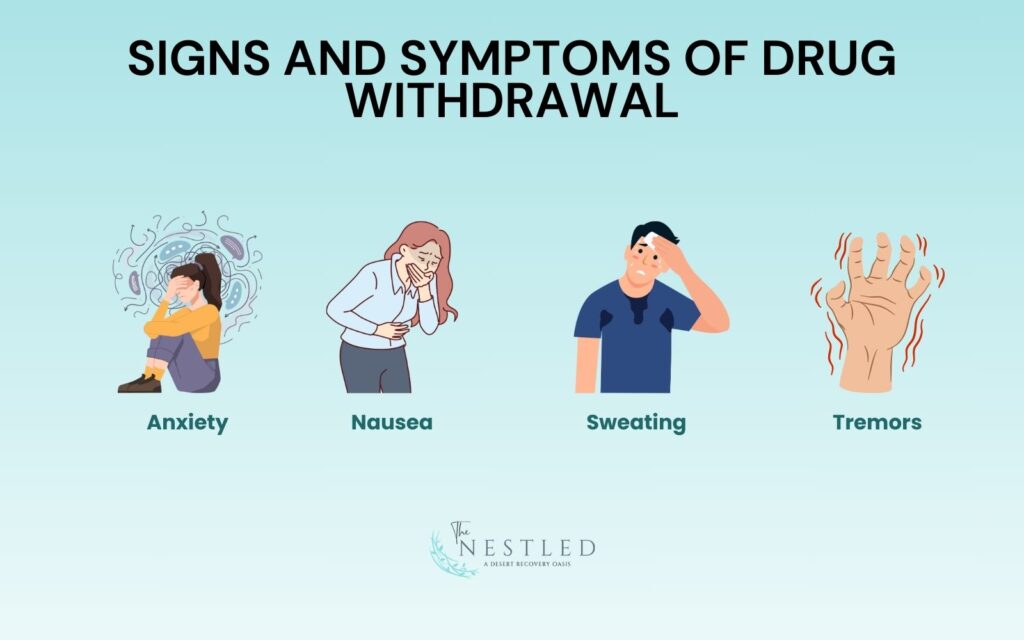
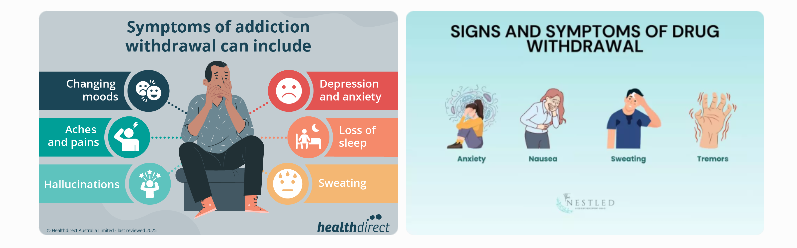
(Images above show common symptoms of drug withdrawal syndrome — anxiety, restlessness, sweating, tremors, mood changes, insomnia, and physical discomfort.)
Causes
Drug withdrawal syndrome occurs due to:
- Sudden stopping or rapid reduction of a substance after prolonged or heavy use
- Physical and psychological dependence developed by the brain and body
- Changes in brain chemistry (neurotransmitter imbalance)
- Individual factors like genetics, duration of use, and overall health
Symptoms
Symptoms depend on the substance but commonly include:
- Anxiety, irritability, restlessness, or agitation
- Tremors, sweating, chills, or flu-like aches and pains
- Insomnia, vivid dreams, or fatigue
- Nausea, vomiting, diarrhea, or loss of appetite
- Cravings for the substance, mood swings, or depression
- In severe cases (e.g., alcohol or benzodiazepines): seizures, hallucinations, or confusion
Homeopathy Medicines with Key Symptoms and Doses
Homeopathic remedies for drug withdrawal syndrome are selected based on the specific symptoms, the substance involved, and the person’s constitution. The following are sometimes considered for supportive management. Remedy selection must be determined only by a qualified homeopath experienced in addiction support after detailed case-taking, in close coordination with a medical doctor or addiction specialist. These are general guidelines only.
Nux Vomica For irritability, hypersensitivity, digestive upset, and craving after over-use of stimulants, alcohol, or drugs. The person is impatient and worse in the morning. Typical use: 30C, 3-5 pellets 1-2 times daily (short term).
Arsenicum Album For extreme anxiety, restlessness, fear of being alone, and burning pains with thirst for small sips. Better from warmth. Typical use: 30C, 3-5 pellets 1-2 times daily (short term).
Aconitum Napellus For sudden intense fear, panic, or restlessness with rapid heartbeat, especially in early withdrawal. Typical use: 30C, 3-5 pellets 1-2 times daily (very short term).
Gelsemium Sempervirens For trembling, weakness, heaviness in limbs, and anticipatory anxiety with drowsiness. Typical use: 30C, 3-5 pellets 1-2 times daily.
Ignatia Amara For emotional withdrawal with changeable moods, sighing, grief-like feelings, or spasmodic symptoms after emotional shock. Typical use: 30C, 3-5 pellets 1-2 times daily (short term).
Hyoscyamus Niger For restlessness, muttering, jealousy, or suspicious thoughts with twitching or picking at clothes. Typical use: 30C, 3-5 pellets 1-2 times daily (short term).
Stramonium For violent restlessness, fear, or terrifying hallucinations with staring eyes. Useful in severe cases. Typical use: 30C, 3-5 pellets 1-2 times daily (short term, under guidance).
Lycopodium Clavatum For lack of confidence, digestive weakness, and anticipatory anxiety during recovery. Typical use: 30C or 200C, 3-5 pellets 1-2 times daily.
Carbo Vegetabilis For exhaustion, coldness, air hunger, and collapse-like weakness in severe withdrawal. Typical use: 30C, 3-5 pellets 1-2 times daily (short term).
Sulphur Often used as an intercurrent remedy when there is burning sensation, unhealthy tendency, or when symptoms do not respond well. Typical use: 30C or 200C, sparingly (once weekly under guidance).
Important guidance: Drug withdrawal can be life-threatening (e.g., delirium tremens in alcohol withdrawal or seizures in benzodiazepine withdrawal). Medical detoxification under supervision with medications, fluids, and monitoring is often essential. Homeopathy may help reduce anxiety, restlessness, and physical discomfort as supportive care but must never replace professional medical treatment or rehabilitation programs. Seek immediate medical help if symptoms are severe, include seizures, confusion, or suicidal thoughts. This information is for educational purposes only and not a substitute for professional medical or homeopathic advice. Consult a qualified doctor or addiction specialist immediately for safe withdrawal management, and a registered homeopath experienced in supportive care for individualized remedy selection. Recovery is possible with proper support and long-term rehabilitation.