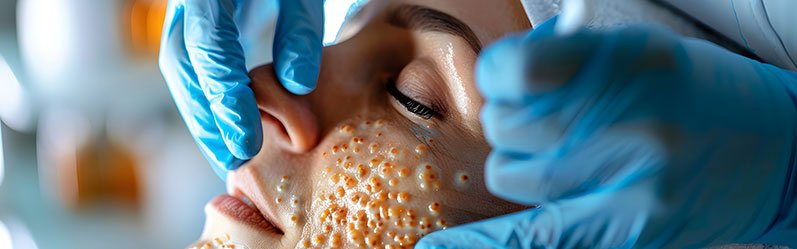
Dermabrasion Complications refer to unwanted side effects or problems that can occur after dermabrasion — a cosmetic skin resurfacing procedure that uses a rotating abrasive tool to remove the outer layers of skin. This procedure is done to treat scars, wrinkles, acne marks, or sun damage. While generally safe when performed by an experienced dermatologist, complications can include prolonged redness, swelling, infection, scarring, pigmentation changes, or delayed healing. In homeopathy, remedies are used only as supportive care to help reduce inflammation, promote healthy healing, ease discomfort, and support skin recovery. Dermabrasion complications should always be managed under the guidance of the treating dermatologist or plastic surgeon.
(Images above show typical post-dermabrasion skin — redness, swelling, raw appearance, and possible early signs of complications like uneven healing or inflammation.)
Causes
Complications arise mainly due to:
- Depth of abrasion going too deep into the skin layers
- Individual skin type, sensitivity, or poor healing tendency
- Infection (bacterial, viral like herpes reactivation, or fungal)
- Sun exposure without proper protection after the procedure
- Improper aftercare, smoking, or underlying medical conditions (diabetes, poor immunity)
- Allergic reaction to anesthetics or post-procedure products
Symptoms
Common symptoms of complications include:
- Prolonged redness, swelling, or burning sensation
- Pain, tenderness, or itching in the treated area
- Formation of scabs, crusts, or pus (indicating infection)
- Uneven skin tone — darkening (hyperpigmentation) or lightening (hypopigmentation)
- Scarring, thickened skin, or enlarged pores
- Delayed healing, blistering, or acne flare-ups
Homeopathy Medicines with Key Symptoms and Doses
Homeopathic remedies for dermabrasion complications are chosen based on the type of skin reaction, pain, discharge, and overall constitution. They may support faster healing and reduce inflammation. Remedy selection must be determined only by a qualified homeopath after detailed case-taking, in close coordination with a dermatologist. These are general guidelines only. Strict sun protection and proper wound care are essential.
Arnica Montana For bruising, soreness, swelling, and pain after the abrasive trauma. Helps reduce inflammation and promote early recovery. Typical use: 30C, 3-5 pellets 1-2 times daily (short term).
Calendula Officinalis Excellent for raw, open skin surfaces with risk of infection. Promotes healthy granulation and healing with antiseptic-like action. Typical use: 30C, 3-5 pellets 1-2 times daily. (Can also be used externally as diluted tincture under guidance.)
Hypericum Perforatum For sharp, shooting, or nerve-like pain with hypersensitivity in the treated area. Useful when there is tingling or stinging. Typical use: 30C, 3-5 pellets 1-2 times daily.
Belladonna For sudden intense redness, throbbing pain, heat, and swelling. The skin feels hot and sensitive to touch. Typical use: 30C, 3-5 pellets 1-2 times daily (short term).
Hepar Sulphuris For very sensitive, painful skin with tendency to pus formation or suppuration. Better from warmth. Typical use: 30C, 3-5 pellets 1-2 times daily (short term).
Silicea For slow-healing skin with weakness, tendency to scarring, or foreign body sensation. Supports tissue repair. Typical use: 6X or 30C, 3-5 pellets 1-2 times daily.
Lachesis Muta For bluish-red discoloration, extreme sensitivity to touch, and left-sided complaints with possible septic tendency. Typical use: 30C, 3-5 pellets 1-2 times daily (short term).
Rhus Toxicodendron For stiffness, restlessness, and itching with swelling that improves from warm applications and continued motion. Typical use: 30C, 3-5 pellets 1-2 times daily.
Graphites For thick, cracked, or sticky healing skin with tendency to keloid-like scarring. Typical use: 30C, 3-5 pellets 1-2 times daily.
Sulphur Often used as an intercurrent remedy in cases with burning, unhealthy skin tendency, or when healing is stalled. Typical use: 30C or 200C, sparingly (once weekly under guidance).
Important guidance: Most post-dermabrasion reactions (redness and swelling) are temporary and resolve with proper aftercare — gentle cleansing, moisturizing, sun avoidance, and prescribed creams. Complications like infection or abnormal scarring need prompt medical attention and may require antibiotics, antivirals, or further procedures. Homeopathy may help reduce discomfort and support skin recovery as supportive care but must never replace professional dermatologic management. Strictly follow post-procedure instructions, avoid sun exposure, and do not pick at the skin. This information is for educational purposes only and not a substitute for professional medical or homeopathic advice. Consult your treating dermatologist or plastic surgeon immediately if you notice signs of infection, worsening pain, pus, fever, or abnormal scarring, and a registered homeopath for individualized supportive remedy selection. With good care, most patients achieve smooth healing and satisfying results.